AI estimate as of September 1, 2025 · verify with a professional before acting
AI-Generated · Verify before acting
Everything on this page is generated by AI for informational purposes only. AI can make mistakes — the AI may misidentify items or misattribute them (artist, maker, brand, designer, origin, era). This is not an official valuation and should not be used for insurance, sale, tax, estate, legal, or lending purposes — or any decision requiring a certified appraisal. It is not an authoritative claim about any person, brand, or rights holder — do not share or rely on it as a factual statement about a third party. Always consult qualified professionals before making financial decisions.
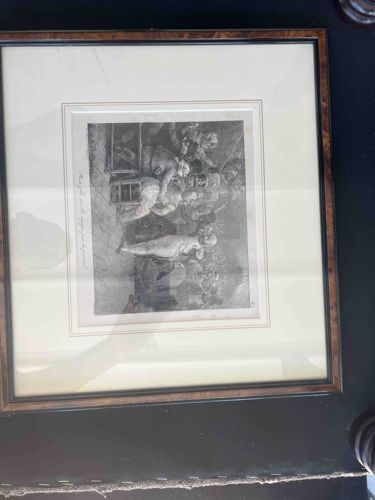
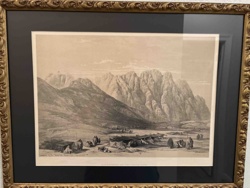
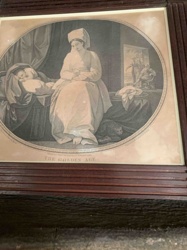
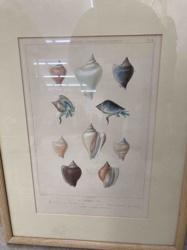
The item is a framed print or engraving, likely an intaglio print given the observable detail, depicting a dynamic, multi-figure scene with classical or mythological overtones. The central imagery features several nude or partially draped figures in various poses, suggesting a narrative or allegorical theme. The print exhibits fine linework and shading, indicative of skilled craftsmanship, possibly an etching or engraving. The tones are monochromatic, typical of historical prints, with a full range of grays from deep shadows to lighter highlights, providing depth and form to the figures.
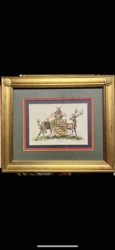
The print is housed within a matted frame. The matting appears to be a light, possibly off-white or cream color, with two distinct border lines in a darker, possibly reddish-brown tone, adding a subtle decorative element and separating the print from the frame. The frame itself is made of wood with a rich, dark brown finish, exhibiting a mottled or burled grain pattern, suggesting a high-quality wood veneer or solid burl wood. The finish has a slight sheen but also shows some signs of wear, particularly along the edges and corners, consistent with age and handling. There is apparent glare on the glass, making it difficult to discern all fine details of the print and the glass's condition. The overall presentation suggests a piece from the 18th or 19th century, given the style of art and framing techniques often associated with that period for displaying prints. The quality of the framing, while showing minor issues, indicates it was once a well-cared-for piece.
AI Appraisal Report
Based on my visual examination of the provided image, this is a framed engraving or print depicting a classical scene with multiple figures, likely from the 18th or 19th century. The print itself appears to be an intaglio type, showing fine linework and tonal range typical of the period. Its monochromatic palette, rich in grays, suggests a quality impression.
Condition-wise, the print's details are somewhat obscured by significant glare on the glass, making a definitive assessment difficult. However, I can discern that the print appears generally well-preserved within the frame, showing no obvious signs of significant foxing or tears, though a hands-on inspection would be required to confirm this. The matting is a pleasant, complementary off-white with two decorative borders. The frame is a dark, burled wood, showing age-appropriate wear, particularly at the corners and edges, which is expected for an item of this vintage. While the framing indicates it was once a well-cared-for piece, the wear does impact its immediate aesthetic appeal.
Market conditions for unsigned or unattributed historical prints of this nature are generally moderate. Comparables would include other antique classical engravings or etchings by lesser-known artists or workshop productions. Demand is steady among collectors of classical art and period decorative items, but rarity is not exceptionally high unless an identifiable artist or significant provenance is present. The primary factors impacting value here are the print's condition (especially clarity of impression), potential authorship (currently unknown), narrative interest, and the overall presentation. Without identification of the artist or specific school, it functions primarily as a decorative antique print.
Limitations in authenticity verification are significant based solely on images. I cannot definitively verify the print's authenticity as an original engraving versus a later reproduction, nor can I identify the artist or a specific publisher. A physical examination would be crucial to assess the paper quality, plate marks (if any), presence of a watermark, and to identify any hidden signatures or inscriptions. Furthermore, an in-person inspection would allow for a clearer view of the print's true condition without glare and a thorough examination of the framing materials. Scientific testing (e.g., paper analysis) would be needed for definitive age determination if doubt existed.