AI Appraisal Estimate

AI-generated estimates · not official valuations

From the user

What was submitted

Photo and notes provided by the user — not generated by AI

Submitted item photo
Submitted photo · June 20, 2026

User's notes

No additional notes provided.

AI analysis below

AI appraisal

AI analysis & estimate

AI-Generated · Verify before acting

Everything below is generated by AI for informational purposes only. AI can make mistakes — the AI may misidentify items or misattribute them (artist, maker, brand, designer, origin, era). This is not an official valuation and should not be used for insurance, sale, tax, estate, legal, or lending purposes — or any decision requiring a certified appraisal. It is not an authoritative claim about any person, brand, or rights holder — do not share or rely on it as a factual statement about a third party. Always consult qualified professionals before making financial decisions.

Read the full disclaimer

AI Identification

·Not independently authenticated·Verify before acting

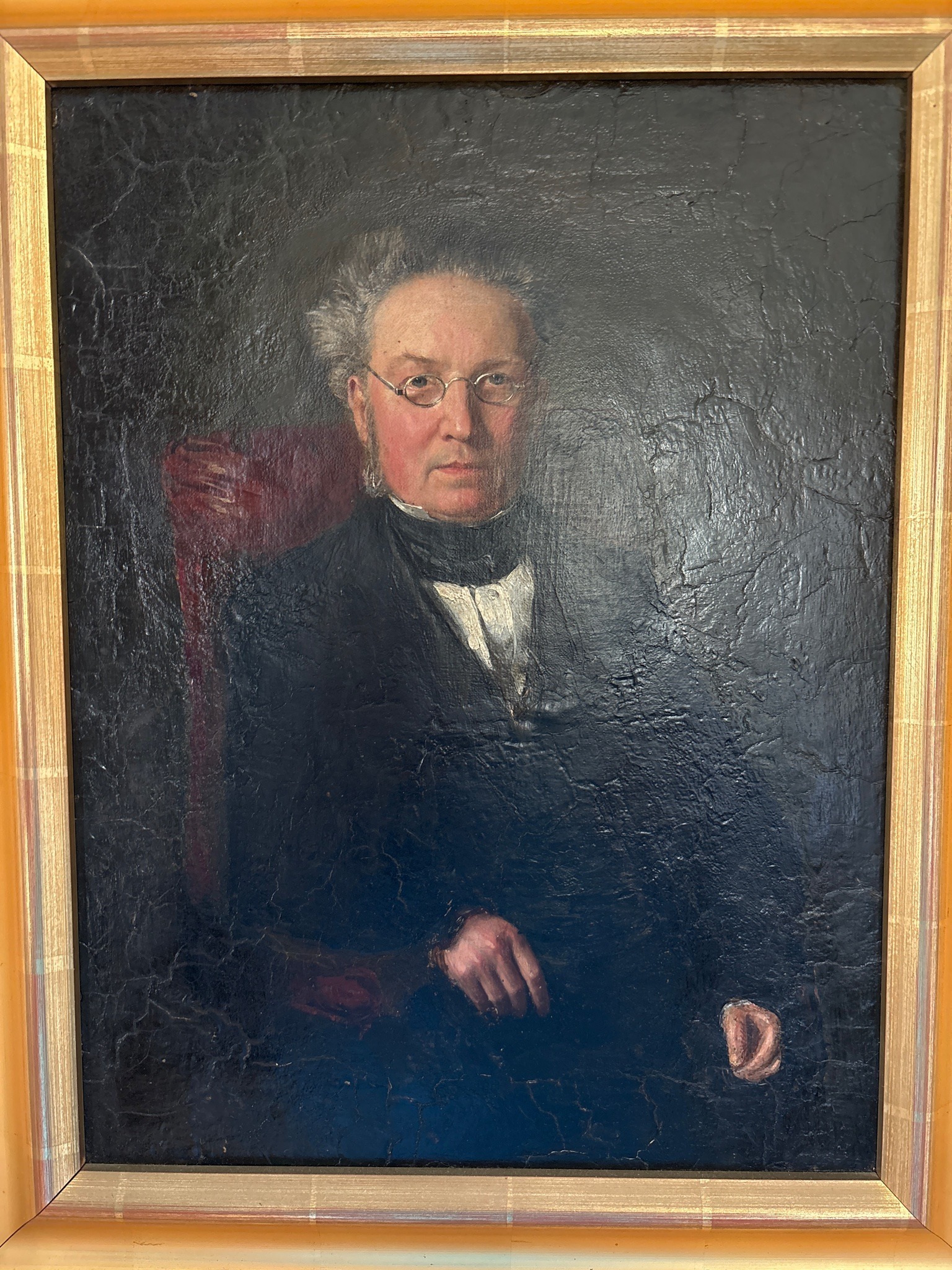
19th Century Biedermeier Style Oil Portrait of a Bespectacled Gentleman

Fine Art - Paintings

AI Estimated Value

·Not an official valuation·Verify before acting

$1,200 - $1,800

As of June 20, 2026

AI Item Analysis

·AI can make mistakes·Verify before acting
This is an original oil painting on canvas, depicting a mature gentleman seated in a red-backed chair. The subject is rendered in a three-quarter view, wearing a formal black frock coat, a high black cravat, and a white collared shirt. He is notably wearing wire-rimmed spectacles, which are rendered with fine detail. The background is dark and monochromatic, focusing all attention on the sitter's face and hands. The style is consistent with mid-19th-century academic portraiture, possibly from the Biedermeier period (circa 1830-1850). The color palette is dominated by dark umbers and blacks, with high-contrast flesh tones and the saturated red of the upholstery providing visual relief. The condition of the piece shows significant signs of age; there is extensive craquelure throughout the entire surface of the canvas, which is characteristic of older oil paintings where the paint layers have lost flexibility. There are visible undulations in the canvas support and some areas of surface grime. The brushwork in the face shows a high level of technical skill, particularly in the rendering of translucent skin and the texture of the hair, while the clothing and background are handled more broadly. The piece is housed in a modern, light-toned wooden frame that appears to be a much later addition and does not match the historical period of the artwork. No visible artist signature is discernible in the provided image.

AI Appraisal Report

·AI can make mistakes·Verify before acting
I have carefully examined the provided high-resolution imagery of this mid-19th-century portrait. The work displays characteristics typical of the Biedermeier period, specifically the emphasis on middle-class dignity, psychological realism, and high-contrast lighting. The technical execution of the sitter's face—particularly the delicate rendering of the spectacles and the translucency of the flesh—suggests a skilled academic hand. However, the condition is a significant valuation factor; the pervasive craquelure indicates historical stress to the paint film, and the undulations in the canvas suggest it may require professional lining or tensioning. The modern frame is a detracting element and provides no historical value. Market-wise, anonymous portraits of men generally realize lower prices than those of women or children unless a specific sitter or artist is identified. Similar 19th-century European portraits of this quality typically auction between $1,000 and $2,000. The current valuation reflects its status as an 'attributed' period piece in unrestored condition. Please note that this appraisal is based solely on digital imagery. A definitive authentication and valuation would require an in-person inspection to verify the canvas weave, identify any hidden signatures under UV light, and examine the stretcher bars for historical stamps or labels. Provenance documentation, such as family records or sales receipts, would be necessary to elevate this piece from an anonymous decorative work to a documented historical portrait.

Get your items appraised

Instant estimates of your treasures with AI-powered appraisals

Browse More Appraisals