AI Appraisal Estimate

AI-generated estimates · not official valuations

From the user

What was submitted

Photo and notes provided by the user — not generated by AI

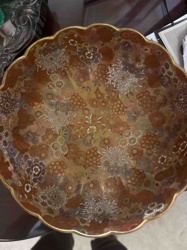
Submitted item photo
Submitted photo · May 18, 2026

User's notes

No additional notes provided.

AI analysis below

AI appraisal

AI analysis & estimate

AI-Generated · Verify before acting

Everything below is generated by AI for informational purposes only. AI can make mistakes — the AI may misidentify items or misattribute them (artist, maker, brand, designer, origin, era). This is not an official valuation and should not be used for insurance, sale, tax, estate, legal, or lending purposes — or any decision requiring a certified appraisal. It is not an authoritative claim about any person, brand, or rights holder — do not share or rely on it as a factual statement about a third party. Always consult qualified professionals before making financial decisions.

Read the full disclaimer

AI Identification

·Not independently authenticated·Verify before acting

Japanese Imari Porcelain Vase with Underglaze Mark

Asian Antiques - Japanese Ceramics

AI Estimated Value

·Not an official valuation·Verify before acting

$450 - $650

As of May 18, 2026

AI Item Analysis

·AI can make mistakes·Verify before acting
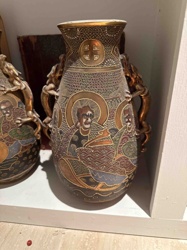
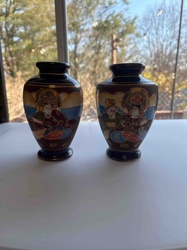
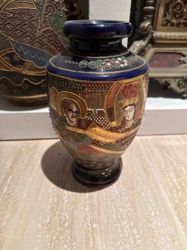
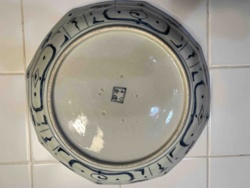
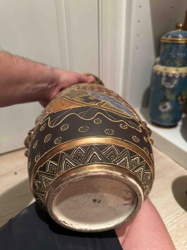
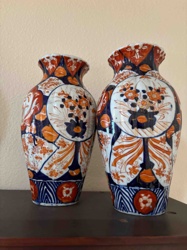
This is a substantial porcelain vessel, likely a large jar or vase, executed in the traditional Imari palette. The piece is constructed from fine white porcelain and features a rounded, bulbous body. The decoration consists of vibrant iron-red, cobalt blue, and gold gilt enamel over a white ground, showcasing classic motifs such as floral medallions and flowing scrollwork. A defining characteristic is the recessed base with a dual-ring border in underglaze blue, containing a small, stylized cobalt blue mark that may represent a maker's seal or an auspicious symbol. The foot rim shows darkening and minor abrasions consistent with use and age-related shelf wear. The glaze appears bright with a smooth, vitreous finish, though small kiln-firing pits and minor surface scratches are visible. The craftsmanship suggests a high level of skill in both the potting and the hand-painted enamel application. Given the color profile and style, this piece likely dates to the late 19th-century Meiji period or early 20th century. The intricate layering of colors and the quality of the cobalt blue underglaze are notable indicators of its decorative value.
AI Appraisal Report

·AI can make mistakes·Verify before acting
Based on my visual examination of the provided images, this piece presents as a characteristic example of Meiji period (1868-1912) or early Taisho period Japanese export porcelain. The vessel, executed in the traditional Imari palette, relies on the classic triad of underglaze cobalt blue, overglaze iron-red, and gilt highlights. The quality of the potting appears competent, with the rounded bulbous form suggesting it was likely intended as a decorative jar or large vase for the Western export market. The underglaze mark within the dual-ring border, while stylized, is a common feature of Arita kilns from this era, often intended to mimic Chinese reign marks rather than identify a specific artisan. The condition appears generally good for its age; the foot rim shows appropriate shelf wear, oxidation, and darkening consistent with a late 19th-century production date. The glaze exhibits a desirable vitreous sheen, though I noted minor kiln-firing pits, which are acceptable manufacturing flaws for this period. The enamel work is vibrant, though there is typical rubbing to the gilt, particularly on high points. The current market for late Meiji export ware is stable but value is heavily dependent on size and intricacy. While decorative, this piece lacks the exceptional fine-line painting seen in top-tier Imari. It falls squarely into the decorative antique category. Limitations of this appraisal include the inability to physically handle the item to check for hairline cracks, professional restoration (particularly around the rim), or the specific weight of the porcelain paste. An in-person inspection under UV light would be necessary to rule out modern repairs, and a definitive translation of the mark would require clearer macro photography.

Get your items appraised

Instant estimates of your treasures with AI-powered appraisals

Browse More Appraisals