AI Appraisal Estimate

AI-generated estimates · not official valuations

From the user

What was submitted

Photo and notes provided by the user — not generated by AI

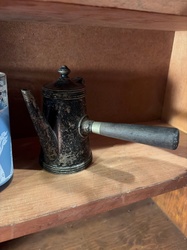
Submitted item photo
Submitted photo · June 6, 2026

User's notes

No additional notes provided.

AI analysis below

AI appraisal

AI analysis & estimate

AI-Generated · Verify before acting

Everything below is generated by AI for informational purposes only. AI can make mistakes — the AI may misidentify items or misattribute them (artist, maker, brand, designer, origin, era). This is not an official valuation and should not be used for insurance, sale, tax, estate, legal, or lending purposes — or any decision requiring a certified appraisal. It is not an authoritative claim about any person, brand, or rights holder — do not share or rely on it as a factual statement about a third party. Always consult qualified professionals before making financial decisions.

Read the full disclaimer

AI Identification

·Not independently authenticated·Verify before acting

Victorian Era Style Silver-Plated Coffee or Water Pitcher

Antique Silver & Silver-Plate Metalware

AI Estimated Value

·Not an official valuation·Verify before acting

$45.00 - $85.00

As of June 6, 2026

AI Item Analysis

·AI can make mistakes·Verify before acting
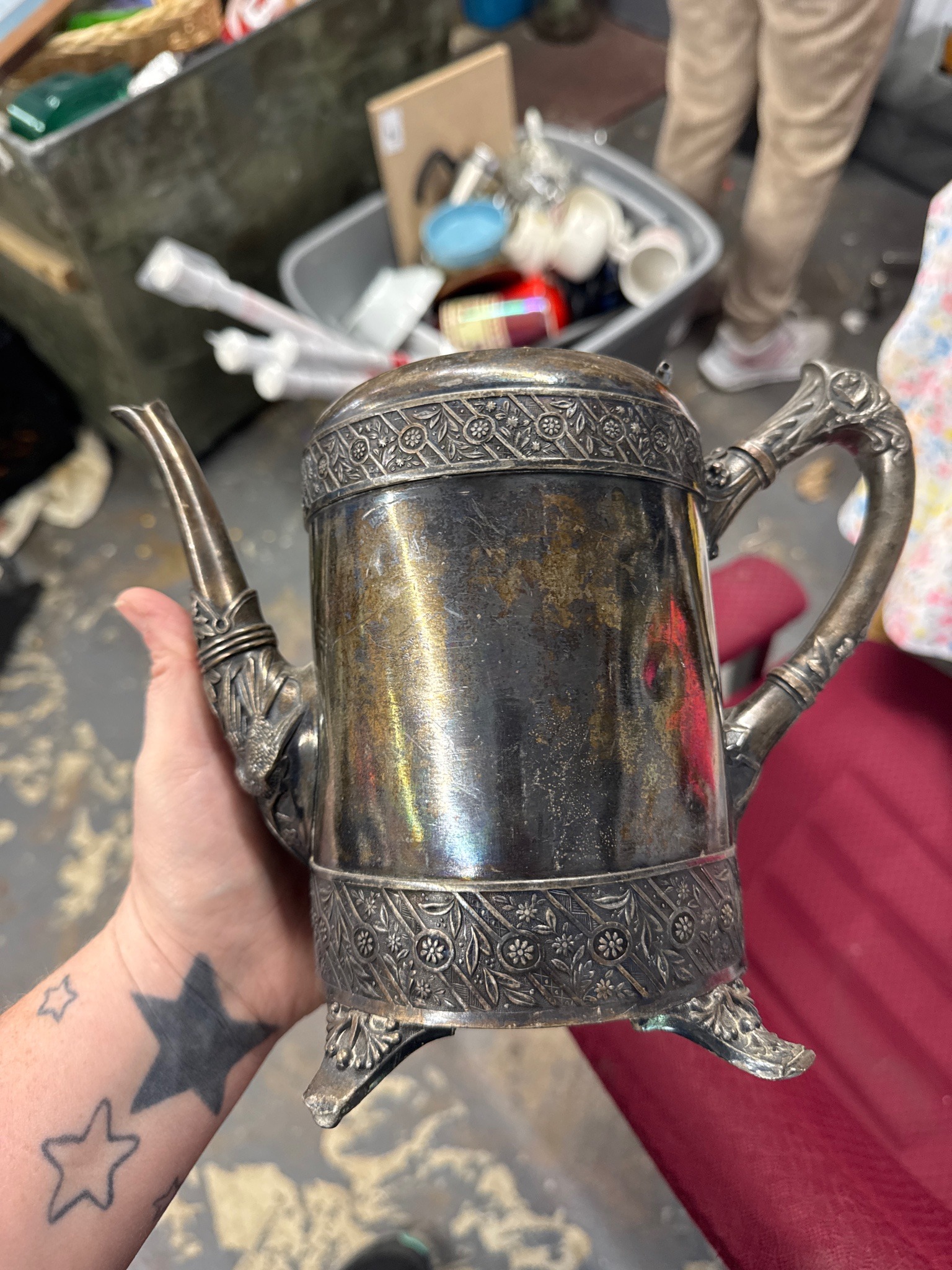
This is a tall, cylindrical silver-plated vessel, likely a coffee pot or hot water pitcher, featuring a hinged lid and an ornate Aesthetic Movement design. The body is characterized by two wide, horizontal bands of repoussé or chased floral and foliate patterns, separated by a smooth, polished central section. The piece is supported by four decorative scrolled feet that elevate the base. The handle is highly decorative with cast scrolls and thumb rests, while the spout is slender and elegantly curved with a stylized bird or leaf motif at the base attachment. Physically, the item exhibits significant surface oxidation and heavy tarnish with a distinct yellowish/brownish 'rainbow' patina, which is common in silver-plate where the thin silver layer reacts with sulfur in the air. This iridescent effect suggests the item has been stored in a damp environment for an extended period. There are visible surface scratches, small pits, and minor abrasions consistent with age and use. The craftsmanship points to a late 19th-century or early 20th-century mass-manufactured silver-plated item, likely produced by an American or European firm like Reed & Barton or Meriden Brittania Co., though no maker's mark is visible in the image. The construction involves a soldered handle and spout onto a rolled metal body.
AI Appraisal Report

·AI can make mistakes·Verify before acting
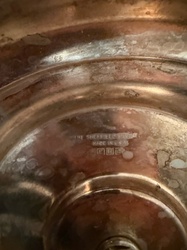
I have conducted a visual inspection of this silver-plated vessel, which appears to be a late 19th-century hot water pitcher or coffee pot in the Aesthetic Movement style. My assessment finds the item is authentic to the Victorian era but is a mass-produced piece rather than a bespoke silversmith creation. The condition is a significant factor in this valuation; the heavy 'rainbow' patina and yellowish oxidation indicate advanced sulfur reaction, and without a physical test, it is impossible to determine if the silver plating has worn through to the base metal (commonly known as 'bleeding'). Such wear would necessitate costly replating, which often exceeds the market value of the object. The market for Victorian silver-plate has softened significantly over the last decade, as modern collectors favor 'wash and wear' items over labor-intensive polished silver. Comparables from manufacturers like Reed & Barton or Meriden Brittania frequently sell in this price bracket at regional auctions and online marketplaces. The lack of a visible maker's mark further limits its desirability among specialized collectors. Final identification is limited by several factors. A physical inspection is required to check for hallmarks on the underside and examine the interior for mineral buildup or pitting. Provenance documentation could confirm a specific historical lineage, though it is unlikely for this type of domestic ware. Without seeing the base, I cannot confirm the core metal (e.g., white metal or copper) or the specific manufacturer, both of which are essential for a definitive authentication and valuation.

Get your items appraised

Instant estimates of your treasures with AI-powered appraisals

Browse More Appraisals