AI Appraisal Estimate

AI-generated estimates · not official valuations

From the user

What was submitted

Photo and notes provided by the user — not generated by AI

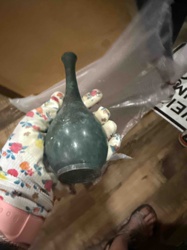
Submitted item photo
Submitted photo · June 6, 2026

User's notes

Vintage Japanese ceramic glazed enameled vase

AI analysis below

AI appraisal

AI analysis & estimate

AI-Generated · Verify before acting

Everything below is generated by AI for informational purposes only. AI can make mistakes — the AI may misidentify items or misattribute them (artist, maker, brand, designer, origin, era). This is not an official valuation and should not be used for insurance, sale, tax, estate, legal, or lending purposes — or any decision requiring a certified appraisal. It is not an authoritative claim about any person, brand, or rights holder — do not share or rely on it as a factual statement about a third party. Always consult qualified professionals before making financial decisions.

Note

This analysis also relies on unverified notes provided by the user, which may be incomplete or inaccurate and could affect the result.

Read the full disclaimer

AI Identification

·Not independently authenticated·Verify before acting

Vintage Japanese Ceramic Glazed Enameled Vase Base with Maker's Mark

Vase

AI Estimated Value

·Not an official valuation·Verify before acting

$40-$80

As of June 6, 2026

AI Item Analysis

·AI can make mistakes·Verify before acting
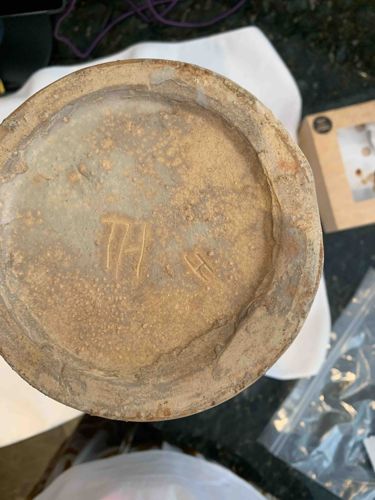
The item captured in the image is the unglazed bottom of a vintage ceramic vase, specifically highlighted by the user as a 'Vintage Japanese ceramic glazed enameled vase'. The base is circular and exhibits a rough, unrefined texture, characteristic of unglazed fired clay. Its color is a mottled beige and light brown, with noticeable darker specks and areas of lighter discoloration, which could be signs of age, handling, or residual firing impurities. The surface is uneven, showing slight indentations and raised areas, particularly around the outer ring which serves as the foot or base rim. The most prominent feature is an impressed mark, likely a maker's mark or signature. Interpreted from the image, these appear to be two initial-like characters, 'TH' on the left, and a single 'H' on the right, deeply incised into the clay before firing. This level of detail suggests a deliberate, possibly hand-incised mark. There are no visible chips, cracks, or repairs, though the natural rough texture and patina make it challenging to ascertain minor surface imperfections. The overall appearance is consistent with older ceramic pieces where the base is left unglazed to prevent sticking during firing and to provide stability. The craftsmanship indicated by the intentional unglazed base and the impressed maker's mark points towards a piece that was either studio pottery or from a small, artisan workshop, prioritizing utility and maker identification. The condition appears to be consistent with its age, showing a natural patina without significant damage.
AI Appraisal Report

·AI can make mistakes·Verify before acting
Upon examining the image of the base of this vintage Japanese ceramic vase, I can assess several key characteristics. The unglazed foot rim and the impressed maker's mark are consistent with traditional Japanese studio pottery techniques. The mark, which appears to be 'TH' and 'H', is not immediately identifiable as a major, well-documented Japanese kiln or artist, which suggests it may be from a smaller, regional workshop or a lesser-known studio potter. Without seeing the full vase—its shape, glaze, enamel work, and overall artistry—the valuation is severely limited. The value of such a piece is primarily determined by the quality of the craftsmanship on the body of the vase, its aesthetic appeal, and the identity of the maker. Currently, the market for unidentified Japanese studio pottery is modest unless the piece exhibits exceptional artistic merit. Comparable vases from unknown 20th-century makers typically sell in the low to mid-range. While the base appears to be in good condition, its primary value lies in its potential to identify the creator. To provide a conclusive appraisal, a full physical examination is essential to assess the glaze, form, and overall condition. Further research into the 'TH H' mark would be required, cross-referencing against databases of Japanese ceramic marks. Without provenance or further identifying features on the vase body, its origin and authenticity cannot be fully verified, and the value remains speculative.

Get your items appraised

Instant estimates of your treasures with AI-powered appraisals

Browse More Appraisals