AI Appraisal Estimate

AI-generated estimates · not official valuations

From the user

What was submitted

Photo and notes provided by the user — not generated by AI

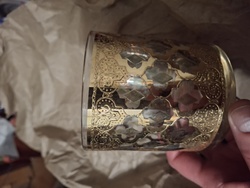
Submitted item photo
Submitted photo · June 6, 2026

User's notes

Mid century

AI analysis below

AI appraisal

AI analysis & estimate

AI-Generated · Verify before acting

Everything below is generated by AI for informational purposes only. AI can make mistakes — the AI may misidentify items or misattribute them (artist, maker, brand, designer, origin, era). This is not an official valuation and should not be used for insurance, sale, tax, estate, legal, or lending purposes — or any decision requiring a certified appraisal. It is not an authoritative claim about any person, brand, or rights holder — do not share or rely on it as a factual statement about a third party. Always consult qualified professionals before making financial decisions.

Note

This analysis also relies on unverified notes provided by the user, which may be incomplete or inaccurate and could affect the result.

Read the full disclaimer

AI Identification

·Not independently authenticated·Verify before acting

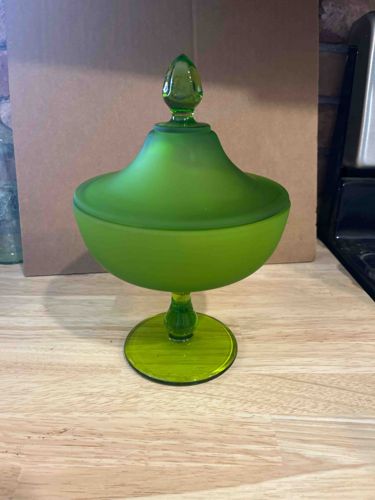
Mid-Century Frosted and Clear Green Glass Covered Candy Dish / Compote

Decorative Glassware

AI Estimated Value

·Not an official valuation·Verify before acting

$40-$65

As of June 6, 2026

AI Item Analysis

·AI can make mistakes·Verify before acting
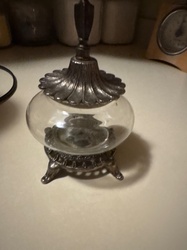
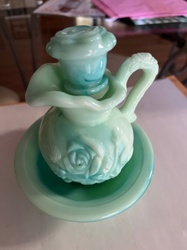
This item is a Mid-Century Modern covered candy dish or compote, crafted from vibrant green glass. The majority of the piece, including the bowl and the domed lid, features a frosted or satin finish, giving it a soft, diffuse appearance. In contrast, the stem and the circular foot are made of clear, polished green glass, allowing light to pass through and create a striking visual contrast. The stem itself is adorned with a ribbed or fluted design, adding a touch of intricate detail. The lid is topped with a distinct finial, also in clear green glass, shaped like an elongated teardrop or a stylized acorn, which appears faceted. The overall form is graceful, with the bowl flaring outwards and the lid presenting a smooth, bell-like curve. The color is a distinct lime green, indicative of mid-century aesthetics. There are no visible chips, cracks, or significant scratches, suggesting it is in good to excellent vintage condition. There are no discernible maker's marks or signatures visible from the provided images. The combination of frosted and clear glass, along with the bold green color, points to a design popular in the mid-20th century, likely between the 1950s and 1970s. The craftsmanship appears to be of good quality, with consistent glasswork and a well-formed lid and finial indicating careful production.
AI Appraisal Report

·AI can make mistakes·Verify before acting
Upon visual examination of the images provided, I can assess this piece as a fine example of Mid-Century Modern decorative glassware. The design, featuring a combination of frosted and clear glass in a vibrant lime green, is characteristic of the 1950s to 1970s aesthetic. The ribbed stem and faceted finial demonstrate quality craftsmanship. The item appears to be in excellent vintage condition, with no visible chips, cracks, or significant defects, which is a primary driver of its value. The market for mid-century glass remains steady, with particular interest in pieces with unique forms and bold colors. While the maker is unidentified, the style is reminiscent of works by American manufacturers like Westmoreland or Viking Glass, or potentially European makers. Without a maker's mark, the value is based on its decorative appeal and condition rather than brand recognition. Similar unmarked frosted and clear glass compotes of this era typically sell in the $35 to $65 range in online marketplaces and antique shops. The lack of a discernible maker's mark is the most significant factor limiting a higher valuation. It is important to note that this appraisal is based solely on images. A full authentication would require in-person examination to feel for any subtle imperfections, check for mold lines or pontil marks that could help identify the manufacturer, and potentially test the glass composition to confirm its age and origin. Verifiable provenance or inclusion in a period catalog would be necessary for a definitive attribution.

Get your items appraised

Instant estimates of your treasures with AI-powered appraisals

Browse More Appraisals