AI Appraisal Estimate

AI-generated estimates · not official valuations

From the user

What was submitted

Photo and notes provided by the user — not generated by AI

Submitted item photo
Submitted photo · June 4, 2026

User's notes

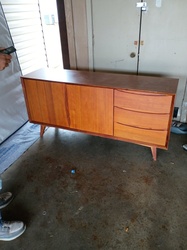
Teak

AI analysis below

AI appraisal

AI analysis & estimate

AI-Generated · Verify before acting

Everything below is generated by AI for informational purposes only. AI can make mistakes — the AI may misidentify items or misattribute them (artist, maker, brand, designer, origin, era). This is not an official valuation and should not be used for insurance, sale, tax, estate, legal, or lending purposes — or any decision requiring a certified appraisal. It is not an authoritative claim about any person, brand, or rights holder — do not share or rely on it as a factual statement about a third party. Always consult qualified professionals before making financial decisions.

Note

This analysis also relies on unverified notes provided by the user, which may be incomplete or inaccurate and could affect the result.

Read the full disclaimer

AI Identification

·Not independently authenticated·Verify before acting

Mid-Century Modern Armchair (Teak and Two-Tone Upholstery)

Furniture

AI Estimated Value

·Not an official valuation·Verify before acting

$650-$950

As of June 4, 2026

AI Item Analysis

·AI can make mistakes·Verify before acting
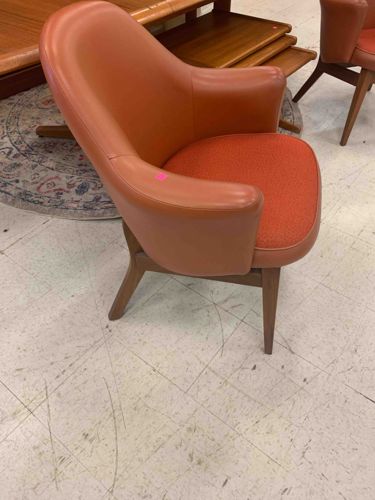
The item is a Mid-Century Modern armchair, likely dating from the 1950s to 1960s, characterized by its sleek lines and organic form. The chair features a distinctive two-tone upholstery scheme: the exterior shell and armrests are upholstered in a smooth, light brown or caramel-colored material, likely vinyl or a treated faux leather, which gives it a polished and durable appearance. The interior seat cushion and backrest are upholstered in a vibrant, textured orange fabric, possibly a tweed or a similar woven material, providing a contrast in both color and texture. The chair's back curves gracefully, forming integrated armrests that flow seamlessly into the seat structure. The base of the chair consists of four tapered, splayed legs crafted from what appears to be solid wood, most likely teak or a similar rich-toned hardwood, consistent with the Mid-Century aesthetic. The legs exhibit a natural wood grain and a warm finish. There are no visible manufacturer's marks or signatures in the provided images. A small pink tag is visible on the proper left armrest, likely an inventory or sale tag, which does not appear to be a permanent marking. The overall condition appears good, with some minor signs of wear consistent with age and use, such as slight creasing or minor scuffs on the lighter upholstery, and potential slight fading or wear on the orange fabric. The wooden legs show no obvious signs of significant damage like cracks or major gouges, indicating a well-maintained piece of furniture. The craftsmanship suggests a mass-produced item of good quality, typical of the era, emphasizing comfort and stylish design.
AI Appraisal Report

·AI can make mistakes·Verify before acting
Upon examining the images of this Mid-Century Modern armchair, my assessment is that it is a well-preserved piece, likely from the 1950s or 1960s, embodying the distinctive Danish Modern aesthetic. The solid teak construction of the tapered legs and the two-tone upholstery—a durable caramel vinyl-like material on the exterior and a vibrant orange textured fabric on the interior—are characteristic of the era. The chair's overall condition appears to be very good for its age, with only minor signs of wear such as slight creasing on the outer shell and potential minor wear to the fabric, which is expected and does not significantly detract from its value. The market for authentic Mid-Century Modern furniture remains robust, with strong demand for stylish and functional items like this armchair. Without a designer attribution, its value is determined by its aesthetic appeal, quality of construction, and condition. Similar unidentified but well-made lounge chairs of this period typically sell in the secondary market for several hundred dollars. The two-tone upholstery is a particularly attractive feature that enhances its desirability. A significant value-influencing factor is the lack of a manufacturer's mark. If a designer such as Arne Vodder, Kurt Østervig, or a notable manufacturer like France & Søn could be identified, the value would increase substantially. However, authentication from images alone is limited. A physical inspection would be necessary to identify any hidden marks, assess the joinery, and confirm the exact materials and condition. Full authentication might require provenance documentation or comparison against established design archives.

Get your items appraised

Instant estimates of your treasures with AI-powered appraisals

Browse More Appraisals