AI identification & appraisal estimate

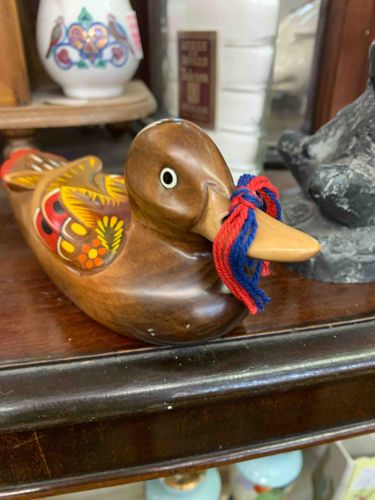
Korean Wooden Wedding Duck Decor

Submitted photo of Korean Wooden Wedding Duck Decor
Photo submitted by the user — not generated by AI

User's notes

Made in Korea

These notes were written by the person who submitted this item. Appraiser.AI has not verified them, and the AI's identification and estimate may rely on them.

AI Estimated Value

Not an official valuation

$40-$65

AI estimate as of July 30, 2025 · verify with a professional before acting

AI-Generated · Verify before acting

Everything on this page is generated by AI for informational purposes only. AI can make mistakes — the AI may misidentify items or misattribute them (artist, maker, brand, designer, origin, era). This is not an official valuation and should not be used for insurance, sale, tax, estate, legal, or lending purposes — or any decision requiring a certified appraisal. It is not an authoritative claim about any person, brand, or rights holder — do not share or rely on it as a factual statement about a third party. Always consult qualified professionals before making financial decisions.

This analysis also relies on unverified notes provided by the user, which may be incomplete or inaccurate and could affect the result.

Read the full disclaimer

AI Item Analysis

This item is a decorative wooden duck, likely carved or shaped from a single piece of wood, featuring a rich, medium-brown stain or natural wood finish that highlights its grain. The duck is depicted in a resting position, with a stylized body that is smooth and rounded. Its eyes are simple, created by white circles with black pupils, giving it a somewhat naive or folk-art aesthetic. A distinctive feature is the brightly colored yarn or cord tied around its beak, consisting of interwoven red and blue strands, which might be a traditional Korean element or simply a decorative flourish. The tail feathers and wing area are adorned with vibrant, hand-painted details in red, amber, yellow, and green, suggesting stylized feather patterns with circular and teardrop motifs. There are small white specks visible on the main body of the duck, which could indicate dust, minor paint loss, or perhaps a distressed finish. The overall craftsmanship appears to be good, with smooth lines and a pleasant tactile quality. Given the 'Made in Korea' context, it suggests a traditional Korean craft piece, possibly a wedding duck which are often given as gifts symbolizing fidelity and lasting love. The estimated age is difficult to pinpoint without further information, but it appears to be a contemporary or mid-20th century decorative item. The painted details show some slight imperfections consistent with hand-painting rather than mass production, indicative of artisanal quality.
AI Appraisal Report

Upon examination of the provided image, this Korean Wooden Wedding Duck (kireogi) presents as a fine example of 20th-century Korean folk art. The duck is carved from a single piece of wood, exhibiting a stylized, smooth form with a rich brown finish. The condition appears to be good, with minor surface wear such as small white specks and slight imperfections in the hand-painted details, which are consistent with its age and artisanal nature. These hand-painted motifs in red, amber, yellow, and green, along with the traditional red and blue cord around the beak, are characteristic of this type of decorative art. The 'Made in Korea' provenance aligns with its style and likely post-1950s production for both domestic use and the export market. These ducks are not exceedingly rare, as they are a common traditional gift, but well-crafted, vintage examples are sought after by collectors of folk art and Korean decor. The market for such items is stable, with values driven by craftsmanship, age, and condition. The primary factor influencing its value is its status as a decorative, likely machine-assisted craft piece rather than a historically significant antique folk carving. Authenticity is presumed based on its typical form and markings. However, a definitive assessment of age and construction method is limited by the digital image. A physical inspection would be necessary to examine the wood's patina, tool marks, and any maker's signatures or stamps to confirm its specific origins and rule out modern reproduction.

Keep exploring

More decorative arts appraisals

Get your items appraised

Instant AI-powered appraisal estimates from a photo

Browse More Appraisals