AI Appraisal Estimate

AI-generated estimates · not official valuations

From the user

What was submitted

Photo and notes provided by the user — not generated by AI

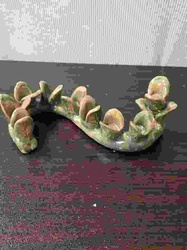
Submitted item photo
Submitted photo · June 6, 2026

User's notes

No additional notes provided.

AI analysis below

AI appraisal

AI analysis & estimate

AI-Generated · Verify before acting

Everything below is generated by AI for informational purposes only. AI can make mistakes — the AI may misidentify items or misattribute them (artist, maker, brand, designer, origin, era). This is not an official valuation and should not be used for insurance, sale, tax, estate, legal, or lending purposes — or any decision requiring a certified appraisal. It is not an authoritative claim about any person, brand, or rights holder — do not share or rely on it as a factual statement about a third party. Always consult qualified professionals before making financial decisions.

Read the full disclaimer

AI Identification

·Not independently authenticated·Verify before acting

Stoneware Floral Vase or Mug

Ceramics

AI Estimated Value

·Not an official valuation·Verify before acting

$40-60

As of June 6, 2026

AI Item Analysis

·AI can make mistakes·Verify before acting
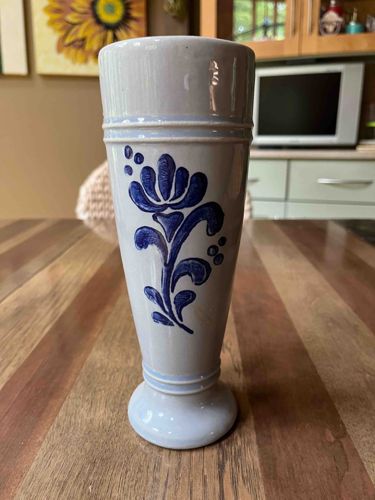
Standing approximately 9 inches tall and 4 inches in diameter at the widest point, this item is a ceramic vase or possibly a tall mug. It is constructed of stoneware or earthenware, featuring a light grey base color with hand-painted blue floral decoration and banding. The vessel has a slightly flared base, a straight cylindrical body narrowing slightly towards the top, and a simple rim. There are two horizontal bands of lighter blue around the lower portion of the body, just above the base, and another similar band encircling the body near the top rim. The primary decoration is a stylized blue floral motif on one side, depicting a prominent flower with multiple petals and scrolling foliage with several small dots. The ceramic appears to be in good condition with no visible chips, cracks, or repairs. The glaze shows a matte to semi-gloss finish. The style of decoration suggests a folk art aesthetic, possibly German or European in origin, likely dating to the mid to late 20th century. There are no visible maker's marks or signatures in the image. The quality of craftsmanship appears competent, with some variation in the hand-painted design indicative of artisan production rather than mass manufacturing.
AI Appraisal Report

·AI can make mistakes·Verify before acting
Having examined the image of this stoneware vase or mug, it appears to be in good condition with no visible chips, cracks, or repairs, which is a positive factor for value. The hand-painted blue floral decoration and banding suggest a folk art aesthetic, likely European stoneware, possibly German from the mid to late 20th century. The matte to semi-gloss glaze finish is typical for this type of piece. Determining authenticity from images alone has significant limitations. While the style is consistent with folk art stoneware of that period, I cannot definitively confirm its origin, age, or maker without a physical inspection. An in-person examination would allow me to inspect the quality of the clay, the application of the glaze and paint more closely, and search for any subtle impressed marks or signs of production not visible in the image. Provenance documentation, such as original receipts or historical records, would also be crucial for verifying its history and origin. Market conditions for this type of decorative folk art stoneware are generally stable but not experiencing high demand. Comparable pieces of similar age and aesthetic, without specific maker attribution, typically fall within a certain price range at auction or retail. Demand is primarily driven by collectors of European folk art and decorative ceramics. Rarity is not particularly high for unsigned pieces from this period. Factors significantly impacting value include the lack of a visible maker's mark (which could identify a specific artist or pottery), the generic nature of the decoration (while attractive, it's not tied to a known pattern or region without further information), and the difficulty in pinpointing the exact age and origin without physical examination. The good condition is a positive, but the lack of definitive attribution limits the potential value. Based on its apparent condition and style, and considering the limitations of image-based assessment, its value on the secondary market is primarily decorative.

Get your items appraised

Instant estimates of your treasures with AI-powered appraisals

Browse More Appraisals