AI estimate as of October 20, 2025 · verify with a professional before acting
AI-Generated · Verify before acting
Everything on this page is generated by AI for informational purposes only. AI can make mistakes — the AI may misidentify items or misattribute them (artist, maker, brand, designer, origin, era). This is not an official valuation and should not be used for insurance, sale, tax, estate, legal, or lending purposes — or any decision requiring a certified appraisal. It is not an authoritative claim about any person, brand, or rights holder — do not share or rely on it as a factual statement about a third party. Always consult qualified professionals before making financial decisions.
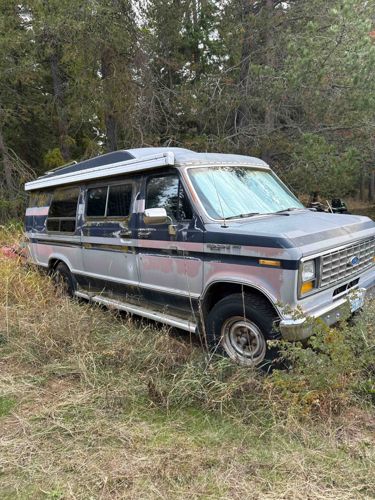
This item is a Ford Econoline E-Series van, likely from the late 1980s or early 1990s based on its body style, which has been converted into or sold as a camper van. The vehicle features a two-tone paint scheme, primarily dark blue or black on the upper half and silver on the lower half, with a thin pink or magenta stripe separating the two colors. A distinct high-top camper shell, seemingly integrated into the roof, is present, offering additional interior height. An awni ng mechanism is visible along the side of the camper shell, indicating outdoor living capabilities. The front grille is chrome with a rectangular egg-crate design, characteristic of Ford vans from that era, and bears the Ford emblem. Rectangular headlights and amber turn signal lenses are also visible. The driver's side features multiple windows, suggesting a passenger or recreational vehicle configuration. The vehicle sits on what appear to be steel wheels with a worn metallic finish. Notable condition issues include extensive paint fade, peeling, and surface rust on various body panels, particularly on the silver sections and around the wheel wells. The rubber trim and weatherstripping around the windows and windshield appear brittle and aged. The windshield is covered by a reflective sunshade, and the entire vehicle is surrounded by overgrown grass and vegetation, indicating it has been stationary for an extended period, suggesting abandonment or long-term storage in a rural or undeveloped setting. There are no visible manufacturer's marks or signatures beyond the Ford emblem on the grille, and any interior details are obscured. Overall, the van exhibits significant wear and tear consistent with its age and apparent neglect, suggesting it would require substantial restoration for roadworthiness or recreational use.
AI Appraisal Report
Based on my visual examination of the provided image, this Ford Econoline E-Series camper van, likely from the late 1980s or early 1990s, is in significantly neglected condition. Its authenticity as an E-Series van is clear from the body style and grille, consistent with that era. The two-tone paint scheme with the pink stripe, integrated high-top, and awning suggest a factory or professional camper conversion, adding to its original utility. However, the current state of extensive paint fade, peeling, surface rust, particularly on the silver sections and around wheel wells, is highly detrimental. The weathered rubber trim and surrounding overgrown vegetation strongly indicate long-term abandonment.
Market conditions for pre-1995 camper vans show a strong divide; well-maintained, ready-to-use examples can command significant prices, but those requiring extensive restoration, like this one, are typically sold at or near scrap value. Comparables for non-running or heavily deteriorated vans in this vintage typically range from $500 to $2,000, depending heavily on the structural integrity and engine condition. The demand for restoration projects exists, but the financial commitment required here would be substantial. Rarity is not a significant factor; while older camper conversions are less common, this model in this condition isn't particularly unique.
Factors significantly impacting value negatively are the visible body rust, paint degradation, apparent non-running state (implied by vegetation), and unknown mechanical condition. Positively, the integrated high-top and awning are desirable features for a camper, if salvageable. The main limitation of this appraisal is the lack of physical inspection. To fully authenticate and accurately value, I would need a hands-on examination to assess chassis rust, structural integrity of the camper shell, engine and transmission condition, interior components, and confirm it's not suffering from hidden electrical or plumbing issues. Provenance documentation could confirm original conversion details. Without this, I estimate its value as a restoration project or parts vehicle at $500-$1,000.