AI estimate as of September 27, 2025 · verify with a professional before acting
AI-Generated · Verify before acting
Everything on this page is generated by AI for informational purposes only. AI can make mistakes — the AI may misidentify items or misattribute them (artist, maker, brand, designer, origin, era). This is not an official valuation and should not be used for insurance, sale, tax, estate, legal, or lending purposes — or any decision requiring a certified appraisal. It is not an authoritative claim about any person, brand, or rights holder — do not share or rely on it as a factual statement about a third party. Always consult qualified professionals before making financial decisions.
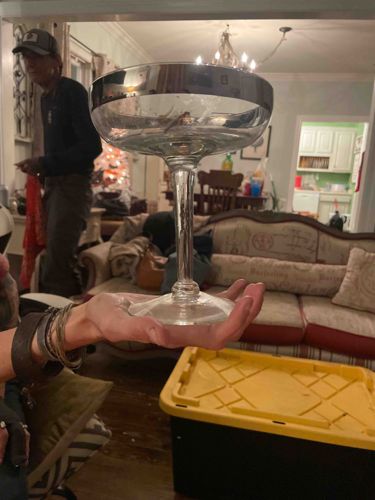
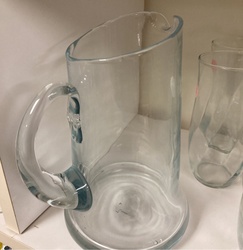
This item is a large glass coupe, likely used for serving cocktails, desserts, or as a decorative centerpiece. It appears to be made from clear, transparent glass for the stem and base, with a bowl that transitions from clear glass at the bottom to a broad, reflective silver rim at the top. The silver rim extends down approximately one-third to one-half of the bowl's depth, creating a striking contrast with the clear glass. The overall form suggests it's a classic coupe or champagne saucer design, characterized by its wide, shallow bowl and a slender stem. The stem is relatively tall, connecting the bowl to a circular base. The connection points between the base and the stem, and the stem and the bowl, appear sturdy. There are no visible chips, cracks, or significant wear on the glass itself, suggesting good condition. The silver rim's reflectivity is quite high, indicating it could be actual silver plating, a silver-colored metallic finish, or possibly mercury glass, although the latter is less likely given the clear lower portion of the bowl. The size of the coupe, as indicated by it being held in a person's hand, suggests it is larger than a standard drinking glass, possibly around 8-10 inches in height and 5-7 inches in diameter at the rim. Its elegant design points to a style popular from the Art Deco period through the mid-20th century, though similar designs are still produced today. Without maker's marks, a precise age is difficult to determine, but its aesthetic aligns with vintage barware. The craftsmanship appears to be of good quality, with smooth transitions between components, enhancing its decorative and functional appeal. There are no obvious manufacturing flaws or repairs visible.
AI Appraisal Report
Based on my visual examination of the provided image, this Silver Rimmed Glass Coupe appears to be in very good condition. There are no visible chips, cracks, or significant wear to the clear glass, and the silver rim maintains a high reflectivity, indicating minimal abrasion or tarnishing. Authenticity is difficult to ascertain solely from an image; while the design strongly suggests an Art Deco to mid-20th century aesthetic, similar styles are still produced. The 'silver' rim could be actual silver plating, a metallic finish, or possibly mercury glass, though the latter is less likely given the clear lower bowl. An in-person examination would be crucial to determine the exact material of the rim, assess its thickness, and search for any subtle maker’s marks or manufacturing characteristics not visible in the photo. Without provenance or physical inspection, I cannot definitively confirm its age or manufacturer.
Market conditions for vintage barware, particularly coupes, are generally stable, with a moderate demand for quality pieces. Comparables for similar silver-rimmed or platinum-banded coupes from the mid-century period typically range from $15 to $40 per glass, depending on the maker, condition, and desirability of the pattern. This item, being a single, larger coupe, may command a slightly higher individual price. Its elegant design and apparent excellent condition contribute positively to its value. However, without a confirmed manufacturer, material (especially the silver component), or historical significance, it remains largely a decorative and functional item. Rarity is difficult to assess without maker identification; it does not appear to be an exceptionally rare form. Therefore, the value reflects its condition and aesthetic appeal, rather than confirmed vintage or designer status.