Quartzite Cobble or River Stone
Geological Specimens

Quartzite Cobble or River Stone

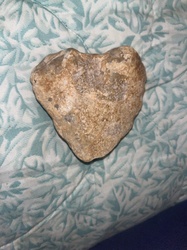
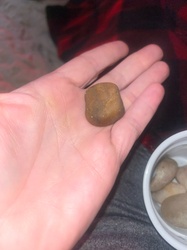
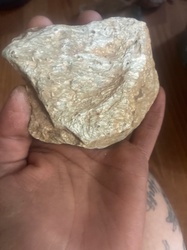
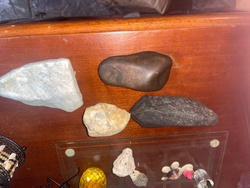
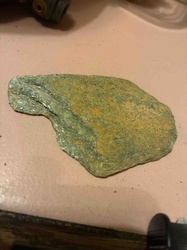
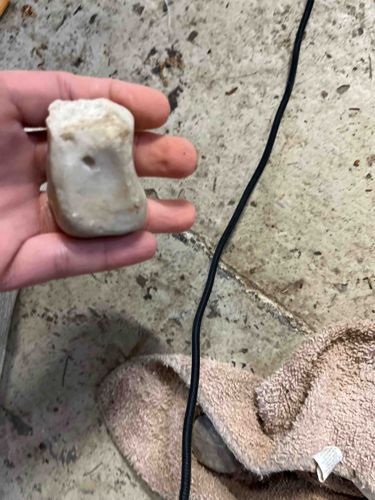
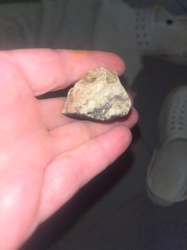
This object is a small, pale-colored stone cobble, likely of quartzite or a similar crystalline rock composition. Physically, it measures approximately 2 to 3 inches in length, fitting easily within a human hand. The color is predominantly a milky white or off-white with visible areas of tan and brown surface staining, likely from mineral oxidation or soil exposure. The edges are notably rounded and smoothed, which is a characteristic usually resulting from natural fluvial erosion—the action of water and sand in a riverbed or stream. Its shape is irregularly rectangular with one slightly flared end. Notable features include a small indentation or 'vug' on the primary face and some rougher texture at the top, suggesting a fracture point. In terms of condition, the stone displays natural 'patina' consisting of environmental staining and micro-pits common in found geological specimens. There are no man-made markings, signatures, or obvious signs of deliberate tool-working (lithic reduction) that would classify it as an artifact rather than a naturally occurring geofact. The item appears to be an unworked stone of geological origin with no specific manufacturing marks, suggesting it is a product of natural weathering processes over thousands of years.

Estimated Value

$0.00 - $5.00

Basic Information

Category

Geological Specimens

Appraised On

April 6, 2026

Estimated Value

$0.00 - $5.00

Item Description

This object is a small, pale-colored stone cobble, likely of quartzite or a similar crystalline rock composition. Physically, it measures approximately 2 to 3 inches in length, fitting easily within a human hand. The color is predominantly a milky white or off-white with visible areas of tan and brown surface staining, likely from mineral oxidation or soil exposure. The edges are notably rounded and smoothed, which is a characteristic usually resulting from natural fluvial erosion—the action of water and sand in a riverbed or stream. Its shape is irregularly rectangular with one slightly flared end. Notable features include a small indentation or 'vug' on the primary face and some rougher texture at the top, suggesting a fracture point. In terms of condition, the stone displays natural 'patina' consisting of environmental staining and micro-pits common in found geological specimens. There are no man-made markings, signatures, or obvious signs of deliberate tool-working (lithic reduction) that would classify it as an artifact rather than a naturally occurring geofact. The item appears to be an unworked stone of geological origin with no specific manufacturing marks, suggesting it is a product of natural weathering processes over thousands of years.
Get Your Items Appraised

Instant estimates of your treasures with AI-powered instant appraisals

Browse More Appraisals