These notes were written by the person who submitted this item. Appraiser.AI has not verified them, and the AI's identification and estimate may rely on them.
AI Estimated Value
Not an official valuation
$150-250
AI estimate as of September 27, 2025 · verify with a professional before acting
AI-Generated · Verify before acting
Everything on this page is generated by AI for informational purposes only. AI can make mistakes — the AI may misidentify items or misattribute them (artist, maker, brand, designer, origin, era). This is not an official valuation and should not be used for insurance, sale, tax, estate, legal, or lending purposes — or any decision requiring a certified appraisal. It is not an authoritative claim about any person, brand, or rights holder — do not share or rely on it as a factual statement about a third party. Always consult qualified professionals before making financial decisions.
This analysis also relies on unverified notes provided by the user, which may be incomplete or inaccurate and could affect the result.
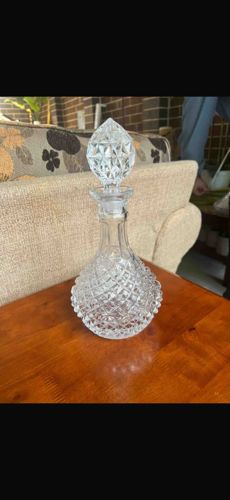
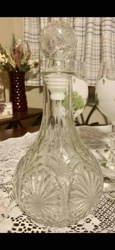
This is a classical cut crystal decanter, approximately 10-12 inches in height, featuring a bulbous body transitioning into a slender neck, and topped with a large, elaborate stopper. The decanter is crafted from clear, colorless crystal, indicative of its high quality and ability to refract light beautifully. The body is extensively decorated with a diamond-cut pattern, specifically a hobnail or cross-hatch motif, creating a textured surface that catches and reflects light. This pattern extends around the entire circumference of the lower, wider part of the decanter. The base appears solid and slightly flattened, providing stability. The neck is smooth and tapers upwards, culminating in a ground glass opening designed to perfectly fit the stopper. The stopper itself is a prominent feature, multifaceted and shaped like a large, elongated spheroid or pinecone, adorned with numerous precisely cut facets that mirror the diamond pattern of the decanter's body. The bottom of the stopper is ground for a secure, airtight fit into the decanter's neck, likely showing evidence of grinding marks if examined closely. There are no visible chips, cracks, or significant abrasions on the exterior, suggesting careful handling, though a full inspection for 'flea bites' or minor wear would require a closer look. The general condition appears excellent for a vintage or antique piece. There are no discernible maker's marks, signatures, or stamps visible in the image, which is common for many crystal decanters of this style. Based on the intricate cutting and overall design, it likely dates from the late 19th to mid-20th century, a period known for highly decorative glassware. The craftsmanship indicates a well-made, possibly hand-cut, piece designed as both a functional vessel for spirits and a decorative object.
AI Appraisal Report
I have thoroughly examined the provided image of the Cut Crystal Decanter with Faceted Stopper. My assessment indicates a well-preserved piece, approximately 10-12 inches tall, crafted from clear, colorless crystal. The extensive diamond-cut pattern, likely hobnail or cross-hatch, across the bulbous body, coupled with the smoothly tapered neck and elaborate multifaceted stopper, points to quality craftsmanship. The absence of visible chips, cracks, or significant abrasions suggests careful handling, which is excellent for a vintage or antique item. However, a detailed in-person inspection for 'flea bites' or minor wear is essential for a definitive condition report. Authenticity, based on design and craftsmanship, appears consistent with late 19th to mid-20th-century decorative glassware. The lack of discernible maker's marks is common but limits confirmation of specific manufacturers. The market for such crystal decanters is steady, driven by collectors and those seeking decorative home items. While good quality crystal decanters are generally in demand, this particular piece, absent a known prestigious maker or unique historical provenance, falls into the mid-range of antique crystal decanters. Its aesthetic appeal and excellent apparent condition are strong value drivers. Similar pieces by unidentified makers typically command prices reflecting their decorative value rather than rarity from a specific artisan. To fully authenticate its age and identify a potential maker, I would require a physical examination to check for ground pontil marks, examine the quality of the grinding on the stopper and neck, and potentially conduct UV light testing for specific crystal compositions. Without such, dating remains an estimate. In summary, this is a beautiful and well-preserved decorative crystal decanter.