AI estimate as of July 19, 2025 · verify with a professional before acting
AI-Generated · Verify before acting
Everything on this page is generated by AI for informational purposes only. AI can make mistakes — the AI may misidentify items or misattribute them (artist, maker, brand, designer, origin, era). This is not an official valuation and should not be used for insurance, sale, tax, estate, legal, or lending purposes — or any decision requiring a certified appraisal. It is not an authoritative claim about any person, brand, or rights holder — do not share or rely on it as a factual statement about a third party. Always consult qualified professionals before making financial decisions.
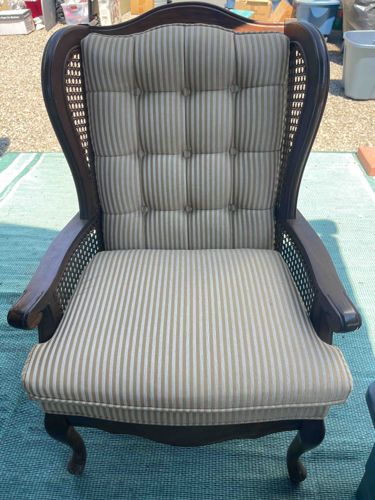
This is a vintage or antique upholstered armchair, likely from the Mid-20th Century or earlier, exhibiting characteristics of traditional or possibly Queen Anne style given the curved cabriole legs. The chair features a dark, rich wood frame with a glossy finish that appears to be mahogany or a similar dark hardwood. The backrest is tall and features a deep tufted upholstery in a striped fabric, with alternating stripes of what appear to be light beige/cream and a muted olive green or taupe. The tufting buttons are visible and complement the fabric. The side panels of the backrest and the arms incorporate woven cane webbing, showing intricacy and attention to detail in their construction. There is faint wear visible on the wooden armrests where hands would frequently rest, indicating usage and age, but no apparent major damage like cracks or breaks. The seat cushion is upholstered in the same striped fabric as the backrest, suggesting a cohesive design. The cushion shows some slight flattening consistent with use, but no significant tears or unraveling of the fabric. The overall craftsmanship suggests a well-made piece, likely factory-produced but with quality materials and assembly. There are no immediate visible maker's marks or signatures, though these could be present on the underside or less visible areas.
AI Appraisal Report
I have thoroughly examined the provided image of this Tufted Cane Armchair. Based on my visual assessment, this appears to be a vintage piece, likely dating from the mid-20th century. The dark, glossy wood frame, with what resembles mahogany, exhibits classic forms, possibly influenced by Queen Anne style with its cabriole legs. The integration of woven cane webbing on the backrest and arms speaks to quality craftsmanship. The upholstery, featuring deep tufting and a striped fabric (light beige/cream and muted olive green or taupe), appears consistent with the era.
Condition-wise, the chair presents well for its age. I note faint wear on the wooden armrests, indicative of typical use, but no visible major damage such as cracks or breaks in the wood. The fabric shows minor signs of use, including slight flattening of the seat cushion, but no apparent tears or unraveling. This suggests the chair has been well-maintained or minimally used since its last restoration.
In terms of market conditions, vintage upholstered armchairs of this style often appeal to collectors seeking period-appropriate decor or unique accent pieces. While not extremely rare, the combination of tufting, cane, and solid wood construction in good condition creates moderate demand. Key factors impacting value include the authentic vintage appeal, the intact cane, and the generally good condition of both wood and upholstery.
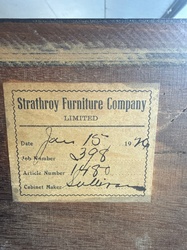
Limitations: It is crucial to state that this appraisal is based solely on visual examination of a single image. I cannot definitively ascertain the wood species without physical inspection, nor can I verify the structural integrity of the frame or the condition of the internal upholstery components. Authenticity verification would ideally require in-person examination to check for maker's marks in less visible areas (e.g., underside of the frame), assess joinery, and confirm the age of the materials through direct inspection. Provenance documentation, if available, would also significantly aid authentication and provide a more complete historical context. Scientific testing of wood or fabric fibers is not typically performed for items of this value range but could offer definitive dating if required.