AI Appraisal Estimate

AI-generated estimates · not official valuations

From the user

What was submitted

Photo and notes provided by the user — not generated by AI

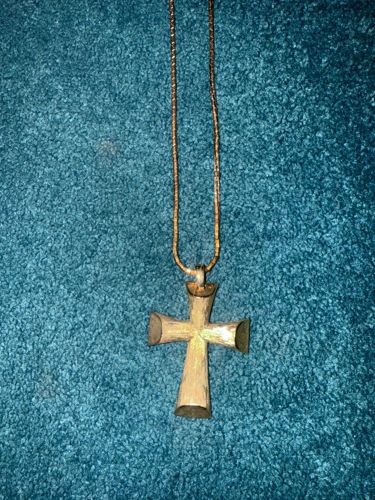
Submitted item photo
Submitted photo · June 12, 2026

User's notes

No additional notes provided.

AI analysis below

AI appraisal

AI analysis & estimate

AI-Generated · Verify before acting

Everything below is generated by AI for informational purposes only. AI can make mistakes — the AI may misidentify items or misattribute them (artist, maker, brand, designer, origin, era). This is not an official valuation and should not be used for insurance, sale, tax, estate, legal, or lending purposes — or any decision requiring a certified appraisal. It is not an authoritative claim about any person, brand, or rights holder — do not share or rely on it as a factual statement about a third party. Always consult qualified professionals before making financial decisions.

Read the full disclaimer

AI Identification

·Not independently authenticated·Verify before acting

Ethiopian Coptic Cross Pendant on Chain

Jewelry

AI Estimated Value

·Not an official valuation·Verify before acting

$75-125

As of June 12, 2026

AI Item Analysis

·AI can make mistakes·Verify before acting
This item is an Ethiopian Coptic cross pendant, crafted from what appears to be a base metal, possibly brass or bronze, given its warm, somewhat dulled gold tone. The cross features flared arms that widen significantly towards their ends, a characteristic design element of many Ethiopian crosses, suggesting a unique artisanal style. Each end of the cross arms, as well as the top where it connects to the bail, exhibits a slightly concave or hollowed-out appearance, which may be a result of its construction method, potentially involving folded or hammered sheet metal. The surface of the cross has a brushed or textured finish, contributing to its artisanal aesthetic rather than a highly polished look. There are no clear markings or engravings visible to identify a specific maker or purity of metal. The overall condition shows signs of age and wear, with a noticeable patina and some minor discoloration, particularly along the edges and within the recessed areas, suggesting it is not a new item. The bail, which connects the pendant to the chain, is integrated into the top arm of the cross and appears sturdy. The chain itself is a thin, possibly gold-toned metal, featuring a fine box or snake link pattern, and shows consistent wear and patina with the pendant. The craftsmanship appears to be hand-done, as evidenced by slight irregularities in the shaping of the cross arms, adding to its unique charm and indicating a potential age that predates modern mass production. Given the style, it is likely from the mid-20th century or earlier.
AI Appraisal Report

·AI can make mistakes·Verify before acting
I have examined the provided image of this Ethiopian Coptic cross pendant with its accompanying chain. My assessment indicates that this is an authentic example of a traditional Ethiopian Coptic cross, likely crafted from a base metal such as brass or bronze, as suggested by its warm, dulled gold tone and characteristic patina. The flared arms and the textured, somewhat irregular finish align well with traditional hand-crafted Ethiopian metalwork. The signs of age and wear, including noticeable patina and minor discoloration, are consistent with an item of its presumed vintage, which I estimate to be mid-20th century or earlier. Market conditions for such pieces are driven by their cultural and historical significance, rather than inherent material value. Demand exists among collectors of ethnic jewelry, religious artifacts, and world cultural items. While not exceedingly rare, older, authentic examples with good patination are more desirable. The craftsmanship appears hand-done, contributing to its unique charm, but also means consistency and precision are not hallmarks. Factors impacting value include its base metal composition, which keeps the intrinsic material value low. The primary value lies in its authenticity as a cultural artifact and its aesthetic appeal. The condition, showing expected wear for its age but no significant damage, also contributes positively. A key limitation from image-based appraisal is the inability to definitively verify metal composition or the precise age without in-person examination, which would allow for tactile inspection and possibly scientific analysis (e.g., XRF scanning for metal composition). Provenance documentation, if available, would significantly enhance authentication and value. Without these, my authentication is based solely on visual characteristics consistent with known examples.

Get your items appraised

Instant estimates of your treasures with AI-powered appraisals

Browse More Appraisals