AI Appraisal Estimate

AI-generated estimates · not official valuations

From the user

What was submitted

Photo and notes provided by the user — not generated by AI

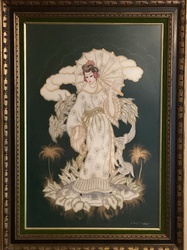
Submitted item photo
Submitted photo · June 6, 2026

User's notes

No additional notes provided.

AI analysis below

AI appraisal

AI analysis & estimate

AI-Generated · Verify before acting

Everything below is generated by AI for informational purposes only. AI can make mistakes — the AI may misidentify items or misattribute them (artist, maker, brand, designer, origin, era). This is not an official valuation and should not be used for insurance, sale, tax, estate, legal, or lending purposes — or any decision requiring a certified appraisal. It is not an authoritative claim about any person, brand, or rights holder — do not share or rely on it as a factual statement about a third party. Always consult qualified professionals before making financial decisions.

Read the full disclaimer

AI Identification

·Not independently authenticated·Verify before acting

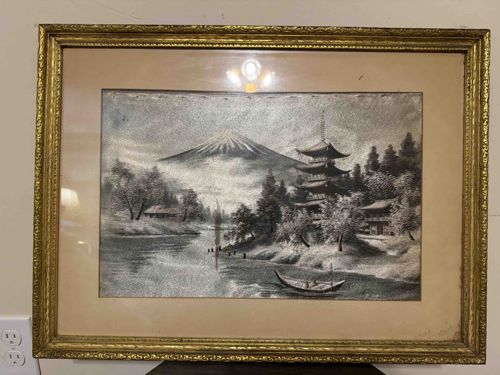
Japanese Silk Embroidery Landscape of Mount Fuji and Pagoda

Asian Fine Art & Textiles

AI Estimated Value

·Not an official valuation·Verify before acting

$400 - $600

As of June 6, 2026

AI Item Analysis

·AI can make mistakes·Verify before acting
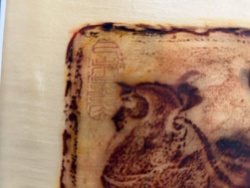
This is a detailed Japanese silk embroidery, likely dating from the early to mid-20th century. The piece depicts a traditional landscape featuring a snow-capped Mount Fuji in the background, a five-story pagoda, lush trees, a serene river with a small boat, and several traditional buildings. The work is executed in a monochromatic palette of grays, blacks, and whites, a style intended to mimic traditional ink wash paintings (sumi-e). The fine silk threads create a subtle sheen and depth through varying stitch directions and densities. The artwork is housed behind glass in a decorative gilt wood frame featuring a repeating floral or foliate relief pattern. Regarding condition, the textile appears to have some localized foxing or light staining on the far right edge of the matting area. The gilt frame shows signs of age with minor surface wear and a slight patina characteristic of vintage decorative arts. The craftsmanship is high, evidenced by the intricate layering of stitches to achieve the atmospheric effects of the clouds and mountain mist. No visible maker's mark or signature is seen in the photograph, which is common for such artisanal textile works produced for the souvenir or export market during the Showa era.
AI Appraisal Report

·AI can make mistakes·Verify before acting
I have conducted a visual examination of the Japanese silk embroidery depicting a landscape with Mount Fuji and a pagoda. Based on its stylistic attributes, this piece appears to be a high-quality example of 'Sui-Boku' style silk embroidery from the mid-20th century (Showa era). The monochromatic thread work successfully mimics the atmospheric perspective of traditional sumi-e wash paintings. The stitch density is impressive, particularly in the rendering of the clouds and the topographical texture of the mountain. Condition-wise, I note visible foxing—light brown oxidation spots typical of organic fibers—near the right edge. This suggests the piece has been exposed to humidity fluctuations. The gilt frame retains much of its original luster but shows minor age-related wear. The market for mid-century Japanese export textiles is stable but highly dependent on condition. While authentic to the era, these works were often produced for international travelers; the absence of a signature confirms its likely origin as a luxury artisanal souvenir rather than a commissioned masterpiece by a known studio like Iida Takashimaya. Comparables for framed silk embroideries of this scale and detail typically hammers in the $350-$700 range at regional auction houses. Limitation: This appraisal is based solely on digital images. A physical inspection is required to confirm the integrity of the silk backing and to check for hidden pest damage or light-induced thinning of the threads. Full authentication would require removing the piece from the frame to inspect the reverse for studio stamps or kanji signatures, and to confirm the wood type of the stretcher bar to further refine the date of manufacture.

Get your items appraised

Instant estimates of your treasures with AI-powered appraisals

Browse More Appraisals