Geometric Leaded Stained Glass Sash Window
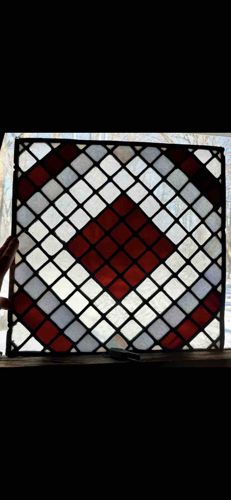
This item is a square architectural stained glass panel, likely a window sash or transom, featuring a geometric lattice pattern. The design is composed of small, diagonally-oriented squares (quarries) in varying shades of red and translucent frosted or white glass, arranged to create a central diamond motif framed by a corresponding red border. The construction utilizes traditional lead cames to join the individual glass pieces, with a thicker black lead or iron perimeter frame for structural integrity. The glass appears to have an undulating, handmade texture characteristic of rolled or cataract glass, which diffuses light softly. The lead work shows a consistent dark patina, suggesting significant age, likely dating to the late 19th or early 20th century (Victorian or Edwardian era). While the overall structure appears stable, some minor irregularities in the leading and slight bowing are visible, typical for salvaged architectural glass of this period. The craftsmanship is highly disciplined, with careful attention paid to the alignment of the diagonal grid. There are no visible maker's marks or signatures evident in the provided view, which is common for residential architectural components of this style.
AI-Generated Appraisal Disclaimer
Estimated Value
$450 - $650
Basic Information
Category
Architectural Antiques / Decorative Arts
Appraised On
March 7, 2026
Estimated Value
$450 - $650
Item Description
This item is a square architectural stained glass panel, likely a window sash or transom, featuring a geometric lattice pattern. The design is composed of small, diagonally-oriented squares (quarries) in varying shades of red and translucent frosted or white glass, arranged to create a central diamond motif framed by a corresponding red border. The construction utilizes traditional lead cames to join the individual glass pieces, with a thicker black lead or iron perimeter frame for structural integrity. The glass appears to have an undulating, handmade texture characteristic of rolled or cataract glass, which diffuses light softly. The lead work shows a consistent dark patina, suggesting significant age, likely dating to the late 19th or early 20th century (Victorian or Edwardian era). While the overall structure appears stable, some minor irregularities in the leading and slight bowing are visible, typical for salvaged architectural glass of this period. The craftsmanship is highly disciplined, with careful attention paid to the alignment of the diagonal grid. There are no visible maker's marks or signatures evident in the provided view, which is common for residential architectural components of this style.
Get Your Items Appraised
Instant estimates of your treasures with AI-powered instant appraisals