AI estimate as of October 30, 2025 · verify with a professional before acting
AI-Generated · Verify before acting
Everything on this page is generated by AI for informational purposes only. AI can make mistakes — the AI may misidentify items or misattribute them (artist, maker, brand, designer, origin, era). This is not an official valuation and should not be used for insurance, sale, tax, estate, legal, or lending purposes — or any decision requiring a certified appraisal. It is not an authoritative claim about any person, brand, or rights holder — do not share or rely on it as a factual statement about a third party. Always consult qualified professionals before making financial decisions.
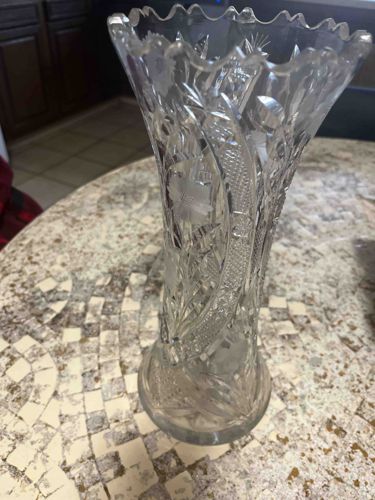
The item is a clear glass vase, likely cut glass, characterized by its intricate and highly decorative surface. The vase features a flared, undulating rim with a scalloped edge, suggesting a handcrafted finish rather than a machine-cut one. The body of the vase is adorned with a complex pattern that combines both floral and geometric motifs. Visible floral elements include etched or cut depictions of flowers, possibly roses or similar blooms, intertwined with leafy vines. These are contrasted with sharp, deeply cut diamond patterns and panels of cross-hatching, creating a rich visual texture that reflects light dramatically. A prominent feature is a swirling or ribbon-like band that wraps around the body, filled with fine, textured cutting. The base of the vase is circular and appears to be thicker to provide stability, also exhibiting some cut patterns, though less elaborate than the main body. The material is clear glass, exhibiting good clarity, which suggests it could be lead crystal given the brilliance and depth of the cuts. No specific maker's marks or signatures are discernible from the provided images. The overall style suggests a late 19th to early 20th-century period, common for highly embellished cut glass. There are no obvious signs of chips, cracks, or repairs, maintaining a good visible condition; however, typical wear commensurate with age, such as very fine scratches or slight cloudiness from water residue, cannot be definitively ruled out without closer inspection. The craftsmanship indicates a high level of skill in glass cutting and design, often associated with quality manufacturers of the era.
AI Appraisal Report
Upon visual examination of the provided image, I assess this cut glass floral and diamond pattern vase. The flared, scalloped rim, intricate floral, diamond, and cross-hatch cuts, along with the swirling band, strongly suggest it is a piece of American Brilliant Period (ABP) cut glass, likely dating from the late 19th to early 20th century. The clarity of the glass and the depth of the cuts point to lead crystal. The visual condition appears very good, with no obvious chips, cracks, or significant damage. However, without a physical inspection, I cannot rule out minor surface wear, flea bites, or internal imperfections common with age. Authenticity as an ABP piece is highly probable based on design and craftsmanship visible, though the absence of a maker's mark makes definitive attribution to a specific manufacturer impossible from images alone. In-person examination would be required to verify condition, test for lead content, and search for faint signatures.
Market conditions for ABP cut glass have softened over recent decades. While highly decorative, the supply often meets or exceeds demand for unmarked pieces, even those of good quality. There's a niche market for discerning collectors, but widespread demand is moderate. Rarity for this specific pattern, without a known maker, is not exceptionally high. Factors impacting value include the intricate cutting, apparent good condition, and overall aesthetic appeal. However, the lack of a known maker, coupled with the current market for cut glass, prevents it from reaching higher values reserved for signed, rare, or exceptionally large/complex pieces. Given these considerations, I place the appraisal value between $100 and $250. Full authentication for provenance or specific maker would require in-hand inspection and potentially scientific analysis.