AI identification & appraisal estimate

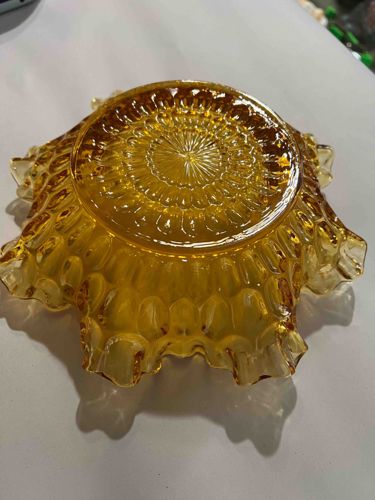
Amber Glass Ruffled Edge Bowl with Daisy & Button Pattern

Submitted photo of Amber Glass Ruffled Edge Bowl with Daisy & Button Pattern
Photo submitted by the user — not generated by AI

AI Estimated Value

Not an official valuation

$30-50

AI estimate as of September 9, 2025 · verify with a professional before acting

AI-Generated · Verify before acting

Everything on this page is generated by AI for informational purposes only. AI can make mistakes — the AI may misidentify items or misattribute them (artist, maker, brand, designer, origin, era). This is not an official valuation and should not be used for insurance, sale, tax, estate, legal, or lending purposes — or any decision requiring a certified appraisal. It is not an authoritative claim about any person, brand, or rights holder — do not share or rely on it as a factual statement about a third party. Always consult qualified professionals before making financial decisions.

Read the full disclaimer

AI Item Analysis

This is an antique or vintage small bowl crafted from pressed glass, exhibiting a rich amber or marigold color. The bowl features a distinctive ruffled or crimped edge, giving it an ornamental, flower-like appearance. The exterior and base are adorned with a repeating 'Daisy and Button' pattern, characterized by raised circular or oval 'buttons' interspersed with starburst or daisy-like motifs within recessed areas. The base of the bowl, which is visible in the inverted image, shows a prominent circular medallion with a detailed starburst or pinwheel design at its center, surrounded by concentric rings of the daisy and button pattern. The glass appears to be in remarkably good condition with a high degree of transparency and luster, suggesting minimal wear. There are no immediately obvious chips, cracks, or significant abrasions visible from this angle. The overall craftsmanship points to mass-produced pressed glass, likely from the late 19th to early 20th century, a popular period for patterned glassware in the United States and Europe. The color is consistent throughout, indicative of the original material rather than a later stain or coating. Its size appears to be moderate, suitable for a relish dish, candy dish, or small decorative accent. The quality is typical of collectible carnival glass or depression-era glass, known for its intricate patterns and vibrant colors produced using mechanical pressing techniques.
AI Appraisal Report

Based on my visual examination of the provided image, this Amber Glass Ruffled Edge Bowl with Daisy & Button Pattern appears to be in very good to excellent condition. The glass exhibits a clear luster with no immediately visible chips, cracks, or significant abrasions from this angle, which is a major positive for its valuation. The clarity of the amber color and the well-defined 'Daisy and Button' pattern suggest original manufacture without later staining or significant wear. This piece is characteristic of late 19th to early 20th-century pressed glass, often categorized as EAPG (Early American Pattern Glass) or, if iridized, Carnival Glass, although the image does not confirm iridescence. The 'Daisy and Button' pattern was immensely popular and produced by numerous glasshouses. While sought after by collectors, its widespread production means it is not particularly rare. Demand remains steady among collectors of vintage pressed glass and those seeking decorative amber pieces. Factors impacting value include its excellent condition, attractive ruffled edge, and classic pattern. However, the commonality of the pattern and the mass-produced nature of such items keep the value in a modest range. The lack of iridescence (Carnival Glass finish) would also place it lower than a similar piece with that added feature. Market comparables for similar EAPG Daisy and Button bowls in good condition typically fall within the $25-$75 range, with exceptional condition or rare variations fetching slightly more. Limitations: My authentication is based solely on the provided image. A full, in-person examination would be crucial to confirm the absence of subtle flaws (e.g., fleabites, internal fractures, or base wear) not visible in photographs. Physical inspection would also allow for a definitive assessment of glass quality, weight, and the presence of any maker's marks, which are rare on EAPG but could impact value. Provenance documentation could provide further assurance of authenticity and history, though it's uncommon for such mass-produced items.

Keep exploring

More decorative glassware appraisals

Get your items appraised

Instant AI-powered appraisal estimates from a photo

Browse More Appraisals