AI estimate as of August 23, 2025 · verify with a professional before acting
AI-Generated · Verify before acting
Everything on this page is generated by AI for informational purposes only. AI can make mistakes — the AI may misidentify items or misattribute them (artist, maker, brand, designer, origin, era). This is not an official valuation and should not be used for insurance, sale, tax, estate, legal, or lending purposes — or any decision requiring a certified appraisal. It is not an authoritative claim about any person, brand, or rights holder — do not share or rely on it as a factual statement about a third party. Always consult qualified professionals before making financial decisions.
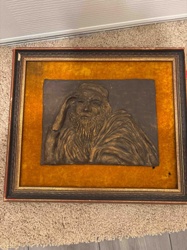
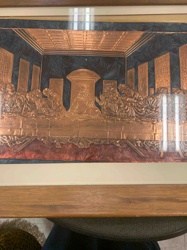
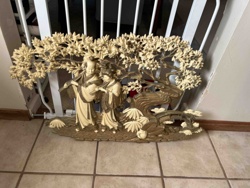
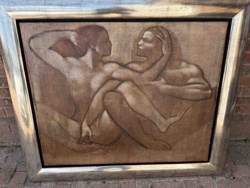
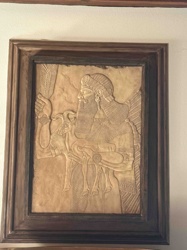
This item is a framed metal relief depicting four traditional Southeast Asian dancers, likely Apsara dancers, rendered in a bas-relief style. The artwork is characterized by its intricate detailing of the figures' attire, headdresses, and poses. Each dancer is depicted with a tall, pointed headdress and elaborately adorned traditional garments, indicating cultural significance. The figures appear to be in various kneeling or seated postures, with graceful hand gestures. The material used is a metallic sheet, possibly copper or brass, which has developed a notable patina, suggesting age. The color palette of the relief itself is predominantly earthy tones, ranging from a muted gold to a bronzy brown, consistent with aged metal. The background behind the figures is a lighter, flatter tone, serving as a contrast to the raised figures. The relief is housed within a simple, dark-colored wooden frame, possibly stained or painted a dark brown or black, enhancing the visual focus on the artwork. A faint golden or lighter-colored inner line can be seen along the perimeter of the artwork, separating it from the frame, which might be a mat or a slim inner frame. There are no immediately discernible manufacturing marks or signatures visible from the provided image. The overall condition appears stable, with the patina being a natural aging effect rather than damage. The craftsmanship indicates a level of skill in metalworking, particularly in forming the intricate details of the figures. Based on the subject matter and style, this piece likely dates from the 20th century, possibly mid to late, reflecting a traditional art form.
AI Appraisal Report
I have carefully examined the provided image of the framed metal relief depicting four traditional Southeast Asian dancers, likely Apsara dancers. From a visual perspective, the item appears to be in good condition, with the notable patina being consistent with natural aging of the metallic sheet, possibly copper or brass. This patina enhances the aesthetic appeal and suggests authenticity in its age. The intricate detailing of the figures' attire, headdresses, and poses demonstrates skilled craftsmanship in bas-relief metalwork. The simple dark wooden frame with a lighter inner line complements the artwork well, focusing attention on the relief.
Regarding authenticity, based solely on the image, the piece appears to be a genuine decorative artwork from the 20th century. However, definitive authentication of the metal composition, exact age, and origin would require in-person examination. A physical inspection would allow for tactile assessment of the metal, examination of the reverse side for any markings or construction details, and potential application of non-invasive scientific testing (e.g., XRF analysis) to confirm material composition and age.
In terms of market conditions, similar framed metal reliefs, particularly those depicting traditional Asian art forms, generally find interest among collectors of ethnographic art, decorative arts, and those seeking unique global decor. While not exceptionally rare, pieces demonstrating good craftsmanship and age, like this one, maintain a steady demand. Comparables in the market for decorative metal reliefs of this size and detail typically range from a few hundred to over a thousand dollars, depending heavily on provenance, confirmed age, and artist attribution. The absence of a visible signature or manufacturing mark limits its valuation to a purely decorative basis, rather than an artist-driven investment piece. My valuation considers it as an attractive decorative art object rather than a rare antique.
The key factors impacting its value are its good condition, the evident skill in its creation, and the appealing aged patina. The primary limitation in valuation is the lack of verifiable provenance or artist attribution, which would elevate its status and value considerably.
To fully authenticate and maximize value, I would recommend: 1) Physical examination to assess the quality of the metal, weight, and any hidden markings. 2) Research into potential regional artistic styles or workshops that produced similar works. 3) Professional cleaning, if deemed necessary, by a conservator specializing in metals, to potentially reveal hidden details or signatures without damaging the patina.