AI Appraisal Estimate

AI-generated estimates · not official valuations

From the user

What was submitted

Photo and notes provided by the user — not generated by AI

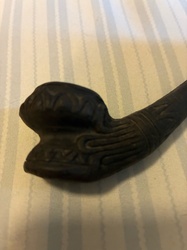
Submitted item photo
Submitted photo · May 25, 2026

User's notes

Caddoan crystal ceremonial

AI analysis below

AI appraisal

AI analysis & estimate

AI-Generated · Verify before acting

Everything below is generated by AI for informational purposes only. AI can make mistakes — the AI may misidentify items or misattribute them (artist, maker, brand, designer, origin, era). This is not an official valuation and should not be used for insurance, sale, tax, estate, legal, or lending purposes — or any decision requiring a certified appraisal. It is not an authoritative claim about any person, brand, or rights holder — do not share or rely on it as a factual statement about a third party. Always consult qualified professionals before making financial decisions.

Note

This analysis also relies on unverified notes provided by the user, which may be incomplete or inaccurate and could affect the result.

Read the full disclaimer

AI Identification

·Not independently authenticated·Verify before acting

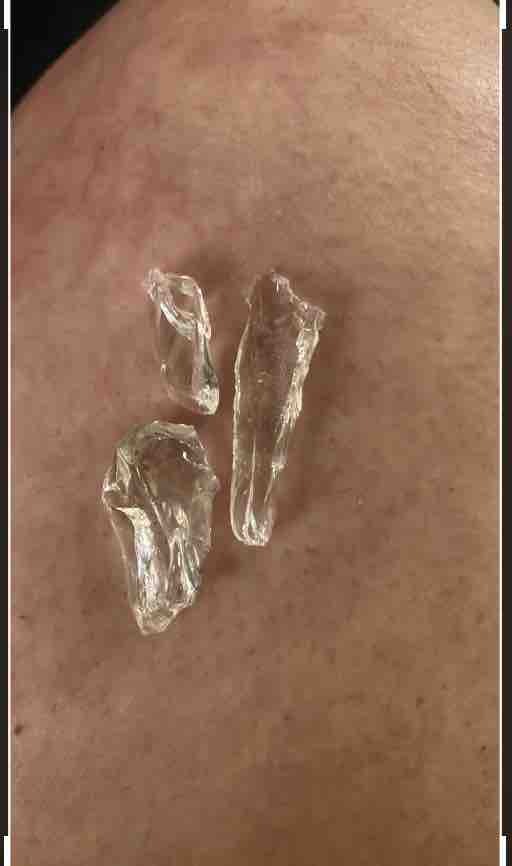
Caddoan Crystal Ceremonial Lithics

Native American Pre-Columbian Artifacts

AI Estimated Value

·Not an official valuation·Verify before acting

$1,200 - $1,800 USD

As of May 25, 2026

AI Item Analysis

·AI can make mistakes·Verify before acting
This set of three lithic artifacts consists of clear, high-quality quartz crystal, associated with the Caddoan Mississippian culture. The pieces exhibit a high degree of transparency with minimal internal clouding, suggesting intentional selection of premium raw material. The group includes one elongated point or blade fragment and two smaller, irregularly shaped flakes or tools. The long piece shows evidence of pressure flaking along its margins, though the refractive nature of the crystal makes flake scars subtle. The textures vary from smooth, glass-like surfaces to jagged, conchoidal fracture edges at the points of termination or breakage. In terms of condition, the items show edge wear consistent with age, with some minor micro-chipping along the utilitarian or ornamental edges. There is a lack of significant patination, which is typical for silica-based minerals like quartz, but microscopic examination might reveal soil adherence or mineral deposits. These pieces are characteristic of ceremonial artifacts found in the Arkansas/Oklahoma/Texas region, where the Caddo utilized local Ouachita Mountain quartz. The craftsmanship indicates a sophisticated understanding of difficult-to-knap lithic materials, often reserved for high-status grave goods or ritual use during the Mississippian period (approx. 800–1450 CE).
AI Appraisal Report

·AI can make mistakes·Verify before acting
Upon examination of this three-piece Caddoan crystal lithic set, the artifacts demonstrate characteristics consistent with high-status ceremonial items from the Mississippian period. The material is high-grade Ouachita quartz, prized for its clarity. The primary elongated blade shows evidence of pressure flaking that, while difficult to execute in monocrystalline quartz, aligns with known Caddoan knapping traditions. The condition appears stable; the edge wear and micro-chipping are consistent with burial recovery rather than modern fabrication. In the current market, authentic Caddoan crystal pieces are highly sought after by collectors of Mississippian art. Recent auction results for documented ceremonial quartz blades of similar size have ranged significantly depending on provenance, though a set of this quality generally commands a premium. Rarity is high, as the skill required to work such brittle material without shattering it was reserved for specialized craftsmen. However, I must note that visual examination via digital imagery has limitations. Quartz does not develop a traditional patina, making it one of the most difficult materials to authenticate remotely. Replicas made with modern tools can be indistinguishable from ancient artifacts in photographs. A final valuation and guarantee of authenticity would require an in-person microscopic analysis to identify 'bridge' signatures of stone-tool percussion versus modern mechanical grinding, as well as a review of detailed provenance records or site-specific documentation. Without a confirmed 'find-site' history, the value remains at the stated estimate; with iron-clad provenance, the value could exceed $2,500.

Get your items appraised

Instant estimates of your treasures with AI-powered appraisals

Browse More Appraisals