AI Appraisal Estimate

AI-generated estimates · not official valuations

From the user

What was submitted

Photo and notes provided by the user — not generated by AI

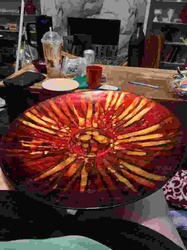
Submitted item photo
Submitted photo · June 25, 2026

User's notes

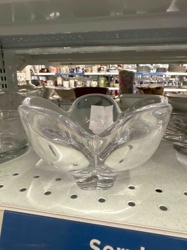
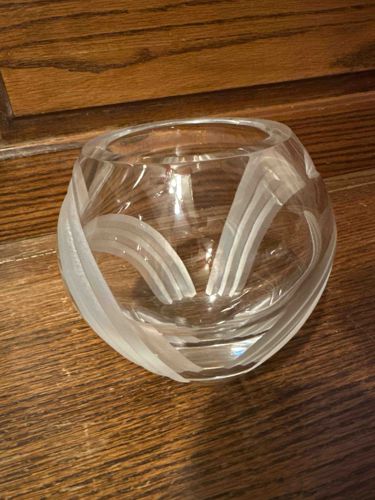
Clear, heavy, deep etching around perimeter in one design with 1/4” thick smooth rim

AI analysis below

AI appraisal

AI analysis & estimate

AI-Generated · Verify before acting

Everything below is generated by AI for informational purposes only. AI can make mistakes — the AI may misidentify items or misattribute them (artist, maker, brand, designer, origin, era). This is not an official valuation and should not be used for insurance, sale, tax, estate, legal, or lending purposes — or any decision requiring a certified appraisal. It is not an authoritative claim about any person, brand, or rights holder — do not share or rely on it as a factual statement about a third party. Always consult qualified professionals before making financial decisions.

Note

This analysis also relies on unverified notes provided by the user, which may be incomplete or inaccurate and could affect the result.

Read the full disclaimer

AI Identification

·Not independently authenticated·Verify before acting

Mid-Century Modern Frosted and Polished Art Glass Rose Bowl

Art Glass / Decorative Collectibles

AI Estimated Value

·Not an official valuation·Verify before acting

$150 - $250

As of June 25, 2026

AI Item Analysis

·AI can make mistakes·Verify before acting
This item is a spherical art glass vase, commonly referred to as a rose bowl or 'thick-walled' centerpiece bowl. Constructed from heavy, clear lead crystal or high-quality flint glass, it features a distinctive 1/4 inch thick smooth-ground and polished rim. The most striking decorative element is the deep, semi-translucent frosted etching that wraps around the perimeter. The design consists of overlapping, stylized arching swaths or 'ribbons' that create a sense of dynamic movement. These frosted sections are deeply cut into the surface of the glass, creating a multi-dimensional effect where light interacts with both the polished clear surfaces and the matte-finished intaglio cuts. The quality of the glass indicates a high lead content, providing excellent clarity and significant weight for its size. Based on the geometric yet organic wave pattern, this piece is likely of Scandinavian (possibly Orrefors or Kosta Boda) or European (such as Rosenthal) origin, dating from the mid-to-late 20th century, circa 1960-1980. The craftsmanship is evident in the precision of the polishing and the uniformity of the frosted texture. The condition appears excellent with no visible chips, flea bites, or significant clouding, though some minor shelf wear (light scratches) is expected on the base. No visible signatures are apparent in the photo, though a faint acid-etched mark may be present on the bottom surface.
AI Appraisal Report

·AI can make mistakes·Verify before acting
I have carefully examined the high-resolution images of this Mid-Century Modern frosted and polished art glass rose bowl. The piece exhibits characteristics consistent with high-quality European production from the 1960s or 1970s, specifically reminiscent of the Vicke Lindstrand era at Kosta Boda or the 'Duo' series by Rosenthal. The 1/4 inch thick ground rim and the precision of the intaglio-cut frosted ribbons suggest a high level of craftsmanship and lead content. The condition appears to be excellent; the lack of visible flea bites or interior clouding (often caused by hard water) preserves the clarity essential for the piece's value. The current market for mid-level Scandinavian and European art glass remains stable, though unsigned pieces command lower prices than those with verifiable signatures such as Orrefors. Similar heavy-walled cut crystal bowls of this size and era typically hammer at auction or retail in the $150 to $250 range. The value is driven primarily by its aesthetic appeal and the 'Mid-Century Modern' design trend rather than extreme rarity. Limitations: Without physical inspection, I cannot confirm the presence of a faint acid-etched signature or evaluate the depth of shelf wear on the base, which can distinguish a modern reproduction from an authentic period piece. Full authentication would require an in-person examination under a loupe and blacklight to check for repairs or fluorescence consistent with period lead crystal. Provenance or original labeling would also solidify its origin and potentially increase the valuation toward the higher end of the spectrum.

Get your items appraised

Instant estimates of your treasures with AI-powered appraisals

Browse More Appraisals