AI estimate as of July 25, 2025 · verify with a professional before acting
AI-Generated · Verify before acting
Everything on this page is generated by AI for informational purposes only. AI can make mistakes — the AI may misidentify items or misattribute them (artist, maker, brand, designer, origin, era). This is not an official valuation and should not be used for insurance, sale, tax, estate, legal, or lending purposes — or any decision requiring a certified appraisal. It is not an authoritative claim about any person, brand, or rights holder — do not share or rely on it as a factual statement about a third party. Always consult qualified professionals before making financial decisions.
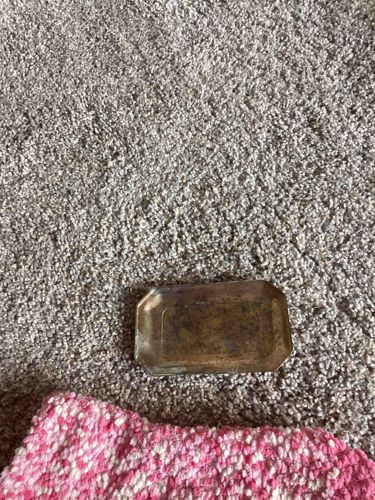
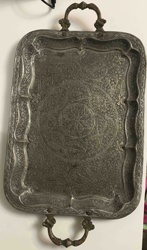
The item appears to be a small rectangular or octagonal tray, likely made of metal with a brass or bronze finish. Its dimensions are not readily available from the image, but it appears small enough to be a trinket tray, coin tray, or perhaps a decorative soap dish. The color is a muted, dark gold/brown, suggesting a significant level of patination or tarnish, which is consistent with aged brass or bronze. The tray features slightly elevated edges and a recessed center panel, creating a border effect around the perimeter. This raised border is not continuous but rather has cut corners, giving the tray an octagonal or truncated rectangular shape with eight distinct sides, though the overall form is predominantly rectangular. The surface shows clear signs of age and wear, including visible scratches and a mottled, uneven discoloration across the flat bottom. The patina is quite dark in some areas, while lighter, almost silvery tones are visible along the elevated rim and corners, possibly indicating areas where the original finish has worn away through handling. There are no clear identifying marks, signatures, or stamps visible in the provided image. The construction appears to be a single piece of pressed or cast metal. Given the visible age and extensive patina, it likely dates from the early to mid-20th century, possibly earlier, consistent with Art Deco or Arts and Crafts periods, though a definitive style is difficult to ascertain without more detail. The craftsmanship appears mass-produced rather than finely handcrafted due to the simple form and lack of intricate detail.
AI Appraisal Report
This octagonal metal tray, likely brass or bronze given its coloration and patination, exhibits clear signs of age and extensive wear. The condition is consistent with an object from the early to mid-20th century, displaying a rich, mottled patina, scratches, and uneven discoloration. The elevated edges and recessed center are typical of small utility trays. Authenticity, based solely on the image, points to a period piece rather than a modern reproduction, largely due to the authentic-looking wear and patina. The craftsmanship appears mass-produced, lacking intricate details often found in higher-value handcrafted items.
From a market perspective, small, unmarked metal trays like this generally fall into the decorative rather than collectible category. Comparables often include similar brass or bronze trinket dishes found in antique malls or online marketplaces for modest sums. Demand is limited, primarily driven by individuals seeking vintage decor or utilitarian items for small objects. Rarity is low; countless similar trays were produced during the early 20th century.
Factors significantly impacting value are the lack of maker's marks, premium material, or exceptional artistic merit. The wear, while authentic, also detracts from its aesthetic appeal for some buyers. Its primary value is as a functional decorative object with historical charm.
Limitations in authenticity verification are significant. Without physical examination, I cannot confirm the exact metal composition or rule out sophisticated contemporary aging techniques. In-person examination would allow for tactile assessment of material, weight, and a thorough search for any hidden marks. Provenance documentation could potentially link it to a renowned manufacturer or designer, dramatically increasing its value. Scientific testing, such as XRF analysis, would definitively confirm the metal alloy. Without these, the appraisal remains an estimation based on visual cues.