AI Appraisal Estimate

AI-generated estimates · not official valuations

From the user

What was submitted

Photo and notes provided by the user — not generated by AI

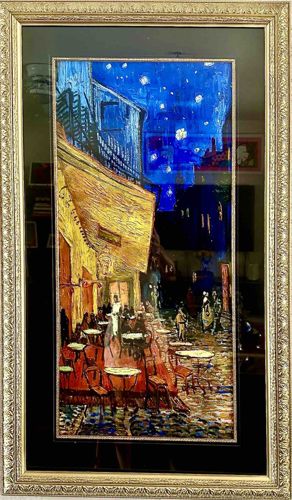
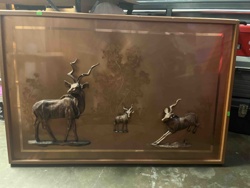
Submitted item photo
Submitted photo · June 10, 2026

User's notes

No additional notes provided.

AI analysis below

AI appraisal

AI analysis & estimate

AI-Generated · Verify before acting

Everything below is generated by AI for informational purposes only. AI can make mistakes — the AI may misidentify items or misattribute them (artist, maker, brand, designer, origin, era). This is not an official valuation and should not be used for insurance, sale, tax, estate, legal, or lending purposes — or any decision requiring a certified appraisal. It is not an authoritative claim about any person, brand, or rights holder — do not share or rely on it as a factual statement about a third party. Always consult qualified professionals before making financial decisions.

Read the full disclaimer

AI Identification

·Not independently authenticated·Verify before acting

Framed Reproduction of Vincent van Gogh's 'Café Terrace at Night'

Wall Art / Decorative Art

AI Estimated Value

·Not an official valuation·Verify before acting

$100 - $250

As of June 10, 2026

AI Item Analysis

·AI can make mistakes·Verify before acting
This item is a framed reproduction of Vincent van Gogh's famous painting, 'Café Terrace at Night' (also known as 'Café Terrace on the Place du Forum'). The reproduction appears to be a textured print or a hand-embellished giclée, designed to mimic the thick impasto brushstrokes characteristic of van Gogh's original work. The texture is prominent, especially visible in the yellow awning of the cafe and the deep blue of the night sky, including the luminous stars. The color palette faithfully reproduces the vibrant blues, yellows, oranges, and reds of the original, with the illuminated cafe contrasting sharply with the dark street and sky. The overall dimensions are typical for a framed print intended for home decoration, presented in a vertical orientation. Notable features include the detailed simulation of impasto, which gives the piece a three-dimensional quality and enhances its visual appeal. The frame itself is a substantial, ornate gilded or gold-painted wooden frame with intricate relief patterns, suggesting a classic or traditional aesthetic. It appears to be relatively new or well-maintained, with no obvious signs of significant wear or damage to the frame's finish visible from the provided images. The print is protected by glass or acrylic glazing, which shows some reflections from the surrounding environment, indicating its reflective surface. Given its nature as a reproduction, it is likely a modern piece, produced post-1900, with its style specifically replicating the Post-Impressionist period of the late 19th century.
AI Appraisal Report

·AI can make mistakes·Verify before acting
Upon visual examination of the provided images, this item is a framed reproduction of Vincent van Gogh's 'Café Terrace at Night'. My assessment is based on its nature as a print, likely a textured giclée, designed to replicate the original's appearance. It is not an original work by the artist but a decorative piece. The condition of both the print and the ornate gilded frame appears to be very good to excellent, with no visible damage, fading, or wear. Such reproductions are mass-produced and widely available on the market. The value is driven primarily by its decorative quality, the material of the print (textured giclée being of higher quality than a simple poster), and the substantial, ornate frame. The market for high-quality reproductions of famous artworks is stable, with demand coming from interior design and home decor sectors. Key factors impacting the value are the modern production, the quality of the print's texture, and the frame's condition. As a non-original, mass-market item, it has no rarity or artist-specific value. Its worth lies solely in its aesthetic appeal and material cost. It is crucial to note that this appraisal is based entirely on images. A full authentication of an original painting would require in-person examination of brushwork, canvas aging, stretcher marks, provenance documentation tracing ownership back to the artist, and scientific analysis such as pigment and canvas testing. However, for this piece, its identity as a reproduction is clear.

Get your items appraised

Instant estimates of your treasures with AI-powered appraisals

Browse More Appraisals