Chert Hand Axe Effigy Scraper
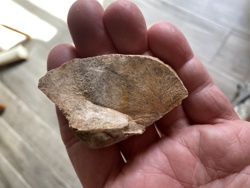
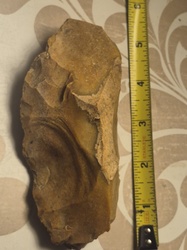
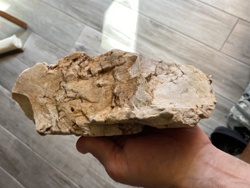
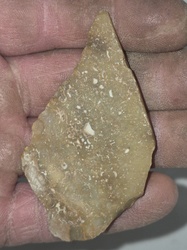
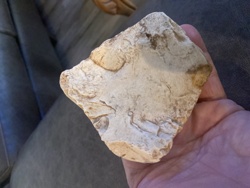
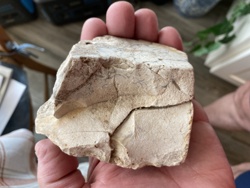
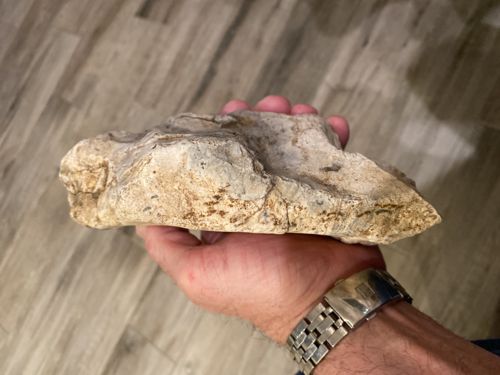
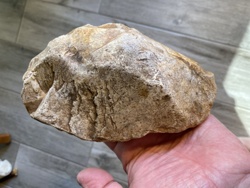
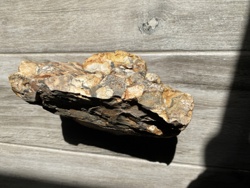
This specimen is a large lithic object identified as a Lower Paleolithic chert hand axe and scraper, measuring approximately 7 inches in length and 3.5 inches in width. The item is composed of a dense, cryptocrystalline sedimentary rock (chert) displaying a mottled tan, beige, and light gray color palette. It exhibits various surface textures, including smooth, weathered areas and more jagged, percussion-flaked edges consistent with intentional lithic reduction techniques. The object possesses a distinct ergonomic design, featuring a weighted base or 'butt' that fits comfortably into the palm, tapering towards a sharper longitudinal edge intended for scraping or cutting. There are visible patches of reddish-brown mineral staining and heavy patina, suggesting long-term exposure to soil minerals and significant age. Notable features include what may be interpreted as 'portable rock art'—surface contours and flake scars that, in certain lighting and orientation, appear to represent an effigy or zoomorphic form, though such features are often subjective in Paleolithic artifacts. The condition is stable, showing hundreds of thousands of years of natural weathering, micro-pitting, and edge wear consistent with a utilized prehistoric tool. The absence of modern mechanical grinding marks confirms its percussion-based manufacturing origin.
AI-Generated Appraisal Disclaimer
Estimated Value
$150 - $350
Basic Information
Category
Archeological Artifacts
Appraised On
February 19, 2026
Estimated Value
$150 - $350
Additional Details Provided By Owner
User Provided Information
Lower Paleolithic Chert hand axe scraper portable rock art effigy tool found in Guthie OK measuring 7" x 3.5"
Item Description
This specimen is a large lithic object identified as a Lower Paleolithic chert hand axe and scraper, measuring approximately 7 inches in length and 3.5 inches in width. The item is composed of a dense, cryptocrystalline sedimentary rock (chert) displaying a mottled tan, beige, and light gray color palette. It exhibits various surface textures, including smooth, weathered areas and more jagged, percussion-flaked edges consistent with intentional lithic reduction techniques. The object possesses a distinct ergonomic design, featuring a weighted base or 'butt' that fits comfortably into the palm, tapering towards a sharper longitudinal edge intended for scraping or cutting. There are visible patches of reddish-brown mineral staining and heavy patina, suggesting long-term exposure to soil minerals and significant age. Notable features include what may be interpreted as 'portable rock art'—surface contours and flake scars that, in certain lighting and orientation, appear to represent an effigy or zoomorphic form, though such features are often subjective in Paleolithic artifacts. The condition is stable, showing hundreds of thousands of years of natural weathering, micro-pitting, and edge wear consistent with a utilized prehistoric tool. The absence of modern mechanical grinding marks confirms its percussion-based manufacturing origin.
Related Tags
Get Your Items Appraised
Instant estimates of your treasures with AI-powered instant appraisals