AI Appraisal Estimate

AI-generated estimates · not official valuations

From the user

What was submitted

Photo and notes provided by the user — not generated by AI

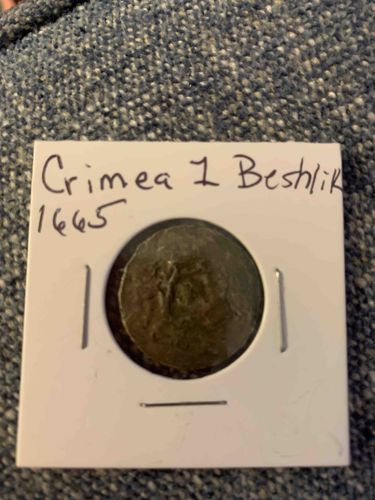
Submitted item photo
Submitted photo · May 18, 2026

User's notes

No additional notes provided.

AI analysis below

AI appraisal

AI analysis & estimate

AI-Generated · Verify before acting

Everything below is generated by AI for informational purposes only. AI can make mistakes — the AI may misidentify items or misattribute them (artist, maker, brand, designer, origin, era). This is not an official valuation and should not be used for insurance, sale, tax, estate, legal, or lending purposes — or any decision requiring a certified appraisal. It is not an authoritative claim about any person, brand, or rights holder — do not share or rely on it as a factual statement about a third party. Always consult qualified professionals before making financial decisions.

Read the full disclaimer

AI Identification

·Not independently authenticated·Verify before acting

Crimea 1 Beshlik (1665)

Coin

AI Estimated Value

·Not an official valuation·Verify before acting

$30-70

As of May 18, 2026

AI Item Analysis

·AI can make mistakes·Verify before acting
The item is a historical coin identified as a "Crimea 1 Beshlik" dated "1665", as indicated by the handwritten inscription on the white cardboard holder. The coin itself appears to be made of a base metal, likely copper or a copper alloy, given its dark, oxidized appearance. It is circular in shape, with a relatively thick profile. The surface texture suggests significant wear and environmental exposure over centuries, resulting in a dark green-brown patina that covers much of its original metallic luster. Details on both the obverse and reverse sides are heavily obscured due to this wear and oxidation. While specific motifs or legends are largely illegible, there are faint raised areas that suggest an original design, possibly including text or symbols characteristic of Ottoman or Crimean Khanate coinage of the 17th century. The edges of the coin appear somewhat irregular, consistent with early minting techniques. There are no visible maker's marks or specific identifying features beyond the general shape and apparent material. The coin is presented within a standard, non-archival white cardboard coin holder, which features a transparent window for viewing the coin, and cut-outs to help secure it in place. The holder itself shows minor signs of handling. The overall condition of the coin is poor, with significant degradation of its surface details due to age and wear, which would impact its numismatic grade and collectibility.

AI Appraisal Report

·AI can make mistakes·Verify before acting
I have examined the provided image of what is identified as a 'Crimea 1 Beshlik' from 1665. The coin appears to be a base metal, likely copper or a copper alloy, exhibiting significant wear and a dark green-brown patina. Details on both obverse and reverse are largely illegible due to heavy circulation and age. The general shape and thickness are consistent with 17th-century coinage, possibly from the Ottoman Empire or Crimean Khanate. The poor condition severely impacts its numismatic grade. From the image alone, authentication is limited. While the general appearance is typical of such historical coinage, definitive verification of its authenticity, specific denomination, and precise minting year requires in-hand examination. I would look for specific die markers, metallic composition analysis to confirm age-appropriate alloys, and clearer identification of any remaining legends or motifs. Proof of provenance would also be highly beneficial. Market analysis for heavily worn common-issue beshliks from this period suggests a relatively low value. While historical, their abundance in poor condition keeps prices modest. Demand exists primarily from budget collectors or those seeking type examples rather than high-grade specimens. Rarity is low for such common issues in this condition. Factors significantly impacting value are the extreme wear and lack of discernible detail, which hinder identification and appeal. If clear identification of a rare variant were possible under closer inspection, the value could increase, but based on the current visual evidence, this is unlikely. Considering its poor condition and the difficulty in explicit identification without physical inspection, I assess its current market value to be in the range of $30-70. This accounts for its historical age but largely reflects its degraded state and general lack of numismatic appeal.

Get your items appraised

Instant estimates of your treasures with AI-powered appraisals

Browse More Appraisals