AI Appraisal Estimate

AI-generated estimates · not official valuations

From the user

What was submitted

Photo and notes provided by the user — not generated by AI

Submitted item photo
Submitted photo · June 15, 2026

User's notes

Tapestry

AI analysis below

AI appraisal

AI analysis & estimate

AI-Generated · Verify before acting

Everything below is generated by AI for informational purposes only. AI can make mistakes — the AI may misidentify items or misattribute them (artist, maker, brand, designer, origin, era). This is not an official valuation and should not be used for insurance, sale, tax, estate, legal, or lending purposes — or any decision requiring a certified appraisal. It is not an authoritative claim about any person, brand, or rights holder — do not share or rely on it as a factual statement about a third party. Always consult qualified professionals before making financial decisions.

Note

This analysis also relies on unverified notes provided by the user, which may be incomplete or inaccurate and could affect the result.

Read the full disclaimer

AI Identification

·Not independently authenticated·Verify before acting

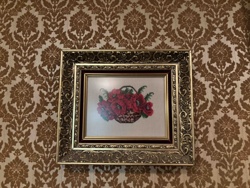
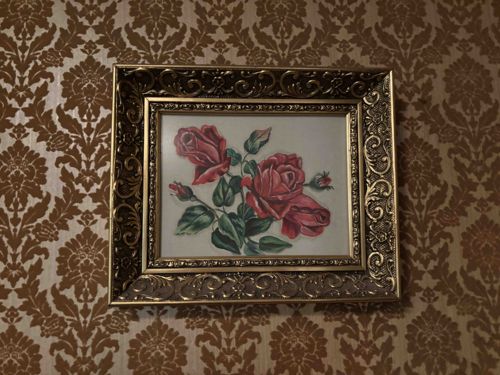
Framed Rose Motif Needlepoint/Tapestry

Decorative Arts / Framed Textiles

AI Estimated Value

·Not an official valuation·Verify before acting

$125 - $225

As of June 15, 2026

AI Item Analysis

·AI can make mistakes·Verify before acting
This item is a framed textile artwork, specifically a needlepoint or machine-woven tapestry featuring a classic floral motif of two blooming red roses with accompanying buds and green foliage set against a cream-colored background. The artwork is housed in a prominent, ornate gold-toned gilt frame with a deep profile. The frame exhibits elaborate high-relief scrollwork, floral carvings, and bead-and-reel border details, typical of mid-20th-century decorative styles or Hollywood Regency aesthetics. The roses are rendered with tonal shading in shades of crimson, pink, and burgundy, while the leaves utilize variegated greens to create a sense of depth and realism. The textile appears to be cotton or wool thread on a fine canvas ground, fitting within the tradition of petit point or fine needlework. The craftsmanship suggests a commercially produced decorative piece from the 1960s or 1970s, intended to evoke a Victorian or traditional European sensibility. The condition of the frame appears good with minor surface dust and potential light oxidation consistent with age, while the textile colors remain vibrant without significant fading or sagging. The piece is displayed against a damask-patterned wallpaper, which complements its traditional aesthetic.
AI Appraisal Report

·AI can make mistakes·Verify before acting
Upon visual inspection of the framed floral needlepoint, I find it to be a well-preserved decorative textile consistent with mid-to-late 20th-century production, likely circa 1965–1975. The central motif of two crimson roses is executed with tonal variations in a style typically seen in high-quality commercial kits of that era. The primary value driver is the ornate, gold-toned gilt frame; its high-relief scrollwork and bead-and-reel detailing are characteristic of the Hollywood Regency and Neo-Victorian revivals. The frame exhibits minimal oxidation, and the textile appears taut with no evidence of moisture damage or significant UV fading. Market demand for such pieces is currently moderate. While the vintage 'cottagecore' and traditionalist aesthetics have seen a resurgence, mass-produced needlepoints of this period remain relatively common. Comparables at auction and in specialty antique malls typically fetch between $100 and $250 depending on frame condition and the intricacy of the stitch work. The value here is hampered by a lack of rarity, as these motifs were widely distributed as domestic craft projects. Limitations of this appraisal include the inability to inspect the verso for manufacture labels or determine the exact material (wool vs. cotton) without a burn test or high-magnification fiber analysis. In-person examination would be required to confirm if the frame is solid wood with gesso or a molded synthetic composite. Additionally, opening the back to inspect for mounting acidity or foxing on the canvas edges would be necessary for a definitive condition report. No specific provenance was provided to suggest historical significance beyond its decorative function.

Get your items appraised

Instant estimates of your treasures with AI-powered appraisals

Browse More Appraisals