AI Appraisal Estimate

AI-generated estimates · not official valuations

From the user

What was submitted

Photo and notes provided by the user — not generated by AI

Submitted item photo
Submitted photo · June 18, 2026

User's notes

century

AI analysis below

AI appraisal

AI analysis & estimate

AI-Generated · Verify before acting

Everything below is generated by AI for informational purposes only. AI can make mistakes — the AI may misidentify items or misattribute them (artist, maker, brand, designer, origin, era). This is not an official valuation and should not be used for insurance, sale, tax, estate, legal, or lending purposes — or any decision requiring a certified appraisal. It is not an authoritative claim about any person, brand, or rights holder — do not share or rely on it as a factual statement about a third party. Always consult qualified professionals before making financial decisions.

Note

This analysis also relies on unverified notes provided by the user, which may be incomplete or inaccurate and could affect the result.

Read the full disclaimer

AI Identification

·Not independently authenticated·Verify before acting

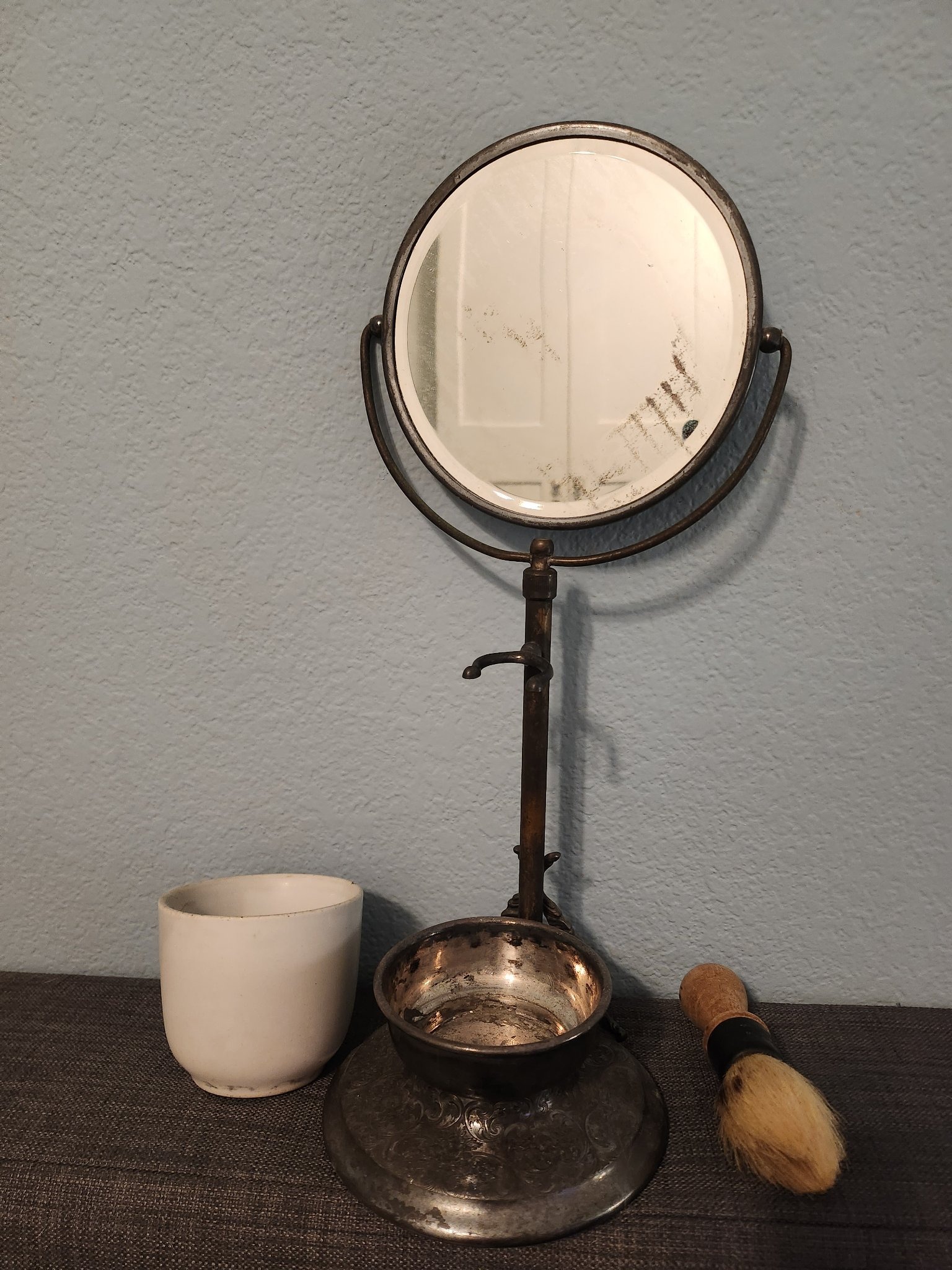
Late Victorian Silver-Plated Adjustable Grooming or Shaving Stand with Accessories

Antique Personal Grooming and Vanity Accessories

AI Estimated Value

·Not an official valuation·Verify before acting

$450 - $650

As of June 18, 2026

AI Item Analysis

·AI can make mistakes·Verify before acting
This is a multifaceted late 19th to early 20th-century grooming or shaving station, featuring an adjustable swiveling circular mirror mounted on a vertical brass or copper-alloy pillar. The central pillar is fixed to a broad, weighted base decorated with ornate Victorian-era repoussé scrollwork and floral motifs. The stand includes a distinctive hook at the midpoint, likely intended for a straight razor or hanging strop. The construction suggests a silver-plated finish over a base metal, which has developed a significant dark grey and blackish-brown patina, particularly in the recessed areas of the engraving. The circular mirror exhibits circular beveling and shows notable silvering degradation (foxing) with dark spots and streaking indicative of age-related moisture damage. Accompanying the stand is a white vitreous ceramic or porcelain cup, a shallow silver-plated metal bowl that fits into the weighted base, and a vintage badger-hair shaving brush with a turned wooden handle and a black ferrule. The overall condition reflects heavy usage with surface tarnishing, minor scratches, and wear to the silver plating, consistent with functional bathroom equipment from the turn of the century.
AI Appraisal Report

·AI can make mistakes·Verify before acting
After a thorough visual examination of this Late Victorian grooming stand, I have assessed it as an authentic piece of functional vanity hardware from the circa 1890-1910 period. The repouss) scrollwork and the specific wear patterns on the silver plating over its copper-alloy substrate are consistent with domestic items of this era. The foxing on the beveled mirror and the specific tarnish profile lend credence to its age, though they do pose a slight detraction from the overall value. The inclusion of the original ceramic cup and a period-appropriate badger-hair brush significantly enhances the set's desirability, as these accessories are frequently lost over time. Market demand for Victorian 'gentleman's' collectibles remains steady among interior designers and historical enthusiasts, though the heavy patina may require professional conservation to appeal to top-tier collectors. My valuation is based on similar sales of silver-plated vanity stands at regional auction houses and specialized antique dealers. Limitations to this appraisal include the inability to inspect the underside for maker's marks (such as Meriden B. Company or Wilcox) which could escalate the value if identified. Furthermore, a physical inspection is required to confirm the mechanical integrity of the swiveling mirror and to ensure the ceramic components are free of hairline fractures. Full authentication would require verifying the weight of the base and testing the metal for silver purity to rule out 20th-century reproductions.

Get your items appraised

Instant estimates of your treasures with AI-powered appraisals

Browse More Appraisals