AI Appraisal Estimate

AI-generated estimates · not official valuations

From the user

What was submitted

Photo and notes provided by the user — not generated by AI

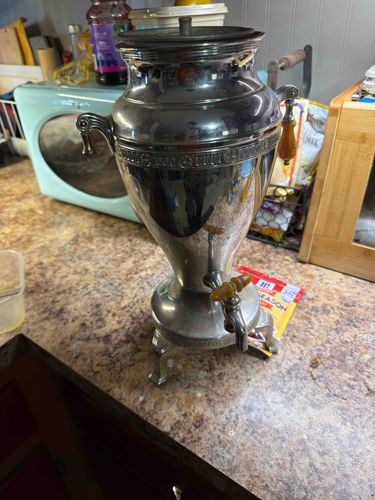
Submitted item photo
Submitted photo · May 25, 2026

User's notes

No additional notes provided.

AI analysis below

AI appraisal

AI analysis & estimate

AI-Generated · Verify before acting

Everything below is generated by AI for informational purposes only. AI can make mistakes — the AI may misidentify items or misattribute them (artist, maker, brand, designer, origin, era). This is not an official valuation and should not be used for insurance, sale, tax, estate, legal, or lending purposes — or any decision requiring a certified appraisal. It is not an authoritative claim about any person, brand, or rights holder — do not share or rely on it as a factual statement about a third party. Always consult qualified professionals before making financial decisions.

Read the full disclaimer

AI Identification

·Not independently authenticated·Verify before acting

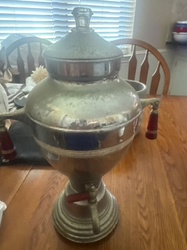
Early 20th Century Manning-Bowman Electric Coffee Percolator Samovar

Vintage Kitchen Appliances and Silverware

AI Estimated Value

·Not an official valuation·Verify before acting

$40–$75

As of May 25, 2026

AI Item Analysis

·AI can make mistakes·Verify before acting
This is a vintage electric coffee samovar/percolator, likely manufactured by Manning-Bowman & Co. around the early 1910s to 1920s. The piece is constructed from silver-plated copper or nickel-plated brass with an elegant urn-shaped body. It features a decorative Greek Key or Neo-Classical band around the upper shoulder, which adds to its formal aesthetic. The item stands on a four-legged pedestal base with scrolled feet, providing stability. Notable features include carved butterscotch Bakelite or celluloid handles and a matching spigot handle, which are characteristic of mid-to-high-end kitchenware of the period. The samovar includes its original lid with a small finial. Regarding condition, the metal surfaces show significant tarnishing and a dull patina, with some visible surface scratches consistent with age and use. There are minor indentations on the body. The electrical heating element is located at the base, although the original cord is missing in the image; the functionality of the internal heating unit is unverified. This piece reflects the transition from traditional alcohol-burning samovars to modern electric appliances, showcasing high-quality craftsmanship through its cast decorative elements and ergonomic handle design.
AI Appraisal Report

·AI can make mistakes·Verify before acting
Based on my visual examination of the images provided, this appears to be an authentic Early 20th Century electric coffee percolator samovar by Manning-Bowman & Co., likely dating to the 1910s or early 1920s. The Greek Key banding and the butterscotch Bakelite or celluloid handles are classic indicators of Manning-Bowman's 'Meriden' line from this era, a period when the company was transitioning from alcohol burners to electric heating elements. The condition, however, is a primary limiting factor for value. The plating (likely nickel over brass or copper) exhibits significant oxidation and a dull patina that will require heavy, careful polishing to restore. The missing power cord is a common issue, as these utilized specific, often obsolete, plug types. Furthermore, without physical testing, I must assume the heating element is non-functional or unsafe, relegating this piece largely to decorative use. If the heating element has shorted or corroded internally, restoration becomes cost-prohibitive. Market demand for these specific electric urns has softened compared to their earlier alcohol-burner counterparts, which are favored by collectors for their mechanism. Comparables in excellent, polished condition with working cords can reach $125–$175, but examples in 'as-found' condition with significant tarnish and missing components typically trade in the $40–$75 range. To provide a definitive higher valuation, I would need to physically inspect the interior for heavy scale or pitting, test the electrical continuity of the heating coil, and verify the specific model number usually stamped on the base.

Get your items appraised

Instant estimates of your treasures with AI-powered appraisals

Browse More Appraisals