AI estimate as of August 27, 2025 · verify with a professional before acting
AI-Generated · Verify before acting
Everything on this page is generated by AI for informational purposes only. AI can make mistakes — the AI may misidentify items or misattribute them (artist, maker, brand, designer, origin, era). This is not an official valuation and should not be used for insurance, sale, tax, estate, legal, or lending purposes — or any decision requiring a certified appraisal. It is not an authoritative claim about any person, brand, or rights holder — do not share or rely on it as a factual statement about a third party. Always consult qualified professionals before making financial decisions.
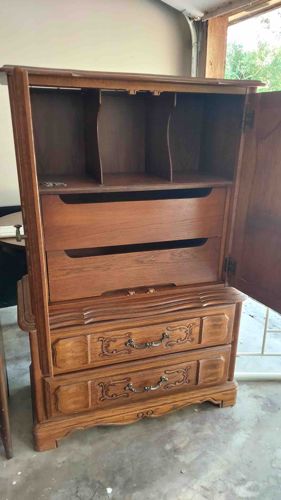
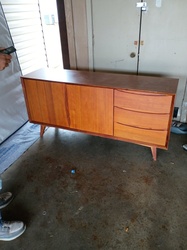
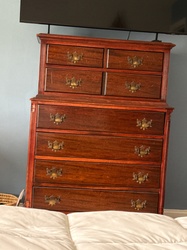
This is a vintage wooden TV armoire or media cabinet, likely from the mid to late 20th century, possibly reflecting a French Provincial or traditional American style. It is constructed primarily of wood, exhibiting a warm, medium-brown tone with a visible wood grain, suggesting it may be oak or a similar hardwood, or a quality veneer. The armoire features a tall, rectangular form with a single, hinged door on the right side, which is currently open, revealing the interior. The top section of the interior is designed for media components, with an open shelf and two arched, vertical dividers, possibly for organizing media like VHS tapes or DVDs, or even for holding books. Below this open shelving are two pull-out drawers, one directly beneath the top open section and another below it. The bottom section of the armoire comprises two larger, traditional drawers with ornate metal pull handles featuring an antiqued finish and decorative escutcheons. These pulls are a blend of bail handles and backplates with rococo-inspired scrolled designs. The drawer fronts themselves are detailed with carved or molded decorative framing, adding to the traditional aesthetic. The base of the armoire is a shaped, plinth-style base with intricate scrollwork and molding along the bottom edge, characteristic of period furniture. Visible condition issues include some wear and tear consistent with age and use, such as minor scratches, scuffs in the finish, and potentially some dust accumulation. No significant damage or repairs are immediately evident. The craftsmanship appears to be of good quality, with well-fitted components and decorative details that suggest a mass-produced but well-made piece of furniture.
AI Appraisal Report
Upon visual examination of the image provided, this vintage wooden TV armoire/media cabinet appears to be a well-preserved example of mid to late 20th-century furniture, likely reflecting French Provincial or traditional American design influences. Its construction, with a warm medium-brown tone and visible grain, suggests oak or a similar hardwood, possibly with quality veneer, though without physical inspection, I cannot confirm solid wood construction unequivocally. The decorative elements, including the ornate metal pull handles and carved/molded detailing, are consistent with mass-produced but well-made pieces from that era.
The condition appears good, with expected wear and tear—minor scratches and scuffs—consistent with age and use. No significant damage or repairs are immediately evident. I note the interior configuration, designed for media components and storage, which enhances its functionality.
In terms of market conditions, vintage furniture of this style experiences fluctuating demand. While 'brown furniture' saw a dip, there's a resurgence for well-proportioned, functional pieces that can be repurposed or integrated into eclectic decor. This specific piece's utility as a media cabinet or for general storage adds to its appeal. It's not rare, but its good condition and classic design contribute positively to its value.
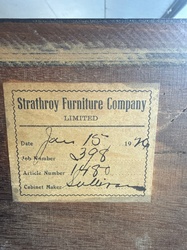
Factors impacting value include its good condition, functional design, and classic aesthetic. However, its mass-produced nature prevents it from reaching higher antique values. Limitations in authenticity verification from images alone include inability to confirm wood type, construction quality (e.g., dovetail joinery), and absence of manufacturer marks. A physical examination would allow for tactile assessment of materials, inspection of joinery, and identification of any hidden damages or repairs. Provenance documentation (e.g., original sales receipts) would offer further authentication of its age and origin.