Folk Art Hand-Carved Wooden Tribal Drum
Musical Instruments / Ethnographic Art

Folk Art Hand-Carved Wooden Tribal Drum

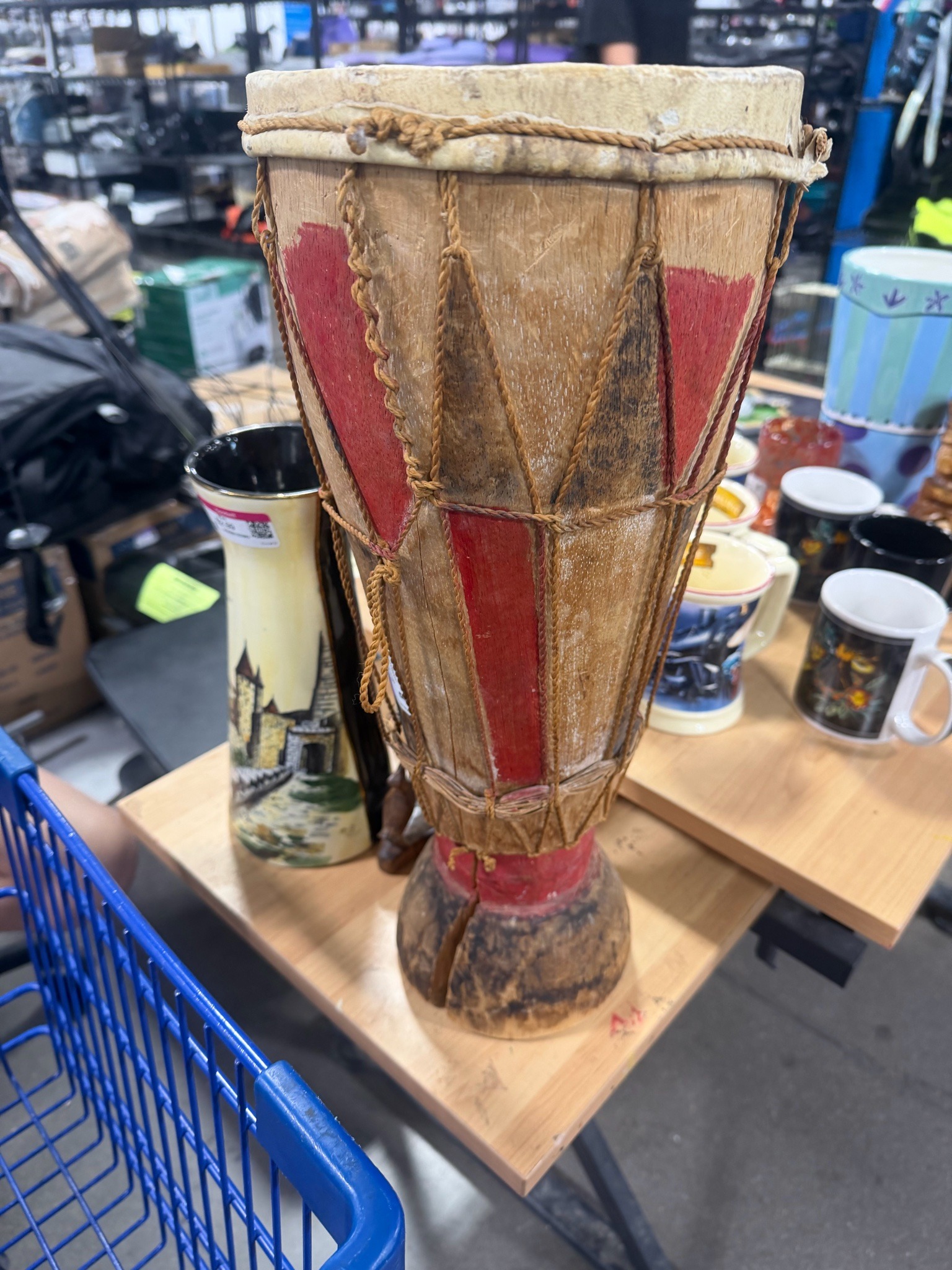
This is a hand-carved goblet-shaped drum, likely of African or Caribbean origin, featuring a single-piece wooden body. The construction exhibits traditional techniques, including a rawhide skin head secured by a complex network of woven fiber ropes. These ropes are tensioned in a geometric V-pattern across the upper two-thirds of the drum to maintain the skin's pitch. The wood displays a natural, coarse grain and is decorated with hand-painted red and black vertical triangular panels and stripes. In terms of condition, the item shows significant signs of age and ethnographic use. Most notably, there is a large structural crack through the rounded pedestal base, along with several smaller vertical splits in the wood. The paint is faded and worn throughout, and the rawhide head shows darkening and accumulation of dust. The rope tensioning system appears intact but aged, with some fraying. There are no visible maker's marks, suggesting it is an authentic piece of folk art or a handcrafted tourist trade item, likely dating from the mid-to-late 20th century. The craftsmanship is rustic yet sturdy, reflecting a functional musical instrument design with aesthetic tribal motifs.
Estimated Value

$150 - $250

Basic Information

Category

Musical Instruments / Ethnographic Art

Appraised On

April 21, 2026

Estimated Value

$150 - $250

Item Description

This is a hand-carved goblet-shaped drum, likely of African or Caribbean origin, featuring a single-piece wooden body. The construction exhibits traditional techniques, including a rawhide skin head secured by a complex network of woven fiber ropes. These ropes are tensioned in a geometric V-pattern across the upper two-thirds of the drum to maintain the skin's pitch. The wood displays a natural, coarse grain and is decorated with hand-painted red and black vertical triangular panels and stripes. In terms of condition, the item shows significant signs of age and ethnographic use. Most notably, there is a large structural crack through the rounded pedestal base, along with several smaller vertical splits in the wood. The paint is faded and worn throughout, and the rawhide head shows darkening and accumulation of dust. The rope tensioning system appears intact but aged, with some fraying. There are no visible maker's marks, suggesting it is an authentic piece of folk art or a handcrafted tourist trade item, likely dating from the mid-to-late 20th century. The craftsmanship is rustic yet sturdy, reflecting a functional musical instrument design with aesthetic tribal motifs.

Get Your Items Appraised

Instant estimates of your treasures with AI-powered instant appraisals

Browse More Appraisals