Vintage Freemasonry Square and Compasses Signet Ring
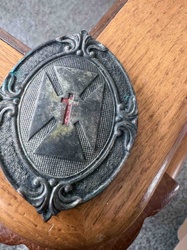
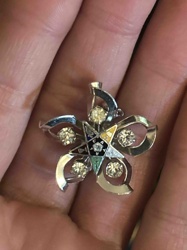
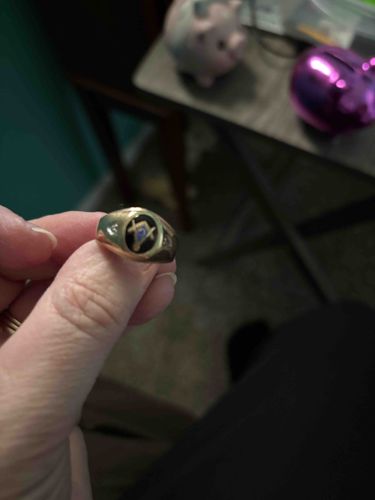
This is a yellow gold signet-style ring featuring the iconic Square and Compasses symbol of the Freemasons. The central decorative medallion consists of an oval black onyx or enamel face, inlaid with gold-toned metalwork depicting the compass and square with a prominent 'G' in the center, representing the Great Architect of the Universe. The ring appears to be made of 10k or 14k yellow gold, though internal hallmarking is not visible in this view. The shoulders of the ring feature decorative triangular or shield-shaped motifs that taper into a solid polished band. In terms of condition, the gold shows signs of surface wear and micro-scratching consistent with long-term use, particularly along the bottom of the shank. The central inlay remains intact, though the high-polished finish of the black backing shows some dullness from skin oils and age. The style suggests a manufacturing period in the mid-20th century, likely between 1940 and 1970, a peak era for fraternal organization jewelry. The craftsmanship is symptomatic of professional die-struck jewelry production, designed for durability and daily wear by a Mason.
AI-Generated Appraisal Disclaimer
Estimated Value
$450 - $650
Basic Information
Category
Antique and Vintage Jewelry / Fraternal Organization Memorabilia
Appraised On
April 3, 2026
Estimated Value
$450 - $650
Item Description
This is a yellow gold signet-style ring featuring the iconic Square and Compasses symbol of the Freemasons. The central decorative medallion consists of an oval black onyx or enamel face, inlaid with gold-toned metalwork depicting the compass and square with a prominent 'G' in the center, representing the Great Architect of the Universe. The ring appears to be made of 10k or 14k yellow gold, though internal hallmarking is not visible in this view. The shoulders of the ring feature decorative triangular or shield-shaped motifs that taper into a solid polished band. In terms of condition, the gold shows signs of surface wear and micro-scratching consistent with long-term use, particularly along the bottom of the shank. The central inlay remains intact, though the high-polished finish of the black backing shows some dullness from skin oils and age. The style suggests a manufacturing period in the mid-20th century, likely between 1940 and 1970, a peak era for fraternal organization jewelry. The craftsmanship is symptomatic of professional die-struck jewelry production, designed for durability and daily wear by a Mason.
Related Tags
Explore similar items and categories:
Get Your Items Appraised
Instant estimates of your treasures with AI-powered instant appraisals