AI estimate as of December 14, 2025 · verify with a professional before acting
AI-Generated · Verify before acting
Everything on this page is generated by AI for informational purposes only. AI can make mistakes — the AI may misidentify items or misattribute them (artist, maker, brand, designer, origin, era). This is not an official valuation and should not be used for insurance, sale, tax, estate, legal, or lending purposes — or any decision requiring a certified appraisal. It is not an authoritative claim about any person, brand, or rights holder — do not share or rely on it as a factual statement about a third party. Always consult qualified professionals before making financial decisions.
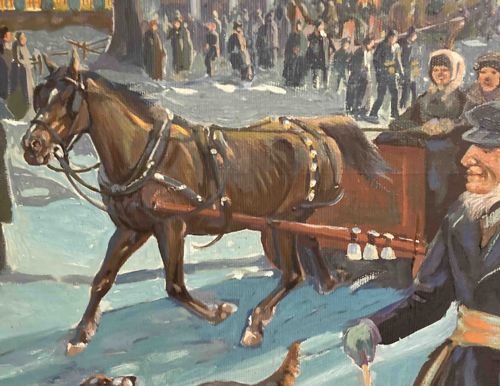
This item is an oil or acrylic painting depicting a lively winter street scene, likely set in a historical European or Russian urban environment. The central focus is a brown horse, meticulously rendered, pulling a single-horse sleigh. The horse is adorned with a harness that appears to be leather, possibly dark brown or black, featuring prominent light-colored studs or decorative elements, possibly silver-toned, particularly visible on the collar and saddle area. Its mane and tail are dark brown, almost black, and the horse itself has a rich, medium-brown coat with lighter brown or tan markings around its muzzle and eyes. The harness is connected to a wooden sleigh, painted a dark reddish-brown, which shows some visible wear and variations in color, suggesting age or use. Within the sleigh, parts of human figures are visible; specifically, the upper torso and head of a driver or passenger is seen on the right, wearing a dark blue cap and coat with a light fur or wool collar. Another figure, possibly a woman, with a light-colored head covering, is partially visible behind the driver. The background suggests a bustling street with numerous indistinct figures bundled in winter attire, and buildings that hint at an architectural style of perhaps the late 19th or early 20th century. The ground is covered in snow, rendered with cool blue and white tones, indicating a cold, crisp day. The brushwork appears somewhat loose and expressive, characteristic of impressionistic or realist painting styles from that period. There are no discernible artist signatures or marks visible in this cropped image. The overall condition appears good, with no obvious signs of cracking, flaking, or significant damage to the paint surface. The colors are vibrant and well-preserved.
AI Appraisal Report
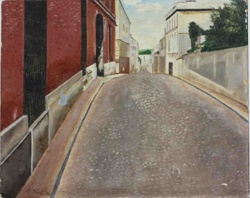
I have examined the provided image of the Winter Sleigh Scene Painting. The painting depicts a lively historical urban winter scene with a meticulously rendered brown horse pulling a sleigh. The brushwork suggests an impressionistic or realist style, with vibrant, well-preserved colors. Based on the image, the condition appears good, with no overt signs of cracking, flaking, or significant damage.
Authenticity verification is highly limited from an image alone. Without a visible signature or provenance, it is impossible to attribute an artist definitively. In-person examination would be required to assess the medium (oil vs. acrylic), canvas/board type, stretcher bar construction, and reverse side for any hidden marks, labels, or inscriptions. Scientific testing, such as pigment analysis, could determine age and authenticity more precisely.
Market conditions for unsigned winter street scenes, particularly those without a prominent artist, tend to be in the decorative art category. Comparable sales for similar unsigned works with good visual appeal typically range from a few hundred to just under a thousand dollars. Demand for well-executed, aesthetically pleasing winter scenes is generally consistent, but rarity is not a significant factor without artist attribution. The appeal lies in its decorative quality and nostalgic subject matter. Factors impacting value negatively include the lack of a signature and provenance, which prevents it from entering the fine art market at higher tiers. Conversely, its visual appeal and good condition support its decorative value.