Vertical Leaded Stained Glass Sidelight
Architectural Decorative Arts / Stained Glass

Vertical Leaded Stained Glass Sidelight

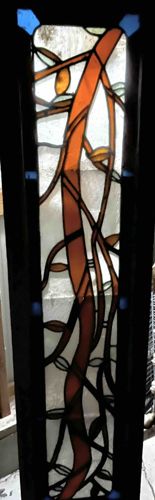
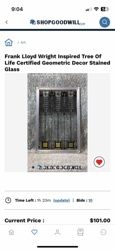
This is a tall, narrow vertical stained glass panel, likely used as a window sidelight. The piece features an organic, botanical motif of a winding vine or branch with attached leaves, rendered in a warm palette of amber, ochre, and orange opalescent glass. These elements are set against a background of textured, clear frosted glass, which provides privacy while allowing light diffusion. Structurally, the panel is constructed using the traditional leaded came method, with dark-patinated lead lines that define the intricate branch work. The corners and edges are accented with small blue square glass inserts. Regarding condition, the lead cames show a heavy, dark oxidation consistent with age, suggesting a late 19th to early 20th-century origins, possibly within the Arts and Crafts or Art Nouveau movement. Some hairline cracks are visible in the larger amber glass sections, and the leading appears slightly bowed in segments, indicating the panel may require stabilization or re-cementing. There are no visible maker's marks, but the quality of the glass cutting and the fluid design suggest professional craftsmanship typical of American residential artisan studios from the 1910s-1930s.
Estimated Value

$850 - $1,200

Basic Information

Category

Architectural Decorative Arts / Stained Glass

Appraised On

March 7, 2026

Estimated Value

$850 - $1,200

Item Description

This is a tall, narrow vertical stained glass panel, likely used as a window sidelight. The piece features an organic, botanical motif of a winding vine or branch with attached leaves, rendered in a warm palette of amber, ochre, and orange opalescent glass. These elements are set against a background of textured, clear frosted glass, which provides privacy while allowing light diffusion. Structurally, the panel is constructed using the traditional leaded came method, with dark-patinated lead lines that define the intricate branch work. The corners and edges are accented with small blue square glass inserts. Regarding condition, the lead cames show a heavy, dark oxidation consistent with age, suggesting a late 19th to early 20th-century origins, possibly within the Arts and Crafts or Art Nouveau movement. Some hairline cracks are visible in the larger amber glass sections, and the leading appears slightly bowed in segments, indicating the panel may require stabilization or re-cementing. There are no visible maker's marks, but the quality of the glass cutting and the fluid design suggest professional craftsmanship typical of American residential artisan studios from the 1910s-1930s.
Get Your Items Appraised

Instant estimates of your treasures with AI-powered instant appraisals

Browse More Appraisals