AI Appraisal Estimate

AI-generated estimates · not official valuations

From the user

What was submitted

Photo and notes provided by the user — not generated by AI

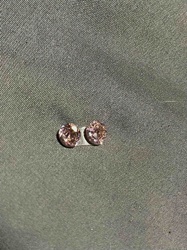
Submitted item photo
Submitted photo · May 19, 2026

User's notes

Sapphire

AI analysis below

AI appraisal

AI analysis & estimate

AI-Generated · Verify before acting

Everything below is generated by AI for informational purposes only. AI can make mistakes — the AI may misidentify items or misattribute them (artist, maker, brand, designer, origin, era). This is not an official valuation and should not be used for insurance, sale, tax, estate, legal, or lending purposes — or any decision requiring a certified appraisal. It is not an authoritative claim about any person, brand, or rights holder — do not share or rely on it as a factual statement about a third party. Always consult qualified professionals before making financial decisions.

Note

This analysis also relies on unverified notes provided by the user, which may be incomplete or inaccurate and could affect the result.

Read the full disclaimer

AI Identification

·Not independently authenticated·Verify before acting

Loose Teal Sapphire Gemstone

Loose Gemstones / Jewelry Components

AI Estimated Value

·Not an official valuation·Verify before acting

$450 - $700

As of May 19, 2026

AI Item Analysis

·AI can make mistakes·Verify before acting
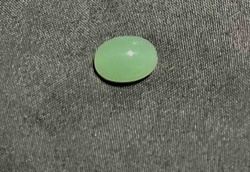
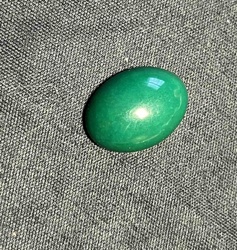
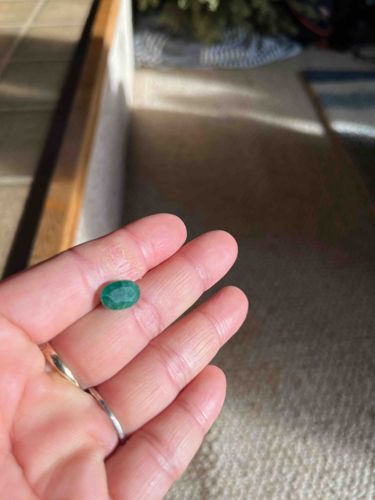
This item is a loose, oval-cut green/teal sapphire gemstone, estimated to be approximately 1.5 to 2.5 carats based on its visual size relative to the handler's finger. The stone exhibits a distinct greenish-blue or teal hue, which is a desirable color variant in the corundum family. The cut appears to be a traditional oval brilliant or mixed cut, featuring a faceted pavilion that helps reflect light, though the polish on the crown facets appears slightly dull or worn in this lighting. In terms of clarity, the gemstone shows visible internal characteristics, often referred to as 'gardens' or silk inclusions, which contribute to a slightly cloudy or translucent appearance rather than being eye-clean for a high-jewelry grade. There are no major visible chips on the girdle or edges, though minor surface abrasions may exist consistent with a loose stone being handled. The craftsmanship of the cut shows symmetrical faceting, suggesting modern lapidary work. The color saturation is moderate, and the presence of natural inclusions suggests it is likely an Earth-mined stone rather than a synthetic, though laboratory testing would be required to rule out thermal treatments common in the trade. This stone represents a contemporary or late 20th-century aesthetic frequently used in custom bespoke jewelry settings.
AI Appraisal Report

·AI can make mistakes·Verify before acting
I have virtually examined this loose oval-cut sapphire, which displays a secondary greenish-teal hue. At an estimated weight of 1.5 to 2.5 carats, the stone occupies a popular size bracket for bespoke engagement rings. The color saturation is moderate; however, the presence of 'silk' and internal 'gardens' impacts the transparency, resulting in a slightly cloudy appearance that prevents it from reaching premium high-jewelry grades. The facet symmetry is consistent with modern lapidary standards, though surface abrasions suggest the stone has been handled frequently. The current market for teal sapphires—often sourced from Montana, Australia, or Nigeria—is strong due to the rising demand for unique alternatives to traditional blue sapphires. While larger ‘eye-clean’ stones in this color range can command significantly higher prices, the visible inclusions in this specimen place it in a more accessible commercial-to-fine category. This valuation is based on visual characteristics and assumes the stone is natural and earth-mined. Several critical factors cannot be verified through images alone: the presence of heat treatment (standard in the trade but impacting value by 20-30%) or the use of diffusion/filling treatments. A definitive appraisal requires a physical inspection using a refractometer and 10x magnification to confirm the refractive index and internal structure. For full authentication and a higher valuation, a report from an accredited laboratory like the GIA or AGL would be necessary to certify the origin and treatment status.

Get your items appraised

Instant estimates of your treasures with AI-powered appraisals

Browse More Appraisals