AI Appraisal Estimate

AI-generated estimates · not official valuations

From the user

What was submitted

Photo and notes provided by the user — not generated by AI

Submitted item photo
Submitted photo · June 6, 2026

User's notes

No additional notes provided.

AI analysis below

AI appraisal

AI analysis & estimate

AI-Generated · Verify before acting

Everything below is generated by AI for informational purposes only. AI can make mistakes — the AI may misidentify items or misattribute them (artist, maker, brand, designer, origin, era). This is not an official valuation and should not be used for insurance, sale, tax, estate, legal, or lending purposes — or any decision requiring a certified appraisal. It is not an authoritative claim about any person, brand, or rights holder — do not share or rely on it as a factual statement about a third party. Always consult qualified professionals before making financial decisions.

Read the full disclaimer

AI Identification

·Not independently authenticated·Verify before acting

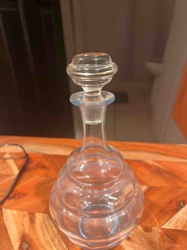
Vintage Pressed Glass Decanter with Starburst Stopper

Antique and Vintage Barware

AI Estimated Value

·Not an official valuation·Verify before acting

$45 - $65

As of June 6, 2026

AI Item Analysis

·AI can make mistakes·Verify before acting
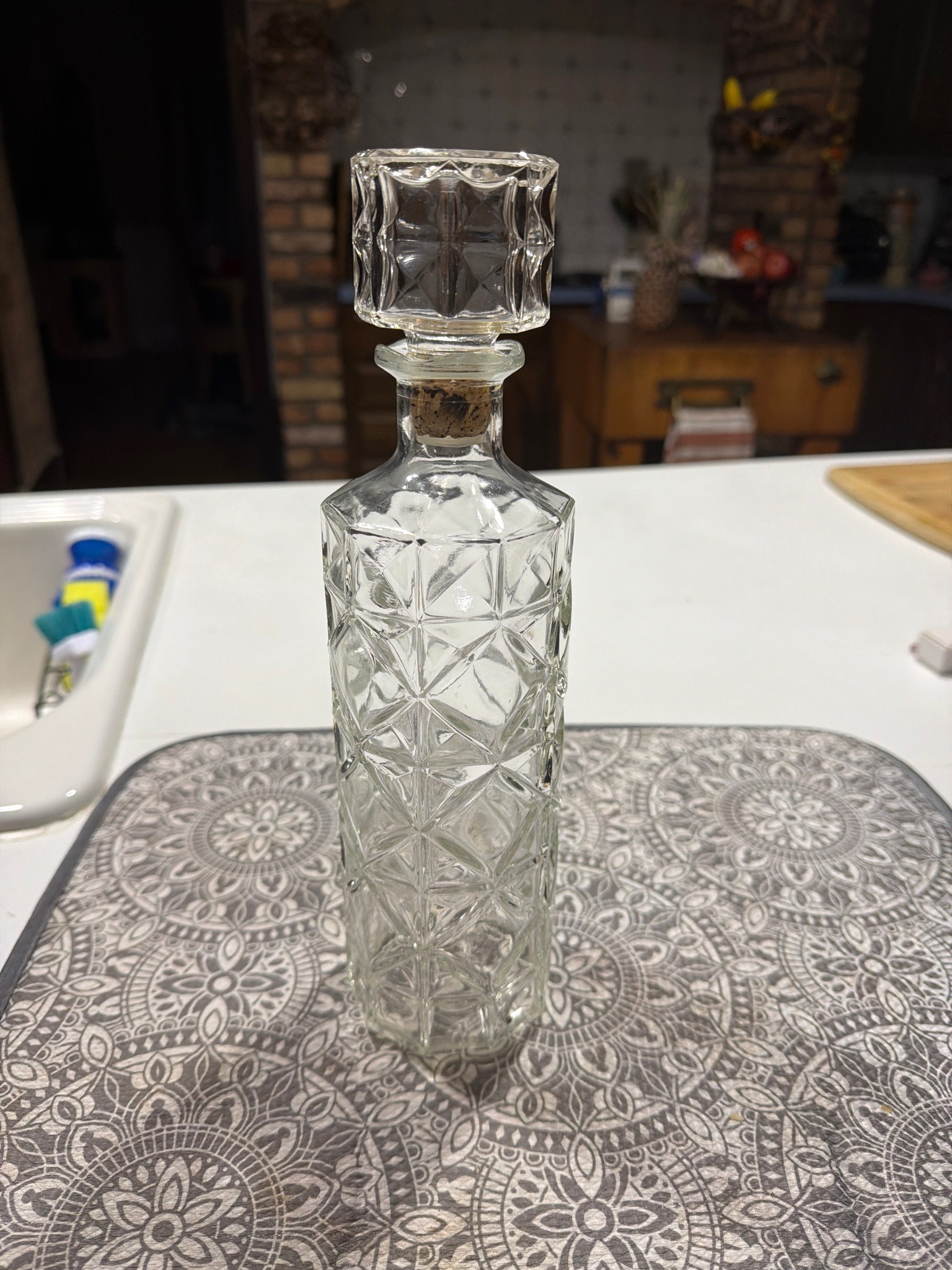
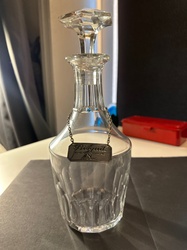
This item is a tall, slender glass decanter appearing to be made of pressed flint glass. The vessel features a distinct geometric diamond point or harlequin pattern across the main body, which transitions into a smooth, tapered neck ending in a flared rim. A notable feature is the oversized, faceted stopper displaying a large starburst or compass rose design on its top surface. The stopper is uniquely secured with a visible natural cork ring to ensure a tight seal within the neck. In terms of dimensions, the piece is elongated, suitable for liqueurs or spirits. The glass is clear with no prominent tinting, though it shows characteristic mold seams indicative of its manufacturing method. Regarding condition, the piece appears well-maintained with high clarity, though there is minor particulate or residue visible at the very bottom interior. The cork shows signs of age and natural compression from use. While no specific maker's mark is visible in the photograph, the style and construction are characteristic of mid-20th-century American or European barware, approximately 1950s-1970s. The craftsmanship is functional with good light refraction from the geometric facets, making it a classic example of vintage utility glassware.
AI Appraisal Report

·AI can make mistakes·Verify before acting
Based on my visual analysis of this tall, pressed flint glass decanter, I have assessed it as a classic example of mid-20th-century mass-market barware, likely Produced between 1950 and 1975. The geometric diamond-point pattern provides excellent light refraction, and the oversized starburst stopper remains its most compelling aesthetic feature. The use of a natural cork ring rather than a ground-glass joint is indicative of functional, everyday utility glass rather than high-end lead crystal. The clarity remains high, though the residue at the base and the compressed cork are typical signs of use. The market for vintage barware remains steady, particularly for 'Mad Men' era aesthetics; however, because this is pressed glass (indicated by visible mold seams) rather than hand-cut crystal, it lacks the rarity associated with premium glassware. Comparables for unsigned pressed glass decanters of this size and period typically realize between $40 and $75 in retail settings. Major value inhibitors include the lack of a maker's mark (such as Federal Glass or Libbey) and the minor internal residue. Authenticity as a vintage piece is highly probable based on manufacturing characteristics, but a definitive valuation is limited by the digital format. A physical inspection would be required to check for 'flea bites' on the pattern edges, assess the resonance (lead content), and determine if the stopper is the original factory match. Provenance regarding the original manufacturer and chemical testing to check for lead or manganese (UV reactivity) would further refine its historical attribution.

Get your items appraised

Instant estimates of your treasures with AI-powered appraisals

Browse More Appraisals