AI estimate as of October 30, 2025 · verify with a professional before acting
AI-Generated · Verify before acting
Everything on this page is generated by AI for informational purposes only. AI can make mistakes — the AI may misidentify items or misattribute them (artist, maker, brand, designer, origin, era). This is not an official valuation and should not be used for insurance, sale, tax, estate, legal, or lending purposes — or any decision requiring a certified appraisal. It is not an authoritative claim about any person, brand, or rights holder — do not share or rely on it as a factual statement about a third party. Always consult qualified professionals before making financial decisions.
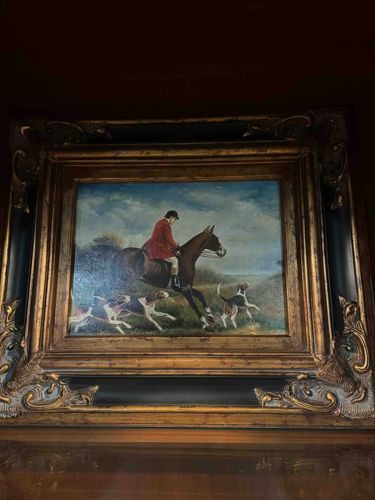
This is an oil painting depicting a classic fox hunting scene, showcasing a rider in traditional red hunting attire (a 'hunting pink' coat) on horseback, accompanied by a pack of hounds. The rider is depicted from the back and side, galloping across a verdant landscape under a cloudy sky. The horse, a dark bay or brown, is in mid-stride. Three hounds are vividly shown running alongside the horse, displaying typical foxhound markings (white with brown/black patches). The background suggests an open field with subtle hints of trees or foliage in the distance under a pale blue sky with scattered clouds. The brushstrokes appear semi-impressionistic, conveying movement and atmosphere. The painting is encased in an ornate, heavy-looking frame that features a dark outer border with intricate gilded, carved, or molded decorative elements, particularly noticeable in the corners with their elaborate volutes and scrolling foliage motifs. The inner part of the frame surrounding the canvas is also gilded, creating a double-frame effect. The overall color palette of the painting is rich in greens, browns, and blues, with the striking red of the rider's coat providing a focal point. While no specific artist's signature or manufacturing mark is visible, the style is characteristic of equestrian art and hunting scenes that were popular from the 19th to early 20th centuries. The frame itself shows some signs of wear consistent with age, such as slight tarnishing or minor chips in the gilding, but appears to be in good overall condition. The craftsmanship of the frame suggests it might be a period piece chosen to complement the painting's subject matter and style, or a later, high-quality reproduction frame. The painting itself does not show any obvious major damage, such as rips or significant paint loss, but a professional cleaning might reveal more detail and vibrancy.
AI Appraisal Report
I have examined the image of this Fox Hunt Equestrian Scene Painting. Based on the visual information, the painting appears to be an oil on canvas, depicting a classic fox hunting scenario with a rider in 'hunting pink' and a pack of hounds. The artist employs a semi-impressionistic style, successfully conveying movement and atmosphere through rich greens, browns, and blues, with the red coat as a strong focal point. Condition-wise, from the image, the painting shows no obvious major damage such as rips or significant paint loss. A professional cleaning would likely enhance its vibrancy and reveal finer details. The ornate, heavy-looking frame, with its gilded scrollwork and volutes, is a significant aesthetic complement. It shows signs of age-consistent wear, such as minor tarnishing or chips in the gilding, but appears structurally sound. This suggests it is either a period frame or a high-quality, complementary later addition.
Regarding market conditions, equestrian art, particularly hunting scenes, maintains a steady, albeit niche, demand. While not the peak demand seen for abstract modern art, there's a consistent collector base. Comparables would include unsigned or attributed 19th to early 20th-century equestrian paintings by lesser-known artists, which can range from a few hundred to a couple of thousand dollars depending on quality and condition. The lack of a visible signature significantly impacts value, placing it in the decorative art category rather than a named artist's oeuvre. Rarity is difficult to assess without knowing the artist, but similar scenes were produced in quantity during the period. The quality of execution, the dynamic composition, and the attractive, substantial frame are positive factors.
It is imperative to state that without a physical in-hand examination, full authenticity verification is impossible. An in-person inspection would allow me to assess the paint layers, canvas weave, stretcher construction, and frame integrity more thoroughly. Provenance documentation, if available, would be crucial for establishing its history and potential attribution. Scientific testing, such as pigment analysis, could help confirm its age. My current appraisal is based solely on visual inspection of the provided image.