AI estimate as of September 6, 2025 · verify with a professional before acting
AI-Generated · Verify before acting
Everything on this page is generated by AI for informational purposes only. AI can make mistakes — the AI may misidentify items or misattribute them (artist, maker, brand, designer, origin, era). This is not an official valuation and should not be used for insurance, sale, tax, estate, legal, or lending purposes — or any decision requiring a certified appraisal. It is not an authoritative claim about any person, brand, or rights holder — do not share or rely on it as a factual statement about a third party. Always consult qualified professionals before making financial decisions.
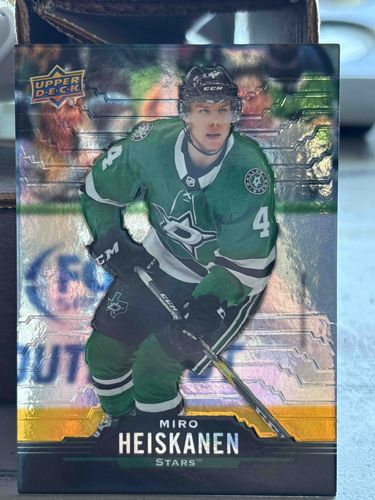
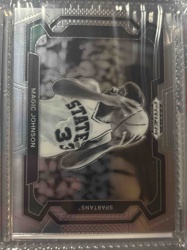
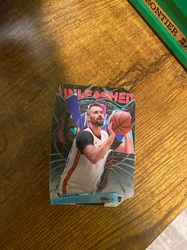
This item is a modern hockey trading card featuring Miro Heiskanen of the Dallas Stars. It appears to be from an Upper Deck series, indicated by the 'Upper Deck' logo in the top left corner, which often signifies reputable sports card manufacturers. The card depicts a color action shot of Heiskanen in his green Dallas Stars jersey, clutching a hockey stick. The background features a distinctive holographic or iridescent finish with parallel lines and possibly some other abstract shapes, giving it a premium or 'foil' card appearance that often denotes a special insert or parallel version. The player's name, 'MIRO HEISKANEN', is prominently displayed in bold white letters against a black and gold banner at the bottom of the card, with 'STARS' (referring to the Dallas Stars team) directly below his surname. The overall condition of the card seems excellent, with sharp corners and no visible creases, surface scratches, or edge wear, suggesting it has been well-preserved, possibly in a protective sleeve or case. The construction is likely standard card stock with a glossy, possibly holographic, finish. Its estimated age is recent, likely within the last five years, given Heiskanen's active career and the modern aesthetic of the card design. The craftsmanship is typical of mass-produced trading cards, but the holographic elements contribute to its visual appeal and perceived quality. The specific series or year is not explicitly visible beyond the Upper Deck branding, which would be crucial for a full appraisal.
AI Appraisal Report
Based on my visual examination of the provided image, this Miro Heiskanen Upper Deck hockey card appears to be in excellent condition. The corners are sharp, the edges clean, and there are no visible surface imperfections like scratches, creasing, or indentations. This suggests it has been well-preserved, likely in a protective sleeve or top-loader. The Upper Deck logo confirms its authenticity as a product from a major sports card manufacturer. The prominent holographic or iridescent finish with parallel lines indicates it is likely a parallel or insert card, which generally holds more value than a base card.
Market conditions for modern hockey cards, particularly those of young defensemen like Heiskanen who, while talented, are not yet considered generational superstars, can be volatile. While the card's apparent premium finish enhances its appeal, its market value is largely driven by Heiskanen's on-ice performance and collectibility. There is moderate demand for his cards among Stars fans and newer collectors. Rarity depends heavily on the specific Upper Deck series and the exact parallel – details not discernible from the image. Comparables for non-rookie, mid-tier parallels of players of similar stature typically range from a few dollars to twenty dollars, unless it's a very rare serial-numbered parallel or an extremely sought-after insert.
A significant factor impacting value is the lack of a visible serial number. Without knowing the exact set, year, and specific parallel name, it's difficult to pinpoint rarity. For full authentication and a more precise valuation, a physical in-hand examination would be crucial to assess surface texture, print quality, and confirm the absence of any subtle flaws not visible in the image. Additionally, knowing the specific product line and year (e.g., Upper Deck Series 1 2022-23, Upper Deck Young Guns, etc.) is vital for researching direct comparables and production rarity. Provenance documentation is not typically relevant for modern, unpackaged trading cards.