Vintage Cobalt Blue 'Milk of Magnesia' Glass Bottle
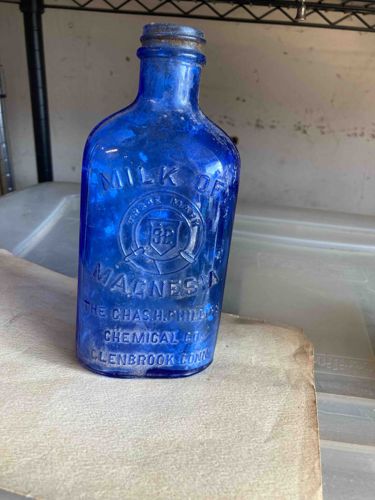
This is an antique to vintage medicinal glass bottle crafted in a vibrant, deep cobalt blue glass. It features a rectangular body with rounded shoulders and a short, narrow neck ending in a threaded lip finish. The front of the bottle displays highly detailed embossed lettering and graphics including 'MILK OF MAGNESIA' in an arched font, surrounding a central circular trade mark emblem with a shield and the signature 'C.H.P.' monogram. Below the emblem, it identifies the manufacturer as 'THE CHAS. H. PHILLIPS CHEMICAL CO.' located in 'GLENBROOK, CONN.' The construction suggests a machine-made process common in the early 20th century, likely dating between 1910 and 1930. The glass shows significant surface wear, including 'bloom' or sickness (cloudiness) likely caused by mineral deposits or environmental exposure if excavated. There are visible scuffs, light scratches, and dirt accumulation around the base and neck. The threaded top exhibits some oxidation and residue, suggesting the original metal cap may have deteriorated or been removed. Despite the surface weathering, the embossed details remain sharp and legible, showcasing the classic typography of the period.
AI-Generated Appraisal Disclaimer
Estimated Value
$10.00 - $25.00
Basic Information
Category
Antique Glassware / Apothecary Bottles
Appraised On
March 31, 2026
Estimated Value
$10.00 - $25.00
Item Description
This is an antique to vintage medicinal glass bottle crafted in a vibrant, deep cobalt blue glass. It features a rectangular body with rounded shoulders and a short, narrow neck ending in a threaded lip finish. The front of the bottle displays highly detailed embossed lettering and graphics including 'MILK OF MAGNESIA' in an arched font, surrounding a central circular trade mark emblem with a shield and the signature 'C.H.P.' monogram. Below the emblem, it identifies the manufacturer as 'THE CHAS. H. PHILLIPS CHEMICAL CO.' located in 'GLENBROOK, CONN.' The construction suggests a machine-made process common in the early 20th century, likely dating between 1910 and 1930. The glass shows significant surface wear, including 'bloom' or sickness (cloudiness) likely caused by mineral deposits or environmental exposure if excavated. There are visible scuffs, light scratches, and dirt accumulation around the base and neck. The threaded top exhibits some oxidation and residue, suggesting the original metal cap may have deteriorated or been removed. Despite the surface weathering, the embossed details remain sharp and legible, showcasing the classic typography of the period.
Related Tags
Explore similar items and categories:
Get Your Items Appraised
Instant estimates of your treasures with AI-powered instant appraisals