AI Appraisal Estimate

AI-generated estimates · not official valuations

From the user

What was submitted

Photo and notes provided by the user — not generated by AI

Submitted item photo
Submitted photo · May 27, 2026

User's notes

painting

AI analysis below

AI appraisal

AI analysis & estimate

AI-Generated · Verify before acting

Everything below is generated by AI for informational purposes only. AI can make mistakes — the AI may misidentify items or misattribute them (artist, maker, brand, designer, origin, era). This is not an official valuation and should not be used for insurance, sale, tax, estate, legal, or lending purposes — or any decision requiring a certified appraisal. It is not an authoritative claim about any person, brand, or rights holder — do not share or rely on it as a factual statement about a third party. Always consult qualified professionals before making financial decisions.

Note

This analysis also relies on unverified notes provided by the user, which may be incomplete or inaccurate and could affect the result.

Read the full disclaimer

AI Identification

·Not independently authenticated·Verify before acting

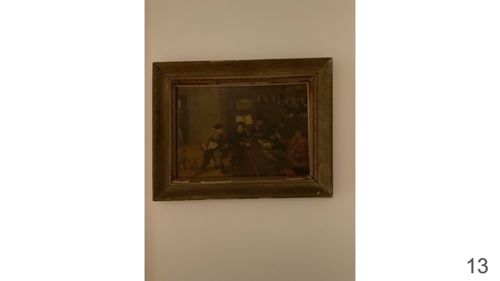
Dutch Golden Age Style Interior Genre Painting

Fine Art - Painting

AI Estimated Value

·Not an official valuation·Verify before acting

$400 - $800

As of May 27, 2026

AI Item Analysis

·AI can make mistakes·Verify before acting
Small-scale oil painting on panel or canvas, depicting a domestic or tavern interior scene characteristic of 17th-century Dutch genre painting styles. The composition features a group of figures gathered around a table in a dimly lit, atmospheric room. The palette is dominated by earthy tenné tones, deep browns, and subtle highlights, with a notable figure in the foreground wearing a white collar or garment that captures the light. The execution shows a focus on chiaroscuro, creating a sense of depth and intimacy common in the works of artists like Adriaen van Ostade or David Teniers the Younger. The painting is housed in a substantial, period-style wooden cove frame with a dark, possibly olive-drab or bronzed finish. The frame shows visible signs of age, including minor surface abrasions, small chips to the wood on the upper edge, and a general accumulation of dust and patina consistent with late 19th or early 20th-century manufacture. The painting surface appears somewhat obscured by aged, darkened varnish, which may mask finer brushwork or a signature. There is some slight separation visible between the painting edge and the frame's inner lip. The overall craftsmanship suggests an artist well-versed in classical techniques, either a high-quality period original or an expertly rendered 19th-century revival piece.

AI Appraisal Report

·AI can make mistakes·Verify before acting
Based on my visual examination of the provided images, this artwork appears to be a 19th-century revival piece executed in the style of 17th-century Dutch genre painting, rather than a period original from the Golden Age. The composition, depicting figures in a dimly lit tavern interior, heavily references the 'low life' scenes mastered by Adriaen van Ostade and David Teniers the Younger. The execution displays competent handling of chiaroscuro, though the brushwork, where visible through the darkened varnish, lacks the distinctive fluidity and masterful layering found in authentic 17th-century works. The heavy, dark varnish is significant; it obscures potential signatures and flattens the depth, making precise attribution difficult without cleaning. The frame is a substantial 19th or early 20th-century cove moulding with visible wear, chips, and separation, which aligns with the revival dating. While charming, the market for 19th-century 'old master style' genre scenes is currently soft compared to genuine period works. Collectors often seek bright, cleaned examples or those with firm attribution. Without physical inspection, I cannot rule out that this is an earlier work, but the craquelure pattern and heavy varnish are consistent with later imitations. To justify a higher valuation or attribution to a specific workshop, professional cleaning and UV light examination would be required to reveal underdrawings or obscured signatures. Currently, the value lies in its decorative appeal as an atmospheric antique study.

Get your items appraised

Instant estimates of your treasures with AI-powered appraisals

Browse More Appraisals