AI identification & appraisal estimate

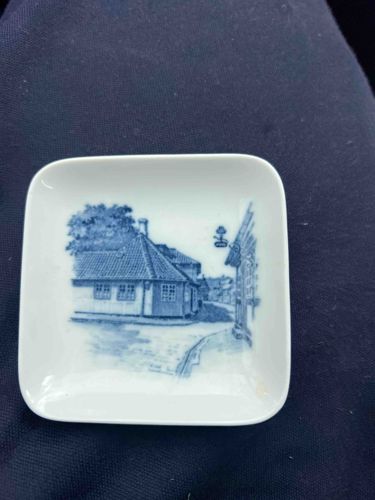
Royal Copenhagen Miniature Square Porcelain Dish

Submitted photo of Royal Copenhagen Miniature Square Porcelain Dish
Photo submitted by the user — not generated by AI

User's notes

Royale Copenhagen

These notes were written by the person who submitted this item. Appraiser.AI has not verified them, and the AI's identification and estimate may rely on them.

AI Estimated Value

Not an official valuation

$15-$30

AI estimate as of February 28, 2026 · verify with a professional before acting

AI-Generated · Verify before acting

Everything on this page is generated by AI for informational purposes only. AI can make mistakes — the AI may misidentify items or misattribute them (artist, maker, brand, designer, origin, era). This is not an official valuation and should not be used for insurance, sale, tax, estate, legal, or lending purposes — or any decision requiring a certified appraisal. It is not an authoritative claim about any person, brand, or rights holder — do not share or rely on it as a factual statement about a third party. Always consult qualified professionals before making financial decisions.

This analysis also relies on unverified notes provided by the user, which may be incomplete or inaccurate and could affect the result.

Read the full disclaimer

AI Item Analysis

This is a small, square porcelain dish or butter pat produced by Royal Copenhagen, a renowned Danish manufacturer. The item is crafted from fine white vitrified porcelain with rounded corners and a shallow, dipped well typical of 'small-ware' collectibles. The central decorative feature is an underglaze blue monochromatic transfer print depicting a traditional Danish architectural scene, specifically a street view with a low-slung, timber-framed building under a tiled hip roof. The rendering includes fine details of window panes, roof textures, and a classic street sign. The cobalt blue pigment is characteristic of the Copenhagen 'Musselmalet' palette, displaying various tonal values from deep navy to soft azure. The glaze is exceptionally smooth and high-gloss, indicating high-quality craftsmanship. Although the underside is not visible, these pieces typically feature the three wavy lines (symbolizing the Great Belt, the Little Belt, and the Sound) and a crown stamp. The dish appears to be in excellent vintage condition with no visible chips, cracks, or crazing, though there is a very slight yellowish discoloration on the lower right edge likely from age or organic residue. This style of miniature souvenir platters was widely produced in the mid-to-late 20th century.
AI Appraisal Report

I have virtually examined this Royal Copenhagen miniature square porcelain dish, measuring approximately 3 to 4 inches. The piece displays the characteristic high-glaze vitrified finish and underglaze cobalt blue monochrome palette synonymous with Danish porcelain excellence. The motif, a traditional timber-framed building, identifies this as a part of their prolific series of topographical or souvenir 'butter pats' produced throughout the mid-to-late 20th century. Condition-wise, the dish presents well with a high-integrity glaze and crisp transfer-ware details. I noted a small yellowish discoloration on the lower right edge; while likely surface-level organic residue that can be cleaned, if this represents a localized glaze failure or a 'tight' hairline crack, the value would be negligible. Authenticity appears consistent with late-period Royal Copenhagen production standards, specifically looking for the three wavy lines and the crown backstamp. This item is a common 'entry-level' collectible. The market for small-scale Royal Copenhagen souvenir ware is currently saturated due to high production volumes in the 1960s and 70s. Current auction and secondary market comparables for these miniature square dishes consistently fall within the $15 to $30 range. Rarity remains low as these were designed for mass-affordability and tourism. Limitations: My assessment is based solely on digital images. A definitive valuation requires a physical inspection to check for 'ringing' (sound test for cracks), microscopic verification of the backstamp to date the production year via dot-markers, and a tactile check for professional restoration. Provenance documentation, such as original retail packaging or receipts from Denmark, could provide minor support for its history but would not significantly elevate its market value given the common nature of the piece.

Keep exploring

More antique and vintage collectible porcelain appraisals

Get your items appraised

Instant AI-powered appraisal estimates from a photo

Browse More Appraisals