Smooth River Stone (Possibly Quartzite or Gneiss)
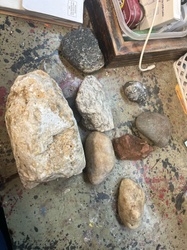
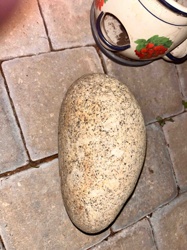
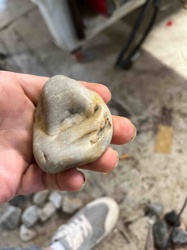
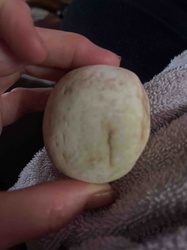
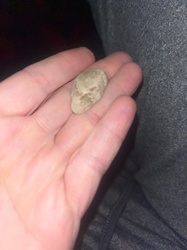
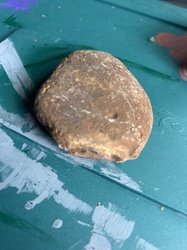
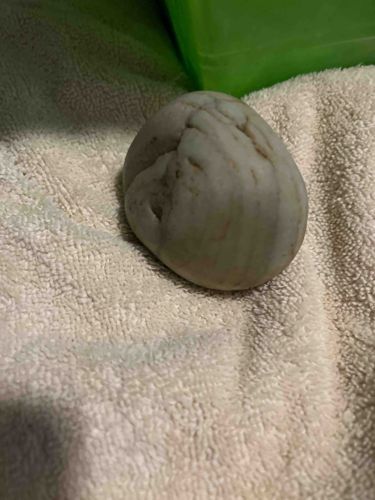
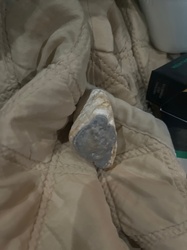
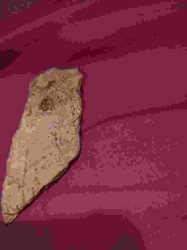
This item is an egg-shaped, water-worn natural rock, commonly referred to as a river stone or cobble. The specimen features a predominantly off-white or light gray base color with subtle, linear indentations and faint reddish-brown or tan iron-oxide staining across its surface. The material appears dense, likely a metamorphic rock such as quartzite or a fine-grained gneiss, evidenced by its matte yet smooth finish and subtle banding. Physically, the stone is rounded with an organic, asymmetrical form, suggesting it has been tumbled by natural water action over a long geological period. There are no signs of human-made tool marks, carvings, or signatures. Notable features include several deep, naturally occurring fissures or small crevices on one face, which may contain tiny mineral deposits. The condition is natural, exhibiting typical weathering consistent with environmental exposure rather than damage. There is no visible evidence of modern polishing or chemical treatment; the patina is consistent with a naturally harvested specimen found in a riverbed or coastal environment. The item is geologically ancient, though its 'age' as a found object is indeterminate.
AI-Generated Appraisal Disclaimer
Estimated Value
$5.00 - $15.00
Basic Information
Category
Natural History / Geological Specimen
Appraised On
April 6, 2026
Estimated Value
$5.00 - $15.00
Item Description
This item is an egg-shaped, water-worn natural rock, commonly referred to as a river stone or cobble. The specimen features a predominantly off-white or light gray base color with subtle, linear indentations and faint reddish-brown or tan iron-oxide staining across its surface. The material appears dense, likely a metamorphic rock such as quartzite or a fine-grained gneiss, evidenced by its matte yet smooth finish and subtle banding. Physically, the stone is rounded with an organic, asymmetrical form, suggesting it has been tumbled by natural water action over a long geological period. There are no signs of human-made tool marks, carvings, or signatures. Notable features include several deep, naturally occurring fissures or small crevices on one face, which may contain tiny mineral deposits. The condition is natural, exhibiting typical weathering consistent with environmental exposure rather than damage. There is no visible evidence of modern polishing or chemical treatment; the patina is consistent with a naturally harvested specimen found in a riverbed or coastal environment. The item is geologically ancient, though its 'age' as a found object is indeterminate.
Get Your Items Appraised
Instant estimates of your treasures with AI-powered instant appraisals