AI estimate as of August 2, 2025 · verify with a professional before acting
AI-Generated · Verify before acting
Everything on this page is generated by AI for informational purposes only. AI can make mistakes — the AI may misidentify items or misattribute them (artist, maker, brand, designer, origin, era). This is not an official valuation and should not be used for insurance, sale, tax, estate, legal, or lending purposes — or any decision requiring a certified appraisal. It is not an authoritative claim about any person, brand, or rights holder — do not share or rely on it as a factual statement about a third party. Always consult qualified professionals before making financial decisions.
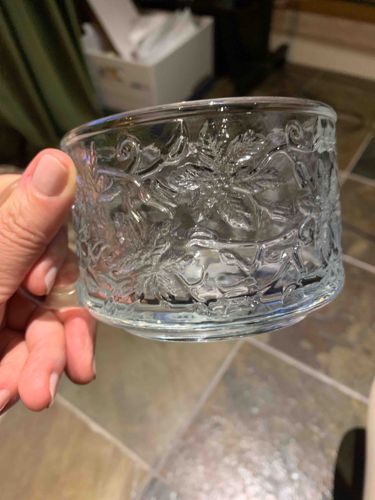
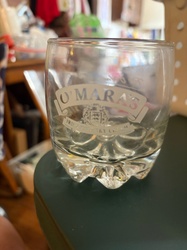
The item is a clear glass mug or perhaps a large cup, possibly designed for coffee, tea, or hot beverages. Its most striking feature is the highly embossed and intricate design that wraps around the entire exterior surface of the vessel. The pattern appears to depict a festive or natural motif, likely holly leaves and berries, or a similar botanical arrangement with swirling vines, suggesting a potential holiday or seasonal theme. The relief is quite pronounced, creating a tactile surface.
The glass itself is thick and robust, indicating durability and good heat retention. The color is clear, transparent glass, without any discernible tints or opacifiers. The construction method appears to be molded glass, given the uniform and high-relief pattern, which is characteristic of pressed glass manufacturing techniques. The rim is smooth and rounded, likely fire-polished, which adds to the comfort of use. The base is flat and thick, providing stability.
Visible condition issues are minimal; the glass appears clean with no obvious chips, cracks, or significant scuffs. There may be minor surface wear consistent with typical use and washing, but this is not clearly visible in the image. No manufacturer's marks, signatures, or stamps are discernible from the provided angle, which may be on the bottom of the piece or difficult to see through the clear glass. Based on the style of the embossed pattern, particularly the botanical motif, it could be a mid-20th century to contemporary piece. The quality indicators suggest it's a mass-produced item due to the pressed glass method, but the intricate design speaks to a certain level of craftsmanship in the mold making. Its unique aspect is the deeply carved, all-around decorative pattern, which sets it apart from simpler, plain glass mugs.
AI Appraisal Report
Upon visual examination of the provided image, I have assessed this embossed clear glass mug. The piece is a well-defined example of pressed glass, likely manufactured in the mid-to-late 20th century. The most notable feature is the high-relief botanical pattern, possibly depicting holly and berries, which suggests a seasonal or holiday theme. The glass appears thick and durable, and its condition is good, with no visible chips, cracks, or significant scuffs. It presents as a clean example of its type.
The value of such glassware is primarily determined by its maker, pattern rarity, and collector demand rather than intrinsic material worth. Without a visible manufacturer's mark (such as Anchor Hocking, Federal Glass, or Arcoroc), attribution is difficult. The market for individual, unmarked pressed glass mugs is generally modest. Comparable unmarked, decorative pressed glass mugs from the same era typically sell for low prices in secondary markets like online auctions and thrift stores.
While the intricate design is visually appealing, its mass-produced nature limits its rarity. The primary factor depressing the value is the lack of a clear maker's mark and the commonality of this type of glassware. For a definitive assessment, an in-person examination would be required to search for any faint or hidden maker's marks on the base and to assess the glass quality and wear more closely. However, based on the available visual information, its value lies in its decorative and functional use rather than as a high-value collectible.