AI estimate as of July 23, 2026 · verify with a professional before acting
AI-Generated · Verify before acting
Everything on this page is generated by AI for informational purposes only. AI can make mistakes — the AI may misidentify items or misattribute them (artist, maker, brand, designer, origin, era). This is not an official valuation and should not be used for insurance, sale, tax, estate, legal, or lending purposes — or any decision requiring a certified appraisal. It is not an authoritative claim about any person, brand, or rights holder — do not share or rely on it as a factual statement about a third party. Always consult qualified professionals before making financial decisions.
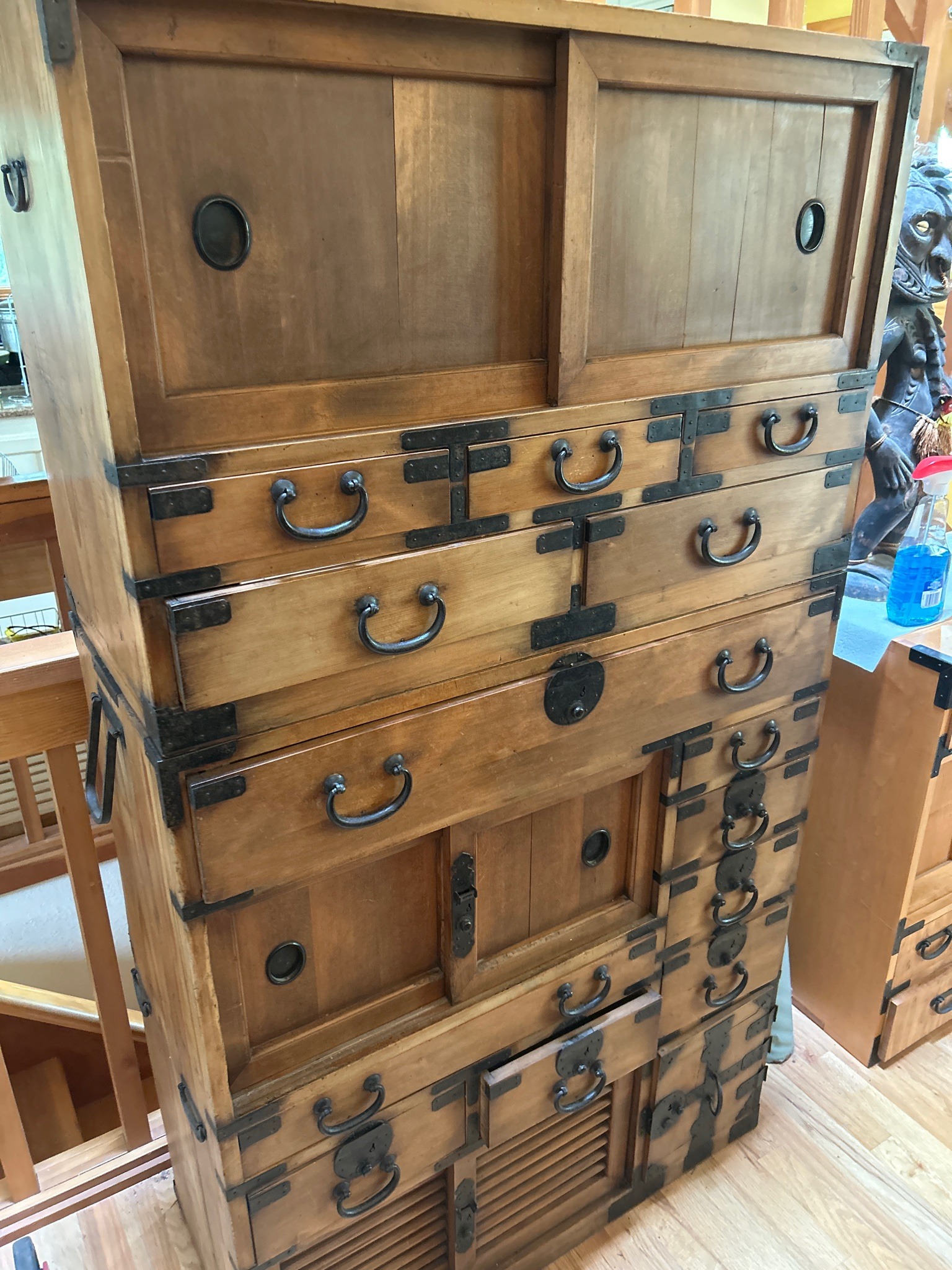
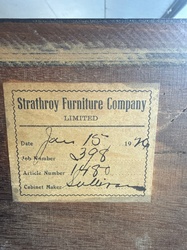
This piece appears to be a multi-section wooden storage chest or cabinet designed in the style of a traditional Japanese tansu, specifically reminiscent of a chōda-bansu or merchant's chest layout. The piece features a natural medium-toned wood finish with visible graining and a warm patina. It is fitted with extensive dark iron or forged metal hardware, including iron corner braces, strap hinges, decorative lockplates (keyholes), flush oval finger pulls on the sliding doors, and traditional bail handles (warabite-style grips). The cabinet is configured with multiple drawers of varying sizes, sliding panel doors at the top and middle sections, and slatted ventilation-style panels near the bottom base. Side iron carrying handles are visible on the exterior frame, consistent with modular Japanese chest designs meant for transportability. The item shows light surface wear, natural aging of the wood, and dark oxidation on the iron fittings, consistent with a vintage or antique piece, or a high-quality historical reproduction. No visible maker's marks, signatures, or stamps are discernible in the image, so attribution to a specific maker, region, or exact era remains subject to physical inspection.
AI Appraisal Report
Based on the image provided, I have examined this tansu-style multi-section wooden cabinet. The piece exhibits characteristics typical of Japanese merchant chests, such as a chōda-bansu layout, featuring iron corner braces, strap hinges, warabite-style bail handles, sliding doors, and side carrying handles. The wood demonstrates a warm patina and light surface wear consistent with age, while the iron fittings show natural oxidation.
From a photograph alone, I can assess the overall form, hardware style, and apparent surface condition, but I cannot examine joinery details, drawer construction, backing panels, or wood species. These physical traits are necessary to determine if this is a late Edo or Meiji period antique, a Taisho-era piece, or a high-quality 20th-century reproduction. No visible maker's marks or stamps are discernible in the photo.
Assuming this is an authentic vintage or antique Japanese tansu chest with original or period-correct iron hardware and sound structural integrity, the estimated market value is $1,200 to $1,800. Tansu cabinets enjoy stable demand among collectors and interior designers due to their functionality and striking aesthetic.
However, this estimate is contingent upon physical inspection. To confirm age and origin, an in-person examination by a specialist in Japanese furniture would be required to analyze construction techniques, tool marks, and hardware attachment methods, alongside reviewing any provenance documentation. If physical inspection reveals the cabinet to be a modern reproduction, a crafted composite, or an item 'in the style of' traditional tansu, its decorative market value would typically fall to a range of $400 to $700.