AI Appraisal Estimate

AI-generated estimates · not official valuations

From the user

What was submitted

Photo and notes provided by the user — not generated by AI

Submitted item photo
Submitted photo · June 1, 2026

User's notes

Glass bowl

AI analysis below

AI appraisal

AI analysis & estimate

AI-Generated · Verify before acting

Everything below is generated by AI for informational purposes only. AI can make mistakes — the AI may misidentify items or misattribute them (artist, maker, brand, designer, origin, era). This is not an official valuation and should not be used for insurance, sale, tax, estate, legal, or lending purposes — or any decision requiring a certified appraisal. It is not an authoritative claim about any person, brand, or rights holder — do not share or rely on it as a factual statement about a third party. Always consult qualified professionals before making financial decisions.

Note

This analysis also relies on unverified notes provided by the user, which may be incomplete or inaccurate and could affect the result.

Read the full disclaimer

AI Identification

·Not independently authenticated·Verify before acting

Early American Pattern Glass (EAPG) Oval Deep Bowl in Brunswick Pattern

Antique Glassware / Collectible Tableware

AI Estimated Value

·Not an official valuation·Verify before acting

$25.00-$45.00

As of June 1, 2026

AI Item Analysis

·AI can make mistakes·Verify before acting
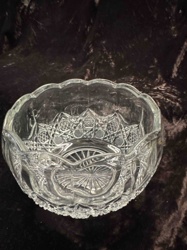
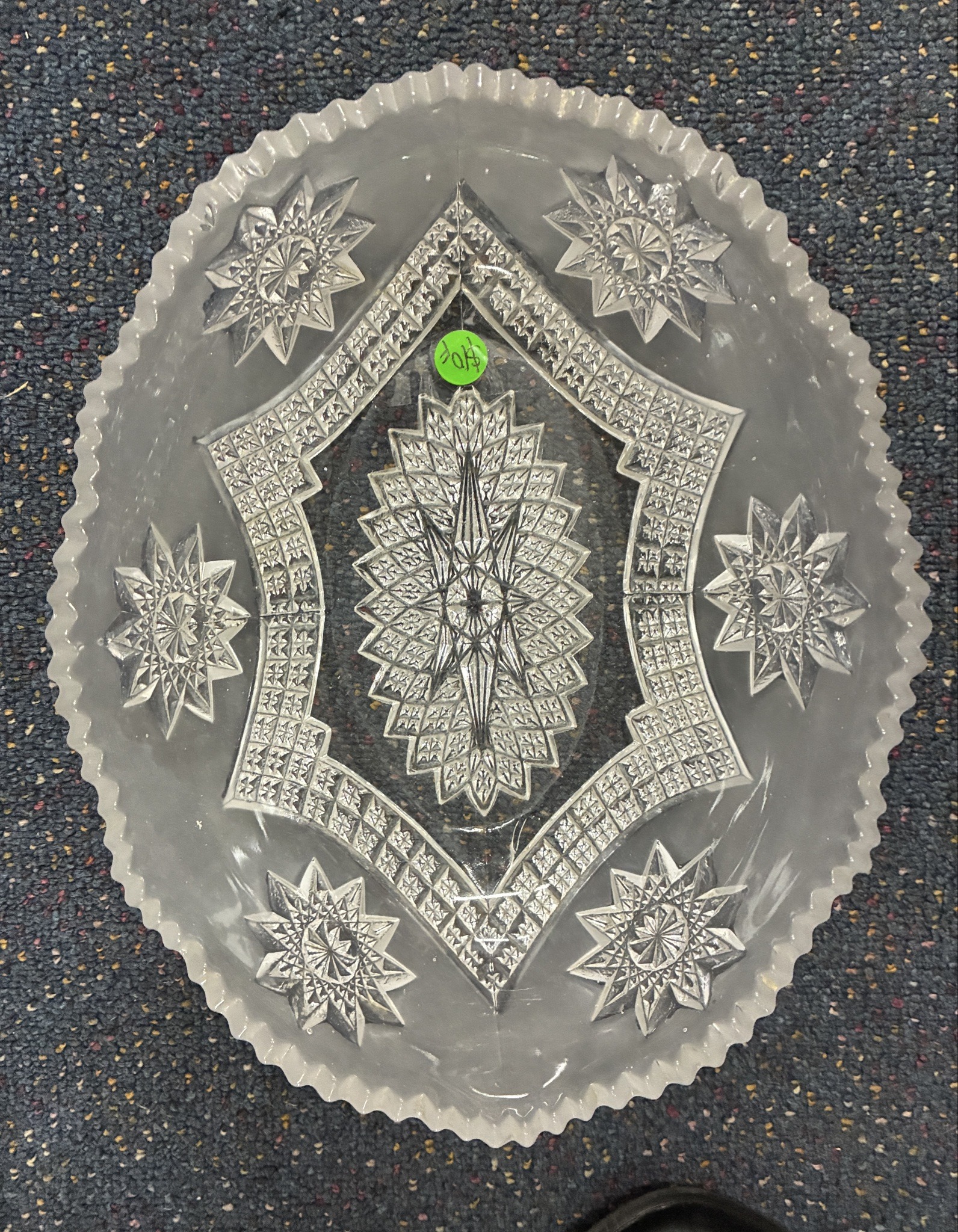
This is a vintage oval serving bowl crafted in the style of Early American Pattern Glass (EAPG), specifically featuring the 'Brunswick' or 'Star and Diamond' motif. The item is made of heavy, pressed colorless glass with a scalloped or serrated rim known as a saw-tooth edge. The central design is dominated by a large, intricate starburst inside an elongated diamond frame, which is itself composed of fine hobnail or cane-style geometric pressing. Surrounding this central diamond are six smaller multi-point stars spaced evenly around the bowl's inner basin. The glass shows characteristic clouding or 'frosting' typical of age or hard water deposits, which has muted the original clarity of the lead or lime glass composition. Visible condition issues include significant limescale buildup and light surface abrasions. The mold lines are visible, indicating a pressed manufacturing process rather than hand-cut, likely dating the piece to the late 19th or early 20th century (circa 1890-1915). A green circular price sticker is temporarily affixed to the interior. The piece exhibits robust craftsmanship with deep, sharp geometric pressings that catch the light, despite the current surface dullness.
AI Appraisal Report

·AI can make mistakes·Verify before acting
I have examined the digital representation of this oval serving bowl in the Brunswick pattern, commonly attributed to the Columbia Glass Company (Findlay, Ohio) circa 1890-1900. This pattern is characteristic of late Victorian-era Early American Pattern Glass (EAPG) with its sharp, geometric diamond and starburst motifs. The visible mold lines and saw-tooth rim are consistent with period-appropriate mass manufacturing techniques for pressed glass. Current market demand for clear, colorless EAPG has softened significantly over the last decade, with collectors prioritizing pieces in 'mint' clarity. The specimen shows significant clouding and limescale buildup, which obscures the natural refraction of the glass; without professional restoration or deep cleaning using an acid bath, this condition negatively impacts the value by roughly 40-50%. Comparables for this specific geometric pattern in better condition typically realize prices under $60 at auction or in specialized antique malls. The primary value drivers for this piece are its robust 'saw-tooth' edging and heavy weight, which remain appealing to Victorian tableware enthusiasts. However, full authentication cannot be confirmed through imagery alone. A physical inspection is required to check for the 'black light' fluorescence (manganese or selenium presence) to confirm age versus modern reproductions. I would also need to examine the item for hidden 'flea bites' or micro-chipping along the sharp edges of the hobnail segments, as tactile defects significantly reduce resale value. No further scientific testing is recommended given the item's established lower-market tier.

Get your items appraised

Instant estimates of your treasures with AI-powered appraisals

Browse More Appraisals