AI estimate as of September 27, 2025 · verify with a professional before acting
AI-Generated · Verify before acting
Everything on this page is generated by AI for informational purposes only. AI can make mistakes — the AI may misidentify items or misattribute them (artist, maker, brand, designer, origin, era). This is not an official valuation and should not be used for insurance, sale, tax, estate, legal, or lending purposes — or any decision requiring a certified appraisal. It is not an authoritative claim about any person, brand, or rights holder — do not share or rely on it as a factual statement about a third party. Always consult qualified professionals before making financial decisions.
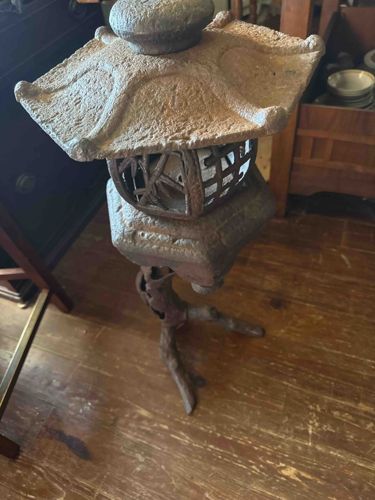
This item is a Japanese-style garden lantern, likely made of cast iron or a similar heavy, weathered metal, designed to resemble a pagoda. It features a multi-tiered construction, with a distinctive pyramidal or square roof section detailed with textured, possibly simulated stone, surfaces. The roof is topped with a round finial element. Below the main roof, there is an enclosed lantern chamber with intricate openwork designs. One side of the lantern chamber appears to have a lattice pattern, while another section resembles intertwined branches or naturalistic motifs. The overall color is a dark, earthy brown to reddish-brown, indicative of aged metal or a finish designed to mimic weathered stone or bronze. The rough texture throughout suggests a cast process and contributes to its aged aesthetic. The lantern is supported by a slender, tree-branch-like stand, also likely cast iron, which provides a rustic and organic foundation. This stand appears to have multiple points of contact with the ground, providing stability, though the exact number of 'legs' is not fully visible. There are visible signs of age and outdoor exposure, including a uniform patina, some surface pitting, and possible minor rust, which is consistent with cast iron and its intended use as an outdoor garden ornament. There are no obvious signs of recent damage, repairs, or specific manufacturer markings discernible from the image. The style suggests it could be a mid-20th century or later reproduction, designed to evoke traditional Japanese garden aesthetics. Its robust construction implies durability, suitable for outdoor decor.
AI Appraisal Report
Based on my visual examination of the provided image, this Japanese-style cast iron pagoda garden lantern appears to be in good, aged condition. The uniform patina, surface pitting, and dark, earthy color are consistent with weathered cast iron and its intended outdoor use. There are no visible signs of significant damage, recent repairs, or structural integrity issues.
Authenticity: From the image, I assess this as a decorative garden ornament, likely a reproduction designed to evoke traditional Japanese aesthetics. The design, particularly the intricate openwork on the lantern chamber and the naturalistic, tree-branch-like stand, points towards a mid-20th century or later manufacture rather than an antique. Without manufacturer markings, specific provenance documentation, or an in-hand examination, definitively dating or authenticating it as a period piece is not possible. Physical inspection would allow for assessment of the casting quality, weight, and other material characteristics critical for full authentication.
Market Conditions and Comparables: The market for outdoor decorative garden ornaments, particularly cast iron lanterns of this style, is moderately active. New pagoda lanterns of similar size and material can range from $100 to $400, depending on detailing and perceived quality. Previously owned examples often fall into the lower end of this spectrum. Demand is steady for appealing garden decor, but rarity is low as items of this type are widely produced.
Factors Impacting Value: The primary value drivers are its decorative appeal, durable cast iron construction, and suitable condition for immediate outdoor display. Its mid-range size and classic pagoda design contribute positively. However, its likely status as a reproduction, lack of discernible age-related rarity, and absence of known provenance or artistic significance limit its upper value. An in-person inspection would also allow for precise measurements and weight assessment, which can influence pricing for such items.