AI estimate as of October 18, 2025 · verify with a professional before acting
AI-Generated · Verify before acting
Everything on this page is generated by AI for informational purposes only. AI can make mistakes — the AI may misidentify items or misattribute them (artist, maker, brand, designer, origin, era). This is not an official valuation and should not be used for insurance, sale, tax, estate, legal, or lending purposes — or any decision requiring a certified appraisal. It is not an authoritative claim about any person, brand, or rights holder — do not share or rely on it as a factual statement about a third party. Always consult qualified professionals before making financial decisions.
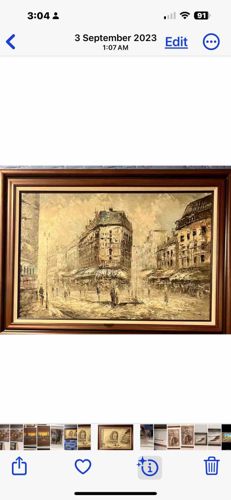
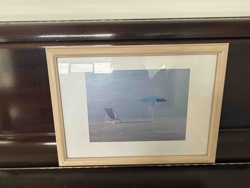
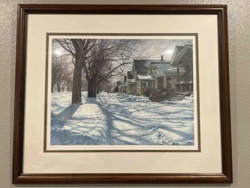
This item is a framed oil painting portraying a bustling Parisian street scene, likely a busy intersection with multi-story buildings. The artwork features a muted color palette, predominantly sepia tones, browns, and off-whites, suggesting either an older painting or a stylistic choice to evoke a historical or atmospheric feel. The brushstrokes appear strong and textured, indicating impasto techniques where paint is applied thickly, giving the surface a three-dimensional quality. This technique is particularly visible in the rendering of the buildings, cobblestone streets, and possibly the figures. The composition centers on a prominent corner building with numerous windows and architectural details, possibly awnings or street vendors below. Pedestrians are visible on the sidewalks, adding a sense of movement and scale to the urban environment. The painting is housed in a substantial wooden frame, likely made of stained hardwood, with a warm brown finish and a classic, somewhat simple profile, enhancing the traditional aesthetic of the artwork. No specific artist's signature or maker's marks are discernible from the provided image. The overall style suggests a mid-20th century European influence, possibly post-impressionistic or a more traditional genre scene. Visible condition appears good given the limitations of the image, with no obvious signs of damage or significant wear to the painting itself, though minor frame wear or patina cannot be ruled out without closer inspection. The absence of vibrant colors contributes to a somewhat melancholic or nostalgic mood.
AI Appraisal Report
This framed oil painting depicts a Parisian street scene with a muted color palette, predominantly sepia and brown tones, creating a nostalgic atmosphere. The strong, textured brushstrokes indicative of impasto technique are visible throughout, particularly in the rendering of buildings and cobblestones, adding a tactile quality to the artwork. The composition centers on a prominent architectural corner, bustling with pedestrians, giving a sense of urban life. The painting is housed in a substantial, warm-toned wooden frame that complements its traditional aesthetic.
Based on visual examination, the painting appears to be in good condition, with no obvious signs of damage or wear to the canvas. The frame also seems well-preserved, though minor scuffs or patina cannot be ruled out without closer inspection. The absence of a discernible artist's signature is a significant factor in authenticity and valuation. While the style suggests a mid-20th century European influence, possibly post-impressionistic or traditional genre, establishing a specific artist without a signature or provenance is impossible from an image alone.
Market conditions for unsigned genre scenes of this nature are generally moderate. Demand is consistent for decorative art pieces depicting iconic European cityscapes, but the lack of an identifiable artist limits its investment potential. Comparable sales data for similar unsigned Parisian street scenes with a decorative appeal typically fall within the $400-$800 range, depending on quality, size, and condition. Rarity is not a significant factor here, as unsigned decorative cityscape paintings are relatively common.
Limitations in authenticity verification from images alone are substantial. To fully authenticate and attribute this piece, an in-person examination by a fine art expert is crucial to assess pigment composition, canvas age, stretcher marks, and application techniques that could point to a specific artist or period. Comprehensive provenance documentation, such as exhibition history or previous ownership records, would also be invaluable. Scientific testing, like UV light examination or pigment analysis, could further aid in dating and confirming the medium. Without these, the appraisal reflects its value as a decorative, unsigned work.