AI Appraisal Estimate

AI-generated estimates · not official valuations

From the user

What was submitted

Photo and notes provided by the user — not generated by AI

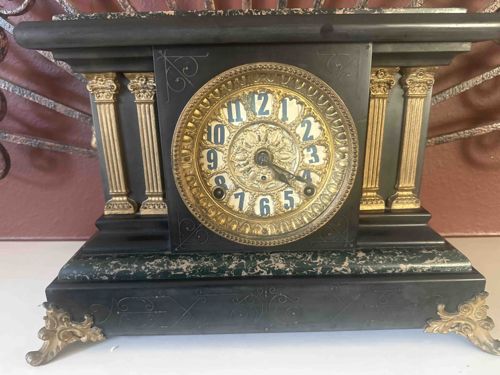
Submitted item photo
Submitted photo · May 30, 2026

User's notes

No additional notes provided.

AI analysis below

AI appraisal

AI analysis & estimate

AI-Generated · Verify before acting

Everything below is generated by AI for informational purposes only. AI can make mistakes — the AI may misidentify items or misattribute them (artist, maker, brand, designer, origin, era). This is not an official valuation and should not be used for insurance, sale, tax, estate, legal, or lending purposes — or any decision requiring a certified appraisal. It is not an authoritative claim about any person, brand, or rights holder — do not share or rely on it as a factual statement about a third party. Always consult qualified professionals before making financial decisions.

Read the full disclaimer

AI Identification

·Not independently authenticated·Verify before acting

American Victorian Black Mantel Clock (Adamantine style)

Antique Clocks / Decorative Arts

AI Estimated Value

·Not an official valuation·Verify before acting

$150-$250

As of May 30, 2026

AI Item Analysis

·AI can make mistakes·Verify before acting
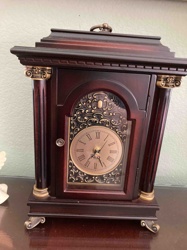
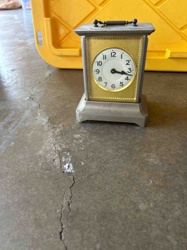
This is a late 19th-century Victorian-style architectural mantel clock, likely manufactured by a prominent American firm such as Seth Thomas or Ingraham. The clock features a characteristic 'black' finish, often referred to as Adamantine (a celluloid veneer) or enameled wood, designed to mimic high-end French slate or marble. It is accented with green faux-marbled sections on the base and cornice. The facade is flanked by four faux-gilt fluted Corinthian columns arranged in pairs. The central dial is highly ornate, featuring a repoussé brass center with a floral motif, surrounded by a cream-colored chapter ring with bold Arabic numerals. The dial is encased in an etched brass bezel. Two winding arbors are visible within the dial, suggesting a typical 8-day time-and-strike mechanical movement. The piece sits upon highly decorative, cast-metal scroll feet with a weathered gold-tone patina. Condition-wise, the clock shows surface wear consistent with age, including minor scuffing on the black finish and typical oxidation or 'tarnishing' on the metal components. The etching on the front panel remains visible but slightly faded. This style of clock was the height of middle-class fashion in the United States between 1880 and 1910, prized for its imposing Neoclassical silhouette and durable construction.
AI Appraisal Report

·AI can make mistakes·Verify before acting
I have completed a visual examination of the submitted late 19th-century American mantel clock. The piece is a classic 'black mantel' clock, likely a Seth Thomas 'Adamantine' or an Ansonia model from circa 1885-1905. The use of Adamantine veneer (a patented celluloid) over wood was a hallmark of the era, designed to provide the aesthetic of expensive French Nero Belgio marble at a reachable price point. The Neoclassical architecture, featuring faux-marbled green accents and fluted Corinthian columns, remains consistent with Victorian middle-class tastes. The repoussé brass dial and cast metal feet show original patination, though typical oxidation is present. Condition is fair to good; while the aesthetic components are intact, there is visible surface wear to the veneer and minor loss of gilding on the metalwork. Market demand for high-production American clocks has softened significantly as younger collectors favor modern aesthetics, making these ‘common’ antique clocks readily available. Comparables for mass-produced Seth Thomas or Ingraham models in unserviced condition typically hammer between $100 and $250. This valuation is limited by the inability to inspect the internal movement. A physical examination is required to verify the integrity of the mainsprings, the presence of the pendulum and key, and to confirm if the 8-day brass movement is functional or requires a costly overhaul. No provenance was provided; original labels on the rear or inside of the case would further solidify the attribution but would not significantly shift the market value unless the movement is of a rare, high-jeweled variety.

Get your items appraised

Instant estimates of your treasures with AI-powered appraisals

Browse More Appraisals