AI Appraisal Estimate

AI-generated estimates · not official valuations

From the user

What was submitted

Photo and notes provided by the user — not generated by AI

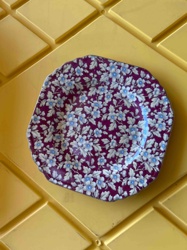
Submitted item photo
Submitted photo · June 8, 2026

User's notes

No additional notes provided.

AI analysis below

AI appraisal

AI analysis & estimate

AI-Generated · Verify before acting

Everything below is generated by AI for informational purposes only. AI can make mistakes — the AI may misidentify items or misattribute them (artist, maker, brand, designer, origin, era). This is not an official valuation and should not be used for insurance, sale, tax, estate, legal, or lending purposes — or any decision requiring a certified appraisal. It is not an authoritative claim about any person, brand, or rights holder — do not share or rely on it as a factual statement about a third party. Always consult qualified professionals before making financial decisions.

Read the full disclaimer

AI Identification

·Not independently authenticated·Verify before acting

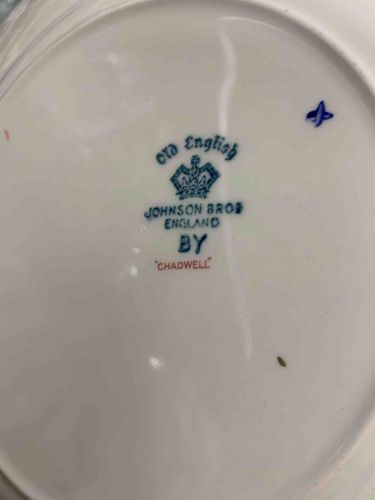
Johnson Bros. \"Old English\" 'Chadwell' Ceramic Plate (Backstamp)

Dinnerware / Collectible Ceramic Plate

AI Estimated Value

·Not an official valuation·Verify before acting

$5 - $15

As of June 8, 2026

AI Item Analysis

·AI can make mistakes·Verify before acting
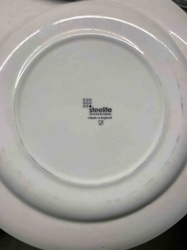
The item is the back of a ceramic plate, likely earthenware or ironstone, given the common materials used by Johnson Bros. for their 'Old English' patterns. The primary color visible is off-white or cream, which serves as the background for the manufacturer's mark. The mark itself is printed in a dark blue or teal underglaze, featuring the words 'Old English' in a serif script above a stylized crown. Below the crown, 'JOHNSON BROS' is printed in bold capital letters, followed by 'ENGLAND' in a smaller font, indicating its country of origin. Further below is the word 'BY' in larger capitals, and then 'CHADWELL' in red, enclosed in single quotation marks. The red 'CHADWELL' suggests a specific pattern name or designer associated with the 'Old English' line. To the upper right of the main mark, there is a small, distinct blue symbol resembling a four-pointed star or cross, which could be an inspector's mark, a decorator's mark, or an internal factory code. The plate appears to be in good overall condition, with no immediate visible chips, cracks, or significant crazing, though a full assessment would require viewing the front and edges. There are a few small dark flecks on the surface, possibly minor manufacturing imperfections or lint. The 'Old English' line by Johnson Bros. dates back to the late 19th and early 20th centuries, suggesting an estimated age of approximately 100-150 years. The clear and crisp printing of the backstamp indicates good quality control during manufacturing. The crown symbol prominently featured in the mark is a common design element for royal warrants or to connote quality and heritage.
AI Appraisal Report

·AI can make mistakes·Verify before acting
Upon examining the provided image of the backstamp, I can confirm this is a genuine mark for Johnson Bros. from their 'Old English' series, specifically the 'Chadwell' pattern. The backstamp style, featuring the crown and the combination of underglaze blue and overglaze red for the pattern name, is consistent with production from the early to mid-20th century. Based on the clear printing and the absence of visible cracks or significant crazing from this view, the plate appears to be in good to very good condition. However, the valuation is significantly influenced by market factors. The Johnson Bros. 'Old English' earthenware lines were mass-produced and are quite common. While charming, they do not command high prices in the current secondary market unless the pattern is exceptionally rare or the piece is an unusual form. A search for comparable 'Chadwell' pattern dinner plates reveals a low market demand. Individual plates typically sell for less than $15 online and at antique shops. The value here is primarily as a replacement piece for someone completing a set rather than as a high-value standalone collectible. My appraisal is based on the assumption that the front of the plate is in similar good condition. A full appraisal would require physical inspection to check for hidden damage like hairline cracks, chips on the rim, or significant wear to the front pattern and glaze. Verification of authenticity is confident from the mark, but a physical examination would solidify the condition assessment.

Get your items appraised

Instant estimates of your treasures with AI-powered appraisals

Browse More Appraisals