AI estimate as of July 4, 2025 · verify with a professional before acting
AI-Generated · Verify before acting
Everything on this page is generated by AI for informational purposes only. AI can make mistakes — the AI may misidentify items or misattribute them (artist, maker, brand, designer, origin, era). This is not an official valuation and should not be used for insurance, sale, tax, estate, legal, or lending purposes — or any decision requiring a certified appraisal. It is not an authoritative claim about any person, brand, or rights holder — do not share or rely on it as a factual statement about a third party. Always consult qualified professionals before making financial decisions.
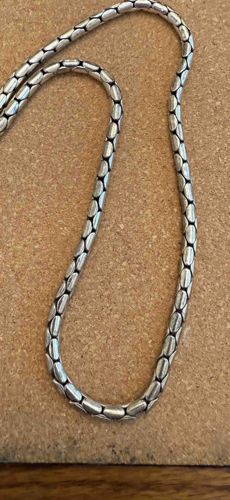
This is a silver-toned necklace, likely made of sterling silver or a similar metal alloy, featuring a distinctive snake chain or Russian braid chain design. The chain is composed of numerous small, oval-shaped links that are intricately woven or linked together to create a smooth, flexible, and visually continuous surface with a segmented appearance. The links are uniform in size and shape, creating a consistent texture along the entire length of the chain. A notable characteristic is the dark, oxidized patina present in the recesses between the individual links, which enhances their definition and creates a subtle contrast against the brighter, polished outer surfaces. This darkening is either a deliberate design choice to add depth and character or a result of natural tarnishing over time, suggesting some age. The necklace appears to be in good overall condition with no obvious signs of significant damage such as kinks, breaks, or missing links. There might be minor surface scratches consistent with normal wear.
AI Appraisal Report
Upon visual examination of the provided image, I assess this silver-toned necklace as being in good overall condition. The snake chain design, or Russian braid, appears intact with no visible kinks, breaks, or missing links, suggesting careful wear or minimal use. The uniform nature of the links indicates quality manufacturing. The dark, oxidized patina present in the recesses is a significant feature; it could be a deliberate design choice to enhance definition and depth, which is common in silver jewelry, or it could be natural tarnishing indicating age. This contrast adds character and visual interest.
Authenticity: Based solely on the image, definitively confirming the metal composition (e.g., sterling silver vs. a plated alloy) is impossible. The appearance is consistent with silver, but without hallmarks or precious metal testing, this remains an assumption. Similarly, while the craftsmanship appears good, specific origin or artisan cannot be determined.
Market Conditions and Comparables: Snake chains are a classic and consistently popular style. The market for vintage or pre-owned silver necklaces is generally stable. Value is largely influenced by metal content, weight, craftsmanship, and brand (if applicable). Comparable sterling silver snake chains of similar length and thickness typically retail in the mid-range for silver jewelry.
Demand and Rarity: Demand for this style is consistent, though not exceptionally high unless associated with a prominent designer or historical significance. This particular piece does not appear to possess characteristics that would suggest extreme rarity. Its value will primarily be driven by its aesthetic appeal and assumed silver content.
Factors Impacting Value: The primary factors affecting value are the actual metal content (sterling silver would be significantly more valuable than base metal with silver plating), the weight of the piece, and any potential hallmarks. The current good condition maintains its value. The oxidation, if natural and desired, adds character, but if it's tarnish that deters a buyer, it could slightly diminish appeal.
Limitations: My assessment is entirely based on a single image. For full authentication and a more precise appraisal, I would require a physical examination to:
1. Verify hallmarks or maker's marks.
2. Conduct precious metal testing (e.g., acid test, XRF) to confirm silver content and purity.
3. Ascertain the exact length and weight for a more accurate valuation.
4. Examine the clasp mechanism for security and quality.
5. Inspect for any subtle repairs or wear not visible in the image.
Without these in-person verifications, the appraisal value carries the inherent limitation of being based on visual assumption of sterling silver.